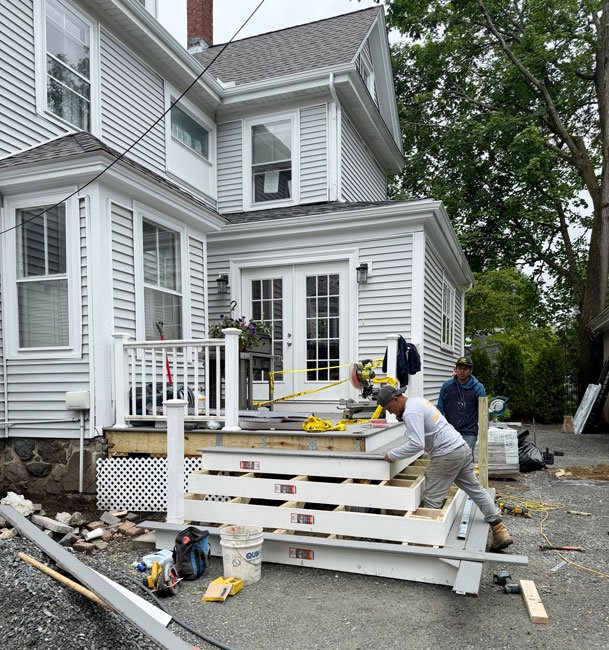
Thinking about a composite deck and wondering what Trex or TimberTech will actually run you in Massachusetts? Composite is the most popular decking choice in New England for good reason — it shrugs off our wet, freeze-thaw winters with almost no maintenance — but the price range is wide, and most online estimates quote warm-climate numbers that skip a crucial local detail: our deep frost line means deck footings have to go far deeper than in milder states, or the whole structure heaves. This 2026 guide breaks down composite deck costs in Massachusetts by brand, by size, and including the framing, railings, and permits that land on a real quote.
In 2026, a composite deck in Massachusetts costs $40 to $80 per square foot installed. A typical 300–400 sq ft Trex or TimberTech deck runs roughly $15,000 to $32,000, including framing and railings. Entry-level Trex Enhance sits at the low end; premium Trex Transcend and TimberTech AZEK (cellular PVC) reach the top at $60–$100+ per square foot.
Key Takeaways
- Average cost: $40–$80 per square foot installed in Massachusetts (2026); premium PVC lines run higher.
- By size: ~$6,500–$13,000 for a small 12×12 deck; ~$16,000–$32,000 for a 20×20.
- Where the money goes: decking boards are only about ⅓ of the cost — framing, footings, railings, and labor make up the rest.
- The New England factor: concrete footings must extend below the ~48-inch frost line, or the deck heaves and shifts. This is the #1 reason a deck here costs more and must be built correctly.
- Composite vs wood: composite costs ~25–30% more upfront but lasts 25–50 years with no staining, often winning on lifetime cost.
How Much Does a Composite Deck Cost in Massachusetts? (2026)
A professionally built composite deck in Massachusetts costs $40 to $80 per square foot installed in 2026. The brand and product tier you choose is the biggest variable, followed by deck size, height, railings, stairs, and site conditions. Here’s how the popular Trex and TimberTech lines compare per square foot installed.
Decking Line | Type | Installed Cost / Sq Ft | Warranty |
Trex Enhance | Entry capped composite | $40 – $55 | 25 yr |
Trex Select | Mid-tier composite | $45 – $65 | 35 yr |
Trex Transcend | Premium composite | $55 – $80 | 50 yr |
TimberTech PRO / EDGE | Mid-tier composite | $50 – $70 | 30 – 50 yr |
TimberTech AZEK | Premium cellular PVC | $60 – $100+ | Lifetime + 50-yr fade/stain |
Most Massachusetts homeowners spend $15,000 to $32,000 on a composite deck. Trex is generally a bit more affordable than TimberTech, and capped PVC lines like TimberTech AZEK cost the most upfront but carry the strongest warranties and the longest lifespans.
Because Boston-area and North Shore labor rates run higher than the national average, expect Massachusetts pricing to sit toward the upper end of national ranges — especially for elevated decks, multi-level designs, and anything requiring new framing.
Composite Deck Cost by Size
Decks are priced per square foot, so size drives the total. Here are typical installed costs for common deck dimensions in Massachusetts in 2026 (mid-tier composite).
Deck Size | Square Feet | Typical Installed Cost (MA, 2026) |
10 × 12 | 120 sq ft | $5,500 – $11,000 |
12 × 12 | 144 sq ft | $6,500 – $13,000 |
12 × 16 | 192 sq ft | $8,500 – $16,500 |
16 × 20 | 320 sq ft | $13,500 – $26,000 |
20 × 20 | 400 sq ft | $16,000 – $32,000 |
These ranges include the substructure, decking, and basic railings. They don’t include major extras like a second story, stairs beyond a basic run, built-in seating, or removal of an old deck — all covered below.
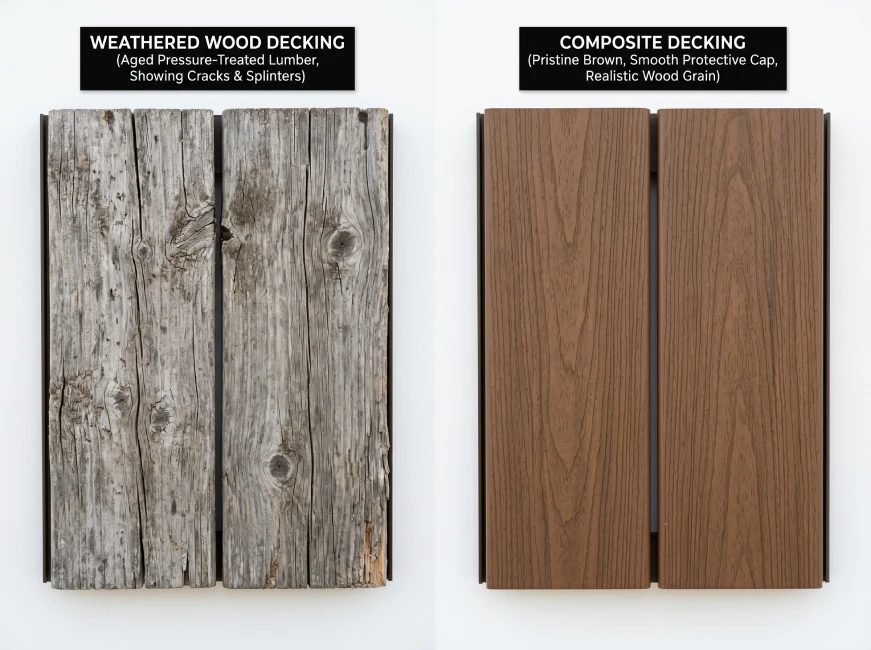
Where the Money Goes: Composite Deck Cost Breakdown
One of the most useful things to understand is that the boards you walk on are only a fraction of the cost. Here’s how a composite deck budget breaks down.
Component | Typical Cost / Share | Notes |
Decking boards (material) | ~⅓ of total; $5–$16 / sq ft | Brand and tier set the price |
Substructure / framing | Major cost | Pressure-treated lumber or steel |
Footings | Critical in MA | Concrete, set below the frost line |
Labor | $24–$48 / sq ft | Higher in the Boston/North Shore market |
Railings | $20–$60 / linear ft | Composite and aluminum cost more |
The number that surprises people: for most professionally installed composite decks, the decking material is only about one-third of the total. The framing, footings, and labor — the parts you don’t see — are where durability is won or lost in New England.
Additional Costs and Popular Upgrades
Most homeowners add features beyond a plain rectangular deck. These are the common extras that affect a Massachusetts composite deck budget in 2026.
Upgrade / Extra | Typical Cost (MA, 2026) |
Composite or aluminum railing | $20 – $60 / linear ft |
Stairs (per flight) | $1,400 – $2,600 |
Built-in bench seating | $1,000 – $2,500 |
Deck and stair lighting | $1,200 – $3,000+ |
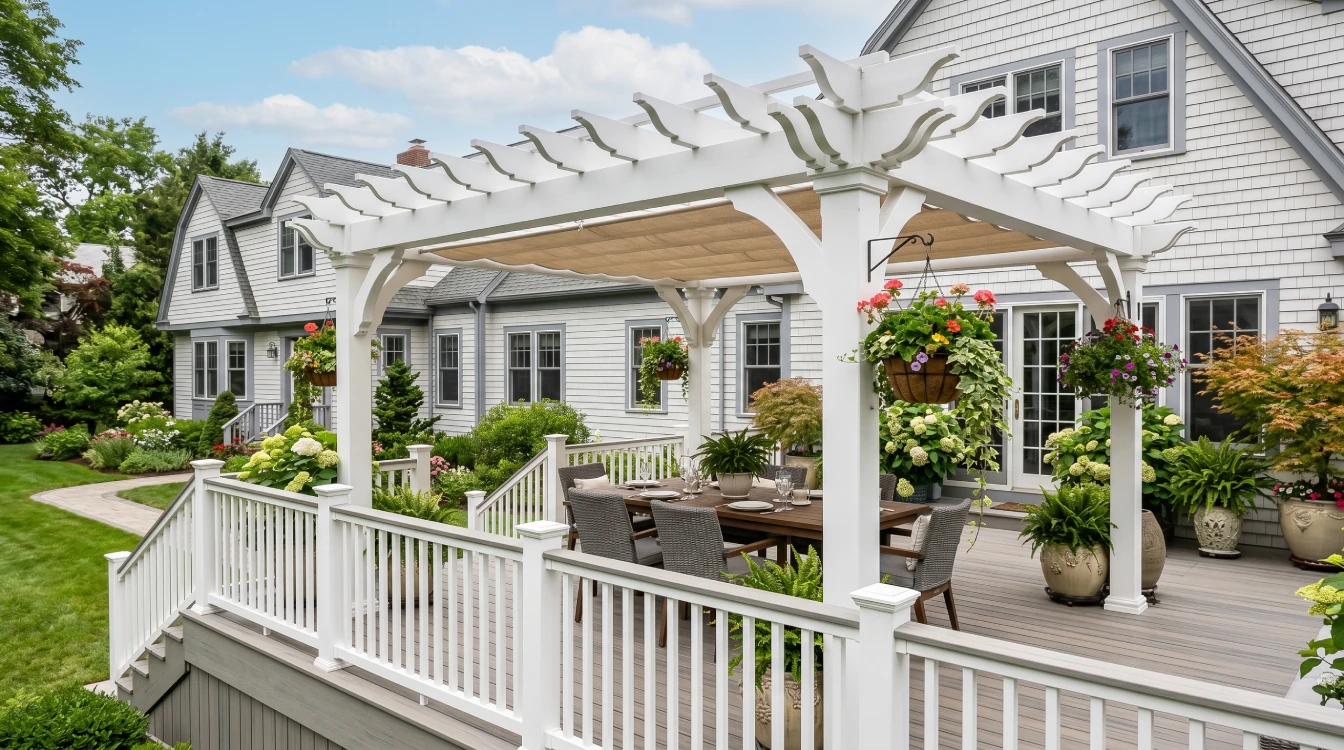
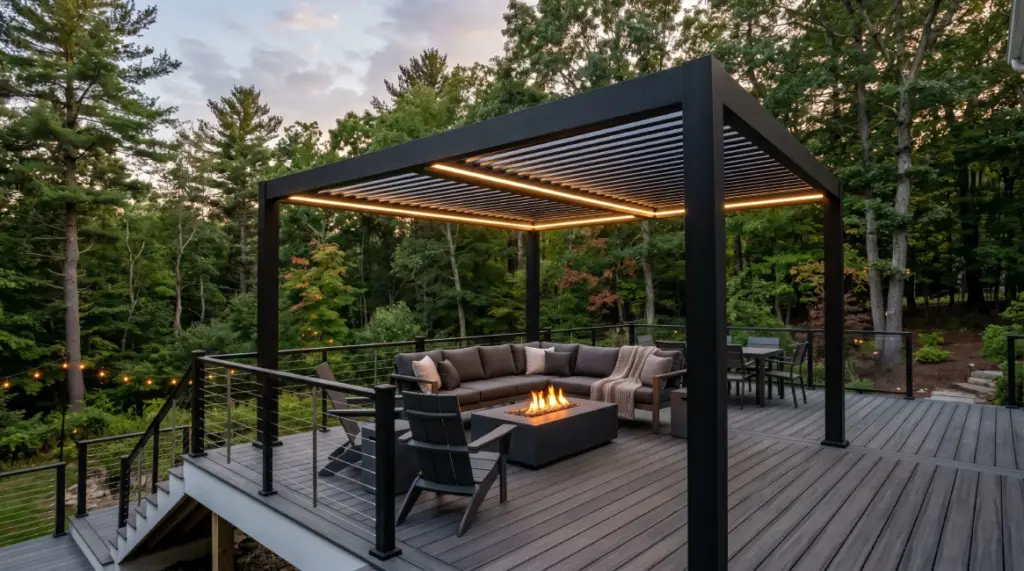
Pergola or shade structure | $1,500 – $5,500+ |
Under-deck drainage (e.g., Trex RainEscape) | +$30 / sq ft |
Picture-frame border / inlay design | Adds material + labor |
Old deck removal & haul-away | $600 – $1,000+ |
Bundling upgrades into the original build is almost always cheaper than adding them later, since the crew and framing are already in place. A deck designed from the start to flow into a complete outdoor living space — with lighting, a pergola, and surrounding landscaping — delivers far more value than a basic platform.
Professional Patio-Deck Builders MA - THE PROS, INC
Book a Project Consultation With Us
Thank You!
Your request has been received. Our team will contact you within 24 hours.
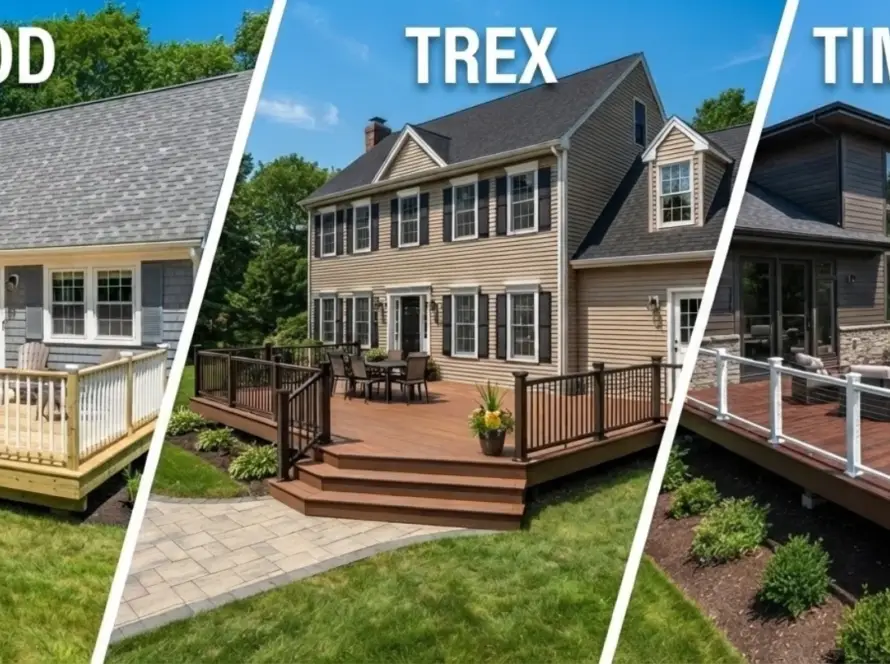
Trex vs TimberTech vs Wood: Which Should You Choose?
The most common question we hear is how Trex, TimberTech, and traditional wood compare for a New England climate. Here’s the honest breakdown.
Factor | Pressure-Treated Wood | Trex (Composite) | TimberTech AZEK (PVC) |
Upfront cost | $ (lowest) | $$ | $$$ |
Lifespan | ~15 yrs | 25–30+ yrs | 30–50 yrs |
Maintenance | High (stain every 2–3 yrs) | Low (occasional wash) | Very low (occasional wash) |
Warranty | None | 25–50 yrs | Lifetime + 50-yr fade/stain |
Heat in sun | Moderate | Warmer (dark colors) | Cooler PVC options available |
Best for | Tightest budget | Best low-maintenance value | Premium look, longest lifespan |
Trex is wood-plastic composite with a hard protective cap — the best balance of cost, durability, and low maintenance for most Massachusetts homeowners. TimberTech AZEK is capped cellular PVC with no wood fiber at all, so it won’t absorb moisture, swell, or rot — ideal for our wet, snowy climate — and it carries the strongest warranties, at a higher price. Pressure-treated wood is cheapest upfront but needs staining every 2–3 years and lasts about half as long. Over a 20-year horizon, composite’s no-staining, longer-lifespan profile often narrows or erases the upfront gap.
Composite costs roughly 25–30% more than wood at installation, but because it never needs restaining and lasts 25–50 years versus about 15 for wood, it usually wins on total cost of ownership — especially in a freeze-thaw climate that’s hard on wood.
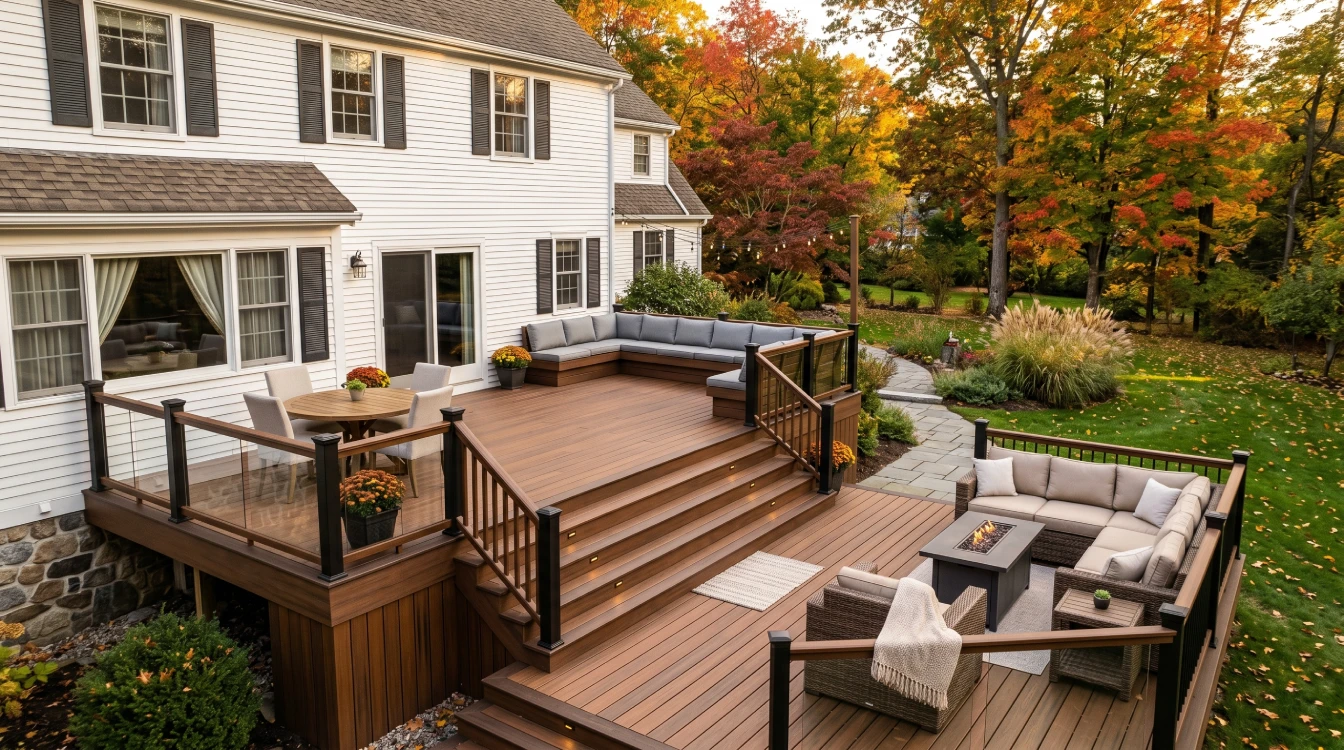
Why Composite Decks Cost More in Massachusetts (The New England Factor)
If a Massachusetts quote runs higher than the national averages you’ve seen, this is why. Building a deck that survives New England winters takes deeper foundations, snow-rated framing, and careful moisture detailing that mild-climate builds skip. Cutting corners here doesn’t save money — it produces a deck that heaves, sags, or rots out at the house connection within a few seasons.
Footings Must Go Below the Frost Line
This is the single biggest factor. Massachusetts has a frost line of roughly 48 inches (4 feet). When the ground freezes, it expands — and any deck footing that doesn’t extend below the frost line gets pushed upward by frost heave, causing the deck to lift, tilt, and pull away from the house over a few winters. Proper construction requires concrete footings dug below the frost line, and posts set on those footings rather than buried (buried wood posts rot). More digging and more concrete than a warm-climate deck is exactly why pricing here is higher — and why it’s worth it.
Snow Load and Framing
New England decks have to carry heavy snow loads, which affects joist size, beam spans, and post spacing. Composite boards are also heavier and sometimes require tighter joist spacing than wood (often 12 inches on center for certain installations), adding framing lumber and labor.
Moisture, Ledger Flashing, and Rot
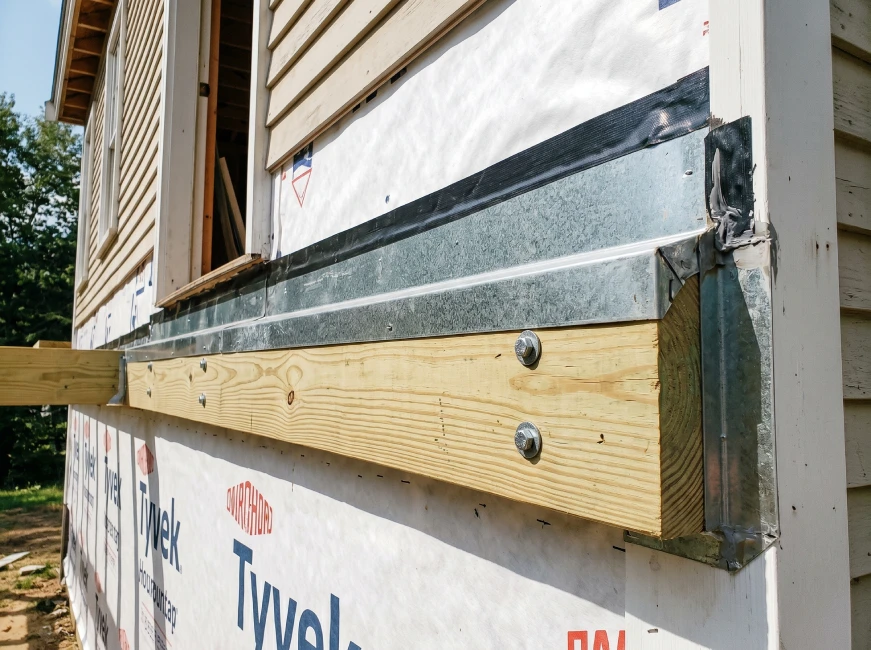
The most common point of deck failure in wet climates is the ledger board — where the deck attaches to the house. Without proper flashing, water gets behind it, rotting both the deck and the home’s framing. A correct New England build flashes the ledger and protects the substructure (many builders add joist flashing tape) so moisture from rain and snow never sits on the framing. This is invisible work that separates a 25-year deck from a 5-year problem.
Expansion, Contraction, and Heat
Composite expands and contracts with our wide temperature swings, so proper gapping between boards is essential — too tight and the boards buckle in summer heat. Dark composite colors also absorb more heat in direct sun; heat-mitigating product lines help if your deck gets full afternoon exposure.
in Massachusetts, the difference between a deck that lasts decades and one that fails fast comes down to footing depth, snow-rated framing, and moisture detailing. This is the clearest reason to hire an experienced local builder over the lowest bid.
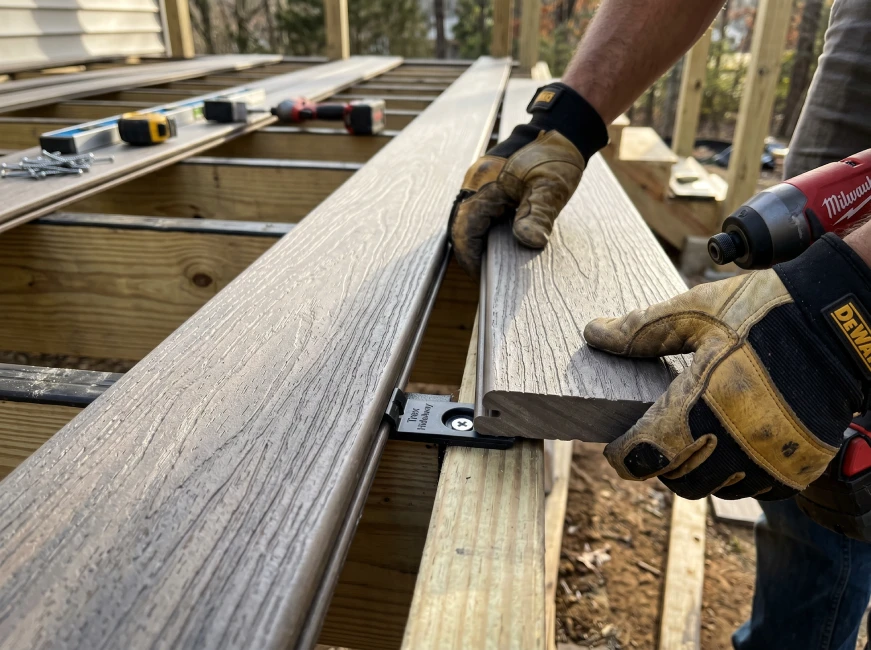
Deck Permits in Massachusetts
Most decks in Massachusetts require a building permit, and a reputable builder handles this for you. Here’s what’s typically involved:
- Permits and inspections: A permit is generally required for any attached deck or any deck more than about 30 inches above grade. Inspectors typically check the footings and framing before the decking goes on, and sign off at completion.
- Structural code: Footing depth (below frost line), ledger attachment and flashing, railing height, and stair dimensions all must meet code. Decks over a certain height require guardrails.
- Confirm before you build: Requirements vary by municipality, so your contractor confirms specifics with your local building department. Skipping permits can cause failed inspections and problems when you sell.
Do Composite Decks Add Home Value in Massachusetts?
Yes. A composite deck boosts curb appeal, expands your usable living space, and is a strong selling point — buyers love low-maintenance outdoor living, especially in Massachusetts where a shorter season makes a great deck especially desirable. Cost-vs-value research consistently shows decks recouping a solid share of their cost at resale, and composite’s no-maintenance, long-lifespan profile is attractive to buyers who don’t want to stain a wood deck every few years. The strongest returns come from quality construction and a deck that integrates with the home and yard. Because a deck is a meaningful investment, many homeowners use flexible financing to spread the cost into monthly payments.
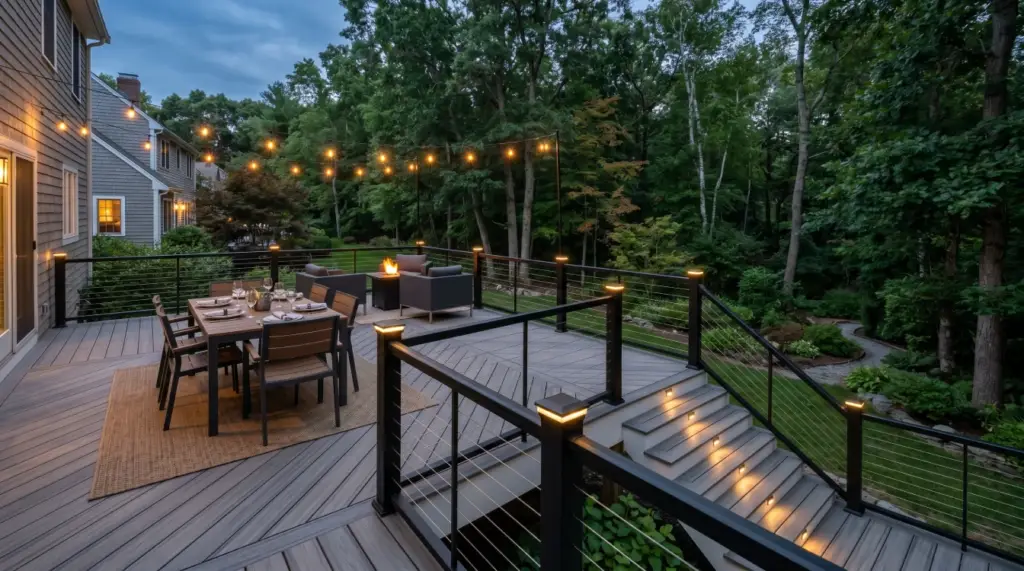
Composite Deck Maintenance Costs
This is where composite earns its premium. Upkeep is minimal compared to wood.
| Material | Upkeep | Typical Cost |
| Pressure-treated wood | Stain/seal every 2–3 years | $2–$4 / sq ft |
| Composite (Trex / TimberTech) | Wash with soap and water 1–2× per year | ~$0–$150 / year |
Composite never needs sanding, staining, or sealing — a periodic wash keeps it looking new. Over 20 years, skipping repeated staining and board replacement is a large part of why composite’s total cost of ownership competes with (or beats) wood.
How to Save Money on Your Massachusetts Composite Deck
You can control costs without compromising the structure that matters in New England:
- Choose an entry or mid-tier line like Trex Enhance or Trex Select — you get composite’s low maintenance without top-of-market pricing.
- Keep the shape simple. Rectangles use less material and labor than multi-level, curved, or angled designs.
- Reuse sound framing. If you’re replacing an old deck and the substructure is still solid and to code, re-decking over it costs far less than a full rebuild.
- Build a ground-level or platform deck where possible — it avoids the cost of tall posts, deep footings for height, stairs, and railings.
- Plan in the off-season. Designing and permitting in fall or winter gets you scheduled early, often at better pricing, before the spring rush.
- Bundle the deck with patio, lighting, or landscaping so you’re not paying twice for mobilization.
- Never cut the footings. The one place not to save is below the frost line — that’s what protects the entire investment.
DIY vs. Professional Composite Deck Installation
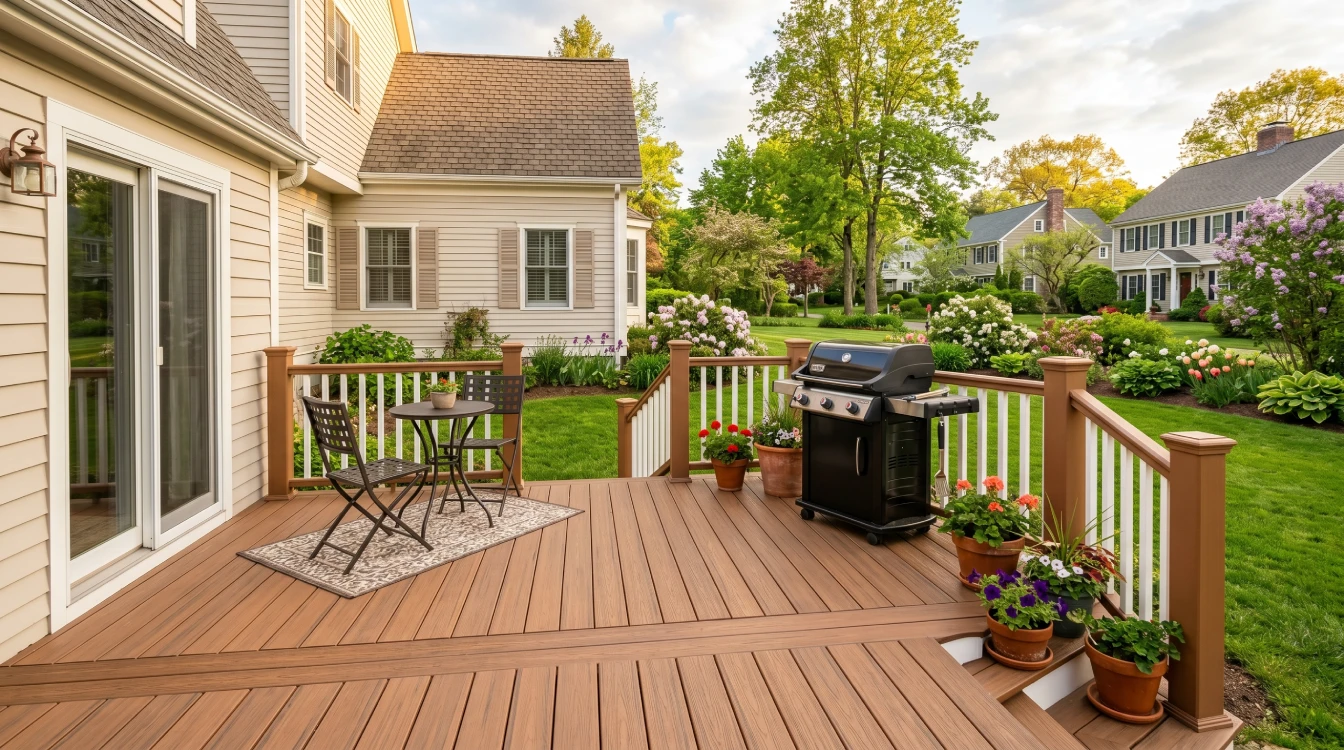
A small, ground-level platform on stable soil can be a reasonable DIY project. A full or elevated composite deck in Massachusetts is best left to professionals, and the reasons are specific to our climate and code. The common DIY failures are footings set above the frost line (which heave after one winter), an improperly flashed ledger (which rots the house framing), incorrect joist spacing for composite, and skipped permits. Composite systems are also less forgiving than wood about gapping and fastener spacing, and manufacturer warranties often depend on correct installation. A failed deck costs far more to fix than to build right the first time.
A professional crew brings frost-depth footing knowledge, snow-load framing, proper ledger flashing, hidden-fastener expertise, permit handling, and the ability to integrate the deck with railings, lighting, and the rest of your yard.
Frequently Asked Questions
How much does a composite deck cost in Massachusetts in 2026? A composite deck in Massachusetts costs $40 to $80 per square foot installed in 2026. A typical 300–400 square foot Trex or TimberTech deck runs roughly $15,000 to $32,000, including framing and railings. Premium cellular PVC lines like TimberTech AZEK reach $60 to $100+ per square foot.
How much does a Trex deck cost? Installed Trex decks in Massachusetts typically run $40 to $80 per square foot, depending on the product line. Entry-level Trex Enhance is the most affordable, Trex Select is mid-tier, and Trex Transcend is the premium line. A standard 16×20 (320 sq ft) Trex deck commonly lands between $13,500 and $26,000.
Is Trex or TimberTech cheaper? Trex is generally a bit more affordable than TimberTech, especially at the entry tier. TimberTech AZEK is capped cellular PVC with no wood fiber, so it resists moisture best and carries the strongest warranties, but it costs the most upfront. Both are priced above pressure-treated wood and cedar.
Is a composite deck cheaper than a wood deck? Not at installation — composite costs roughly 25–30% more than wood upfront. But composite needs no staining or sealing and lasts 25–50 years versus about 15 for wood, so over a 20-year period its total cost of ownership often matches or beats wood, especially in New England’s freeze-thaw climate.
How deep do deck footings need to be in Massachusetts? Because Massachusetts has a frost line of about 48 inches, concrete deck footings must extend below the frost line — generally around 48 inches deep — to prevent frost heave from lifting and shifting the deck. Footings set too shallow are the most common reason decks heave and fail after a winter or two.
Do I need a permit to build a deck in Massachusetts? Usually, yes. A building permit is generally required for attached decks and decks more than about 30 inches above grade, with inspections of the footings and framing. Requirements vary by municipality, and a professional builder handles permits and code compliance for you.
How long does a composite deck last in New England? Composite decking lasts 25 to 50 years depending on the brand and tier, with warranties to match — far longer than wood’s roughly 15-year lifespan. Capped composites and cellular PVC resist the rot, mold, and moisture damage that New England’s wet, snowy winters cause.
Does a composite deck add value to my home? Yes. A composite deck expands usable living space and appeals to buyers who value low-maintenance outdoor living, a strong selling point in Massachusetts. Decks generally recoup a solid share of their cost at resale, and composite’s no-staining, long-lifespan profile is especially attractive.
How much maintenance does a composite deck need? Very little. Composite never needs staining, sealing, or sanding — just a wash with soap and water once or twice a year, costing little to nothing. That’s a major advantage over wood, which needs staining every 2–3 years at $2–$4 per square foot.
Why Choose The Pros, Inc. for Your Massachusetts Deck
With 20+ years of experience, The Pros, Inc. designs and builds composite, Trex, TimberTech, wood, and IPE decks with custom railings across the North Shore, Essex County, and Middlesex County. We engineer every deck for New England conditions — concrete footings below the frost line, snow-rated framing, properly flashed ledgers, and correct gapping — so your deck stays solid and beautiful for decades, not seasons.
As a full-service outdoor living company, we handle everything from 2D/3D design and permitting to framing, decking, railings, stairs, lighting, pool decks, and surrounding hardscaping — all from one trusted local team. The result is a cohesive, durable, code-compliant backyard built for the way you live outdoors.
Want a real, itemized price for your deck? Get a free, no-obligation consultation and quote.
📞 Call (857) 574-4380 or request your deck design consultation online.
The Pros, Inc. Deck Building Company MA