Pricing a new fence in Massachusetts and trying to figure out which material fits your budget? The four most common choices — vinyl, wood, aluminum, and chain-link — span a wide price range, and the right pick depends on whether you care most about privacy, low maintenance, curb appeal, or cost. On top of that, fence pricing here is shaped by a New England reality most online estimates ignore: our deep frost line means fence posts have to be set far deeper than in warmer states, or they heave and lean within a few winters. This 2026 guide breaks down fence installation costs in Massachusetts by material, per linear foot, and includes the gates, permits, and site factors that land on a real quote.
In 2026, fence installation in Massachusetts costs $15 to $60 per linear foot installed, depending on the material. Chain-link is cheapest at $15–$40/ft, wood runs $25–$50/ft, vinyl runs $30–$55/ft, and aluminum runs $30–$60/ft. A typical 150-foot backyard fence costs roughly $2,500–$10,000 installed, before gates and old-fence removal.
Key Takeaways
- Cheapest to most expensive: chain-link, then wood, then vinyl, then aluminum.
- Best value over 20 years: vinyl and aluminum — higher upfront, near-zero maintenance, 25–30+ year lifespans.
- Biggest cost factors: material, fence height, length, gates, and your site (rocky soil, slopes).
- The New England factor: Massachusetts has a ~48-inch frost line, so posts must be set in concrete footings below it to prevent frost heave — the #1 reason a fence here costs more and must be installed correctly.
- Labor is about half the cost, and Boston-area labor runs 15–25% above the national average.
How Much Does Fence Installation Cost in Massachusetts? (2026)
A professionally installed fence in Massachusetts costs $15 to $60 per linear foot in 2026. The material you choose is the single biggest factor, followed by fence height, total length, the number of gates, and your site conditions. Here’s how the four main materials compare per linear foot and for a typical 150-foot backyard.
| Material | Cost per Linear Foot (Installed) | Total for 150 ft | Lifespan |
| Chain-Link | $15 – $40 | $2,500 – $6,000 | 15 – 20+ yrs |
| Wood | $25 – $50 | $3,800 – $9,000 | 15 – 20 yrs |
| Vinyl | $30 – $55 | $4,500 – $10,000 | 25 – 30 yrs |
| Aluminum | $30 – $60 | $5,000 – $9,000 | 30+ yrs |
Most Massachusetts homeowners spend $3,500 to $12,000 on a typical fence project. Chain-link wins on upfront price, while vinyl and aluminum cost more now but pay you back with decades of near-zero maintenance.
Remember that labor makes up roughly half of a fence project, and because Boston-area and North Shore labor rates run higher than the national average, expect Massachusetts pricing to sit toward the upper end of national ranges.
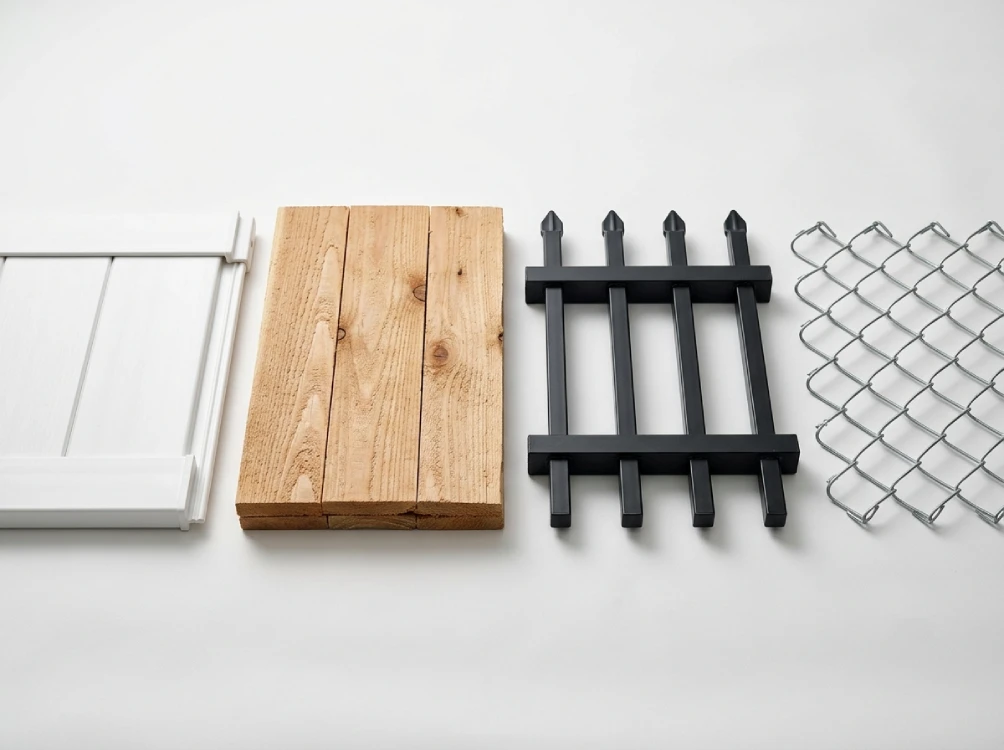
Fence Cost by Material: Vinyl vs Wood vs Aluminum vs Chain-Link
Here’s a closer look at each material — what it costs, how long it lasts, the upkeep involved, and who it’s best for in a New England climate.
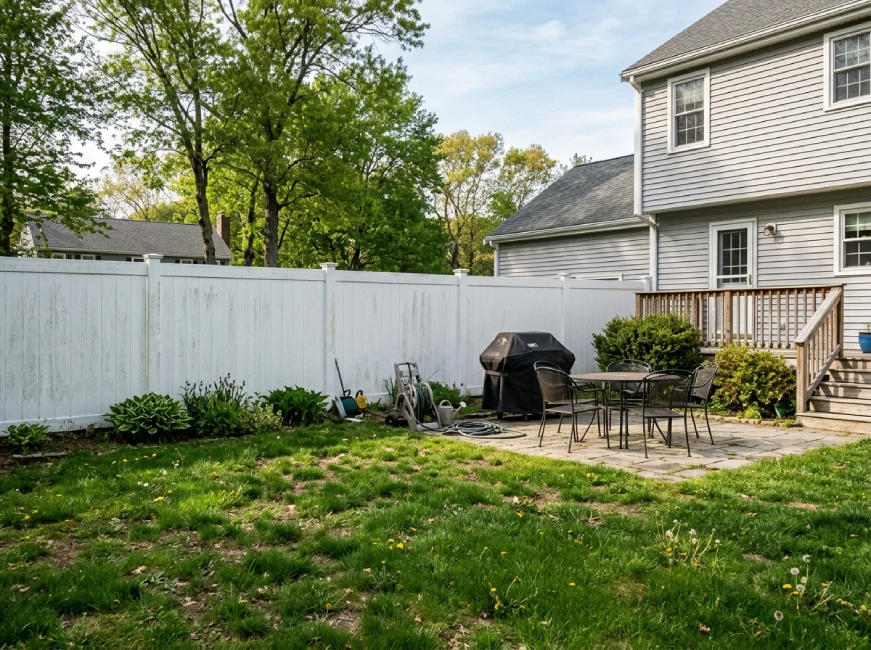
Vinyl Fence Cost in Massachusetts
Price range: $30 – $55 per linear foot installed
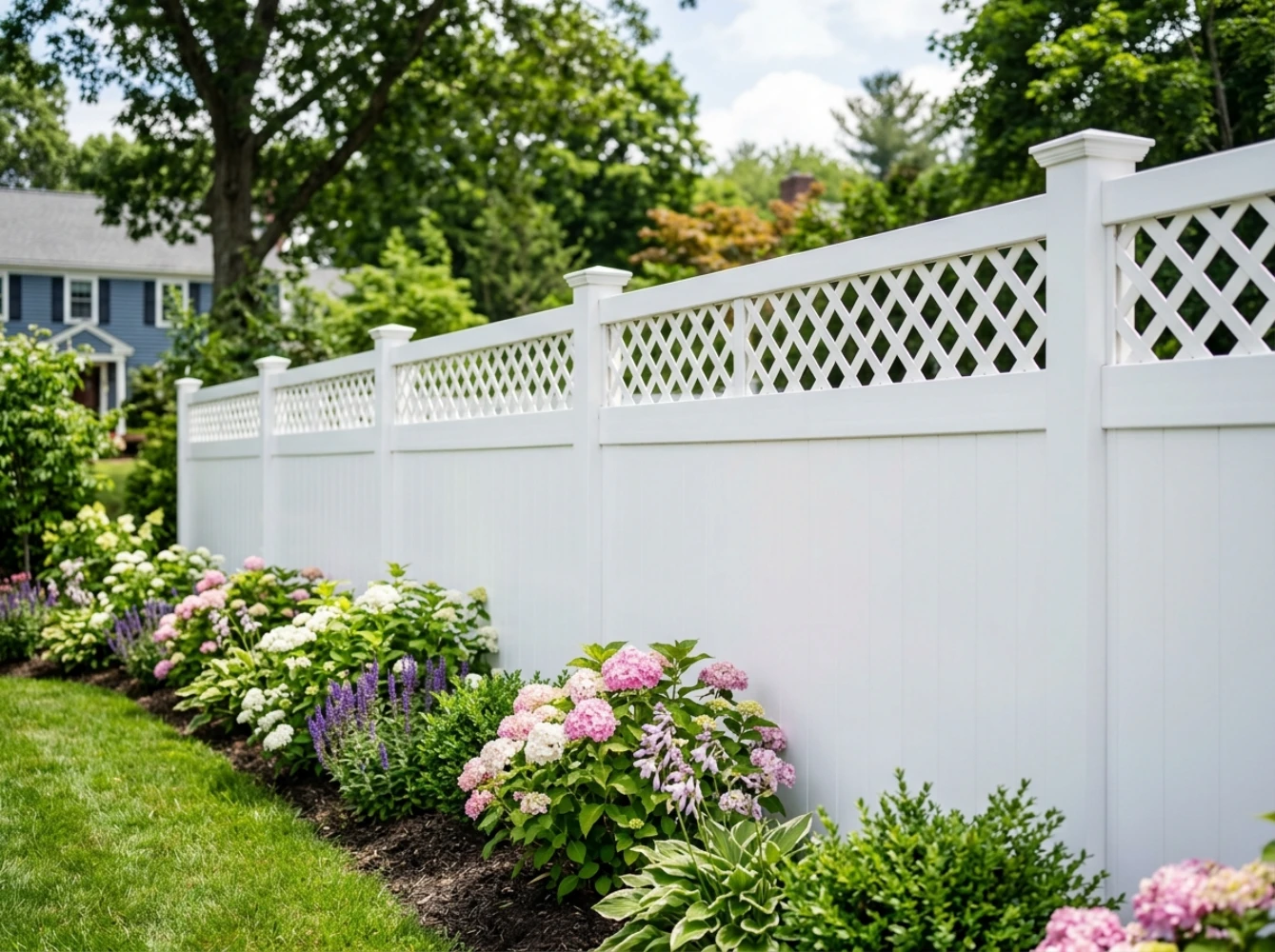
Vinyl fencing has become one of the most popular choices in Massachusetts because it delivers privacy with almost no maintenance. It never needs painting or staining, won’t rot or warp, and a quality vinyl fence lasts 25–30 years or more. It comes in privacy, semi-privacy, picket, and lattice-top styles.
- Pros: Very low maintenance, long lifespan, excellent privacy, won’t rot or rust.
- Cons: Higher upfront cost than wood; lower-grade vinyl can become brittle and crack in extreme New England cold, so material quality matters.
- Best for: Homeowners who want privacy and the lowest long-term upkeep.
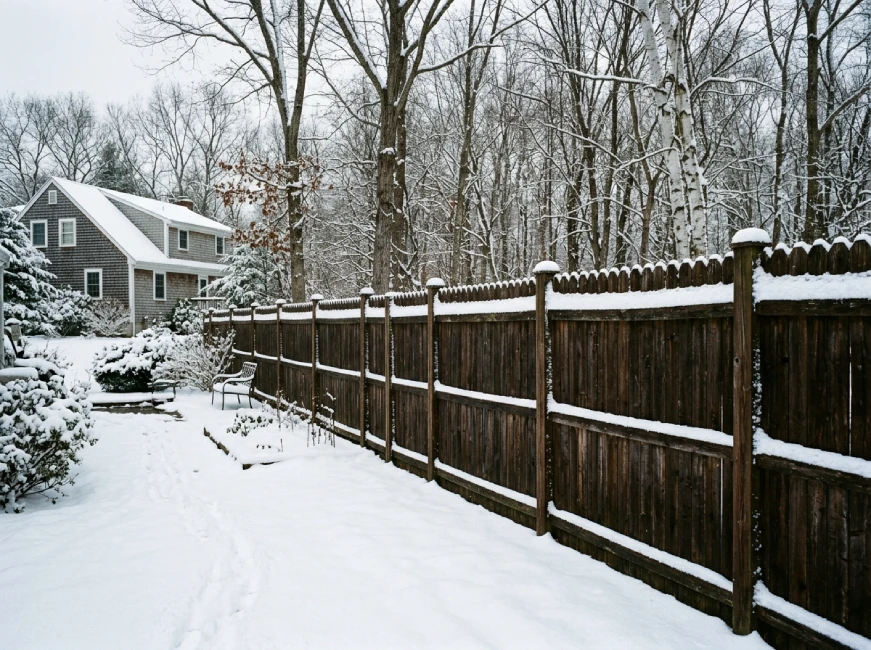
Wood Fence Cost in Massachusetts
Price range: $25 – $50 per linear foot installed
Wood fencing offers timeless, natural curb appeal and excellent privacy at a moderate upfront cost. Pressure-treated pine is the most affordable option, while cedar costs more but resists rot and insects far better — an advantage in our damp climate. Wood is also the easiest material to customize on site.
- Pros: Classic look, strong privacy, lower upfront cost, easy to customize and repair.
- Cons: Highest maintenance — needs staining or sealing every 2–3 years ($2–$4 per linear foot) to fight New England moisture, snow, and rot. Shorter lifespan (15–20 years).
- Best for: Homeowners who want a natural look and privacy at a mid-range price and don’t mind upkeep.
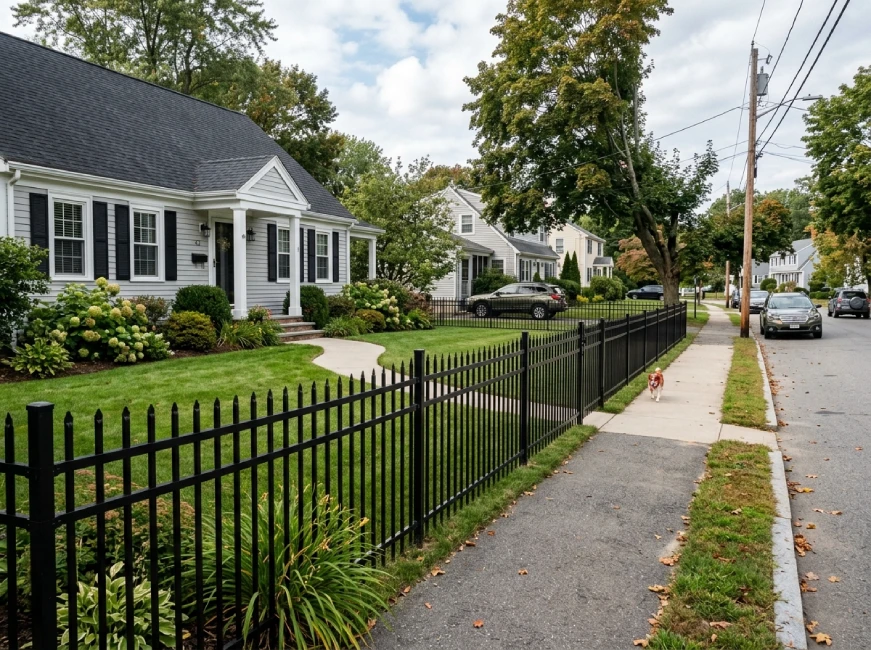
Aluminum Fence Cost in Massachusetts
Price range: $30 – $60 per linear foot installed
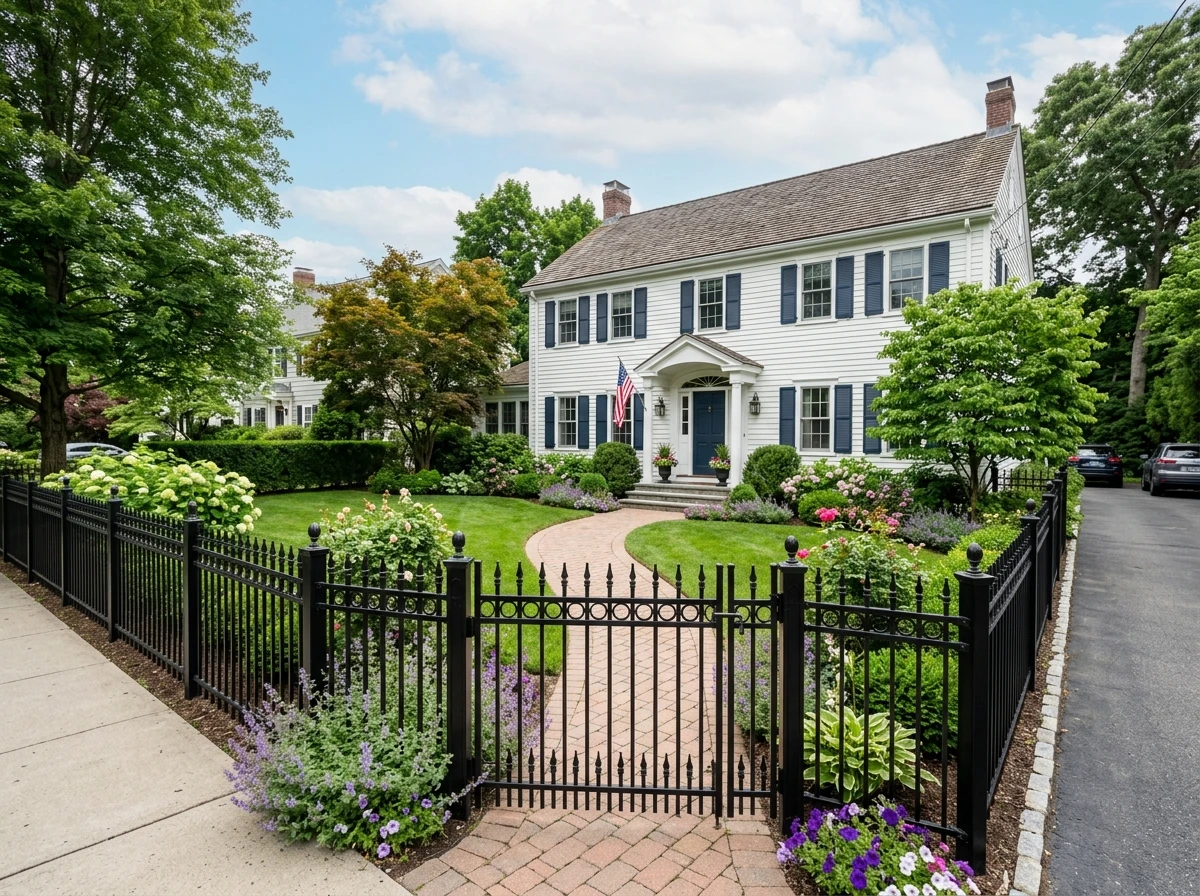
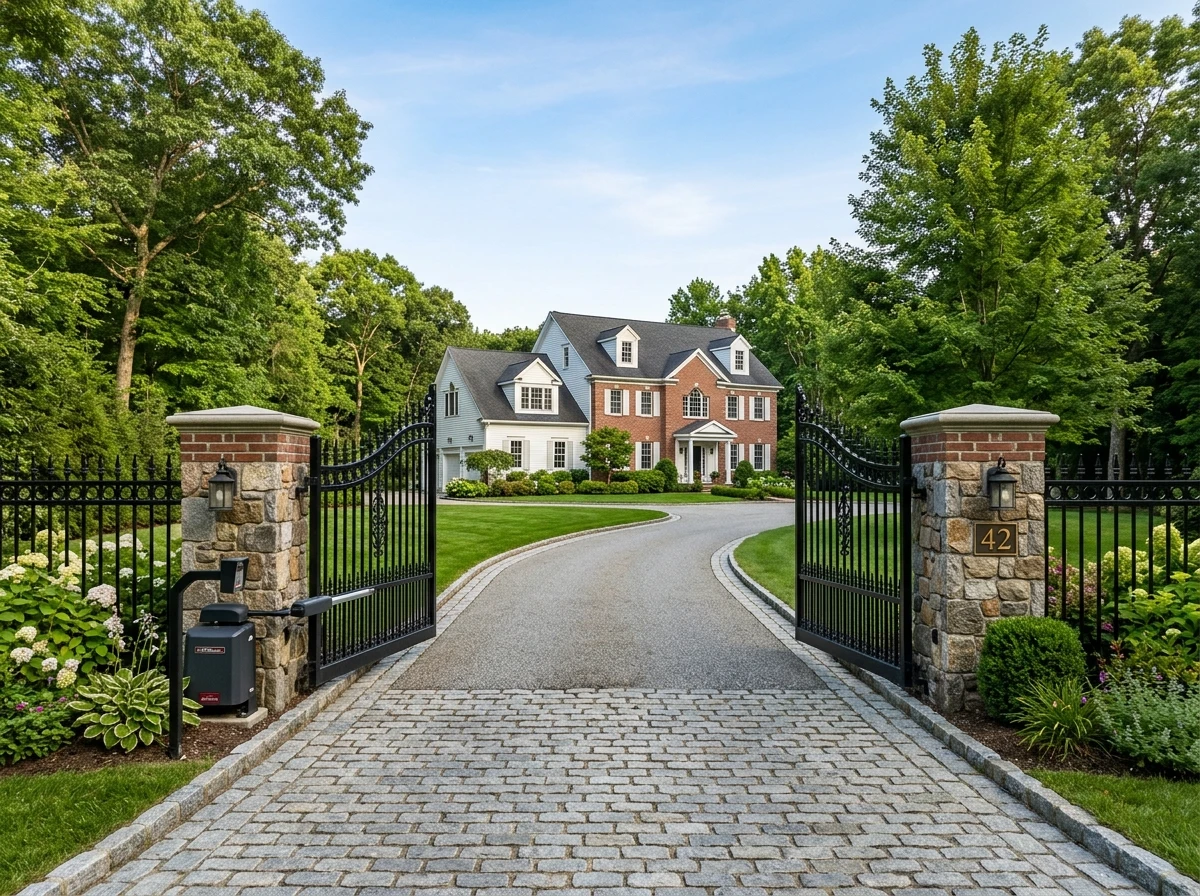
Aluminum fencing gives you the elegant look of wrought iron without the rust, and it’s essentially maintenance-free. It won’t corrode — making it a smart choice for coastal North Shore properties with salt air — and it handles freeze-thaw cycles well. It’s also a top pick for pool enclosures and sloped yards, since the panels can rack to follow grade.
- Pros: Maintenance-free, rust-proof, 30+ year lifespan, great curb appeal, ideal for pools and slopes.
- Cons: Higher upfront cost; provides security and definition but little privacy.
- Best for: Curb appeal, pool-code enclosures, coastal properties, and uneven terrain.
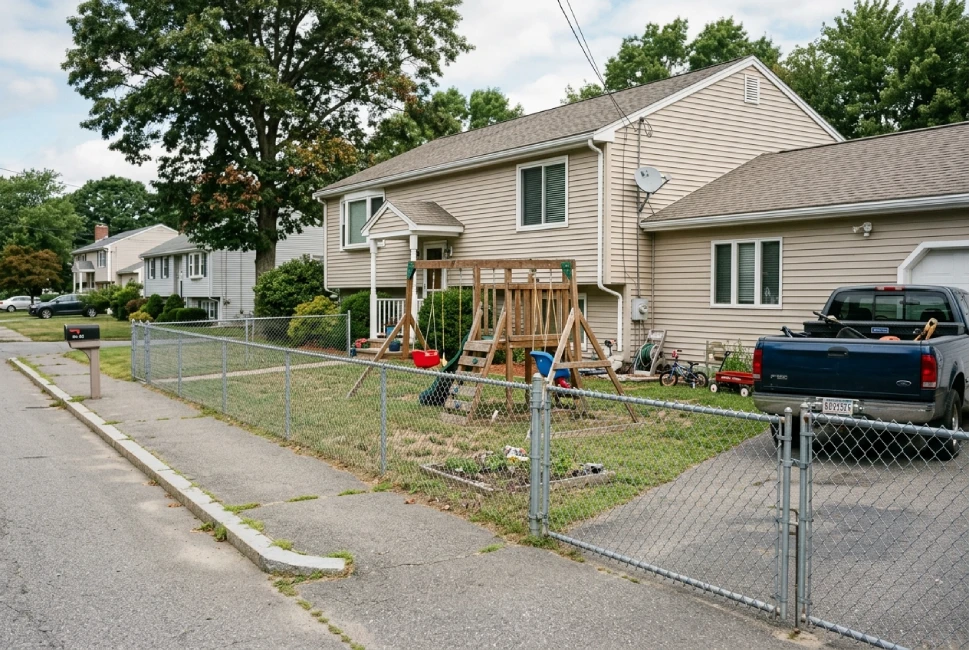
Chain-Link Fence Cost in Massachusetts
Price range: $15 – $40 per linear foot installed
Chain-link fencing is the most affordable, practical way to secure a yard, contain pets, or enclose a large area. Galvanized is the cheapest; black vinyl-coated chain-link costs more but looks far better and resists rust. Privacy slats can be added for $3–$10 per linear foot.
- Pros: Lowest cost, durable, low maintenance, fast to install, great for security and pets.
- Cons: Minimal privacy and the least curb appeal of the four (vinyl-coated and slats help).
- Best for: Budget projects, large yards, pet containment, and security where privacy isn’t the priority.
Professional Fence Builder MA - THE PROS, INC
Book a Project Consultation With Us
Thank You!
Your request has been received. Our team will contact you within 24 hours.
Quick Comparison: Which Fence Material Wins?
| Factor | Chain-Link | Wood | Vinyl | Aluminum |
| Upfront cost | $ (lowest) | $$ | $$$ | $$$ |
| Privacy | Low | High | High | Low |
| Maintenance | Low | High | Very low | Very low |
| Lifespan | 15–20+ yrs | 15–20 yrs | 25–30 yrs | 30+ yrs |
| Curb appeal | Low | High | High | High |
| Best for | Budget, security, pets | Privacy, natural look | Privacy, low upkeep | Curb appeal, pools, slopes |
The 20-year math: a wood fence is cheaper today, but staining and board replacement add $500–$1,500 per decade. Vinyl and aluminum cost more upfront and then need almost nothing — which is why they often come out ahead over their lifespan.
Covered Structures: Extending Your Season in New England
Because Massachusetts has a shorter outdoor season, many homeowners invest in a structure that protects the kitchen and stretches its usability. This is one of the biggest optional cost drivers — and one of the most valuable.
| Structure / Feature | Typical Cost (MA, 2026) |
| Pergola | $4,000 – $12,000+ |
| Pavilion / roofed structure | $10,000 – $40,000+ |
| Vent hood (required under a roof) | $2,000 – $6,000 |
| Built-in outdoor fireplace | $5,000 – $20,000 |
| Fire pit | $1,500 – $6,000 |
| Patio expansion | $1,500 – $5,000+ |
| Infrared / patio heaters | $200 – $2,000 |
| Bar seating area | $2,000 – $10,000+ |
A gazebo or pavilion with wind protection and heating elements can push your hosting season well into the colder months. One important code note: if you build a grill under a roof or solid structure, you’ll need a vent hood to safely exhaust smoke and heat — that’s a required line item, not an optional upgrade.
Additional Costs to Budget For
Beyond the fence itself, these are the common extras that affect a Massachusetts fence budget in 2026.
| Item | Typical Cost (MA, 2026) |
| Walk gate | $175 – $450 |
| Single / double drive gate | $400 – $3,000+ |
| Automated gate opener | $500 – $1,800+ |
| Old fence removal & haul-away | $3 – $7 / linear ft |
| Pool-code compliance (height + self-closing gate) | +$5 – $10 / linear ft |
| Building permit | $50 – $400+ (varies by town) |
| Rocky/ledge soil or sloped terrain | Surcharge varies |
| Privacy slats (chain-link) | $3 – $10 / linear ft |
If you have a larger property or want a rustic look, farm and ranch-rail fencing is another option, and businesses can explore commercial fencing for security and access control.
Why Fence Installation Costs More in Massachusetts (The New England Factor)
If a Massachusetts quote runs higher than the national averages you’ve seen, this is why. Building a fence that survives New England winters takes deeper foundations, harder digging, and weather-smart materials than a mild-climate install. Cutting corners here doesn’t save money — it produces a fence that leans, heaves, and fails within a few seasons.
The Frost Line Is the #1 Factor
Massachusetts has a frost line of roughly 48 inches (4 feet). When the ground freezes, it expands — and any fence post that isn’t set deep enough gets pushed upward by frost heave, causing the fence to lean, gates to misalign, and posts to pop out over a few winters. To prevent this, posts must be set in concrete footings deep enough to reach below the frost line. This single requirement means more digging, more concrete, and more labor than a fence in a warm state — and it’s the clearest reason to hire an experienced local installer who builds for our climate.
Rocky Soil, Ledge, and Clay
Much of the North Shore and Greater Boston sits on rocky ground or ledge, while inland areas often have dense clay. Hitting rock or ledge while digging deep post holes can slow the job and add cost, and clay’s poor drainage makes correct post-setting even more important.
Coastal Salt Air and Freeze-Thaw
On the North Shore and near the coast, salt air corrodes steel and weathers wood faster. Aluminum and vinyl resist corrosion far better, which is why they’re popular choices closer to the water. Repeated freeze-thaw cycles also test every material — and lower-grade vinyl can crack in extreme cold, so material quality matters.
A Shorter Installation Season
Because the ground freezes in winter, fences can’t be installed year-round here. That compresses the building season and makes early booking smart — schedule your design and permitting in the off-season so you’re first in line when the ground thaws.
In Massachusetts, the difference between a fence that lasts 20+ years and one that fails fast comes down to post depth and proper installation. This is the strongest reason to choose a professional over the lowest bid.
Fence Permits & Property Line Rules in Massachusetts
Most fence projects in Massachusetts involve permits and local rules. A reputable installer handles this for you, but here’s what’s typically involved:
- Permits: Many municipalities require a permit, especially for fences over 6 feet tall or near property lines. Costs and rules vary by town, so confirm with your local building department.
- Height limits: Towns often cap front-yard fences (commonly around 4 feet) and backyard fences (commonly around 6 feet); taller fences may need special approval.
- Pool-barrier code: Any pool deeper than 24 inches requires a code-compliant barrier — generally at least 48 inches tall with a self-closing, self-latching gate. A pool fence must meet these safety requirements.
- Property lines: Confirm your boundary before installing; building over a line can mean tearing the fence out. A survey avoids costly disputes.
- Call before you dig: Massachusetts law requires marking underground utilities (Dig Safe, 811) before digging post holes — your contractor arranges this.
Which Fence Material Is Best for Massachusetts?
The “best” fence depends on your goal:
- Maximum privacy: vinyl or wood privacy fencing.
- Lowest upkeep: vinyl or aluminum — clean once in a while and you’re done.
- Tightest budget: chain-link, especially galvanized.
- Curb appeal and a modern look: aluminum, horizontal-style fencing, or decorative fencing.
- Pool enclosure: pool-code aluminum or vinyl.
- Coastal / North Shore properties: aluminum or vinyl, which shrug off salt air.
- Decorative accents: pair your fence with arbors at entries and gates.
Do Fences Add Home Value in Massachusetts?
A quality fence can boost curb appeal, privacy, and security — all desirable to buyers. The return varies by material: an attractive wood, vinyl, or aluminum fence typically adds more resale value than basic chain-link, which is valued more for function than looks (upgrading to black vinyl-coated chain-link or adding slats improves its appeal). The strongest returns come from quality installation and a fence that complements the home and landscaping. Because a fence is a meaningful investment, many homeowners use flexible financing to spread the cost into monthly payments.
Ongoing Maintenance Costs by Material
| Material | Upkeep | Typical Cost |
| Wood | Stain/seal every 2–3 years | $2–$4 / linear ft ($300–$600 per 150 ft) |
| Vinyl | Occasional wash with soap and water | $50–$100 / year |
| Aluminum | Occasional wash | $50–$100 / year |
| Chain-Link | Minimal; recoat only if coating fails (10–15 yrs) | Low |
Maintenance is where the long-term cost difference shows up. Wood demands the most attention to survive New England weather, while vinyl, aluminum, and chain-link are largely set-and-forget.
How to Save Money on Your Massachusetts Fence
- Match the material to the goal. Don’t pay for aluminum curb appeal on a back property line where chain-link would do — or skimp on a front-yard fence that defines your home.
- Choose galvanized or vinyl-coated chain-link for large runs where privacy isn’t needed.
- Book in the off-season. Designing and permitting in fall or winter gets you first in line — and often better pricing — before the spring rush.
- Split the cost with a neighbor for the section of fence between your properties.
- DIY the easy extras like old-fence removal or adding privacy slats.
- Get 3+ itemized quotes — Massachusetts homeowners commonly save 15–35% by comparing detailed bids.
- Run the 20-year math. A pricier vinyl or aluminum fence can be cheaper than wood once you factor in staining and repairs.
DIY vs. Professional Fence Installation
A straight run of chain-link or wood picket on flat ground can be a reasonable DIY project. For most fences in Massachusetts, professional installation is the smarter call — and the reason is our frost line. The most common DIY failures are posts set too shallow (which heave and lean after one winter), incorrect post spacing, and skipped permits. Vinyl and aluminum systems are also unforgiving about post-spacing tolerances, and manufacturer warranties often require professional installation. A failed fence costs far more to redo than to build right the first time.
A professional crew brings the right equipment for deep footings and rocky soil, knowledge of local frost depth and code, permit handling, Dig Safe coordination, and the ability to keep gates and panels aligned for decades.
Frequently Asked Questions
How much does fence installation cost in Massachusetts in 2026? Fence installation in Massachusetts costs $15 to $60 per linear foot installed in 2026, depending on material. Chain-link runs $15–$40, wood $25–$50, vinyl $30–$55, and aluminum $30–$60 per linear foot. A typical 150-foot backyard fence costs roughly $2,500 to $10,000 before gates and removal.
What is the cheapest fence to install in Massachusetts? Chain-link is the most affordable, starting around $15 per linear foot for galvanized in Massachusetts. For an affordable privacy option, pressure-treated wood is the next step up. Vinyl and aluminum cost more upfront but last longer with less maintenance.
What is the cheapest type of fence that offers privacy? A pressure-treated wood privacy fence is usually the lowest-cost way to get full privacy in Massachusetts, starting around $25 per linear foot installed. Vinyl privacy fencing costs more upfront but lasts longer and needs almost no maintenance.
How deep do fence posts need to be in Massachusetts? Because Massachusetts has a frost line of about 48 inches, fence posts should be set in concrete footings deep enough to reach below the frost line — preventing frost heave from pushing the posts up and out. Shallow posts are the most common reason fences lean and fail after a winter or two.
Do I need a permit to install a fence in Massachusetts? Often, yes. Many municipalities require a permit, especially for fences over 6 feet or near property lines, and rules vary by town. You should also confirm your property line and have underground utilities marked through Dig Safe (811). A professional installer handles permits and utility marking for you.
Which fence material lasts the lngest in New England? Aluminum lasts the longest at 30+ years, followed by vinyl at 25–30 years. Both resist rot, rust, and freeze-thaw damage with minimal maintenance. Wood lasts 15–20 years with regular sealing, and quality galvanized or vinyl-coated chain-link can last 20+ years.
Is vinyl or wood fencing better for Massachusetts? Vinyl costs more upfront but needs no staining or sealing, resists New England moisture, and lasts 25–30 years. Wood is cheaper initially and offers a natural look but requires staining every 2–3 years and lasts 15–20 years. Vinyl usually wins on long-term cost; wood wins on upfront price and natural appearance.
What is the best fence for a pool in Massachusetts? Pool-code aluminum is a popular choice because it’s rust-proof, low-maintenance, and meets safety requirements. State code generally requires a barrier at least 48 inches tall with a self-closing, self-latching gate around any pool deeper than 24 inches.
When is the best time of year to install a fence in Massachusetts? Spring through fall is the main installation season, since the ground freezes in winter. Designing and permitting in the off-season helps you get scheduled early and often at better pricing before the spring rush.
Why Choose The Pros, Inc. for Your Massachusetts Fence
With 20+ years of experience, The Pros, Inc. is a trusted, fully licensed and insured fence company serving the North Shore, Essex County, and Middlesex County. We design, install, and repair the full range of fences — vinyl, wood, aluminum, chain-link, pool-code, decorative, horizontal, farm, and commercial fencing, plus arbors — all built for New England weather with frost-depth footings done right.
We handle everything from design and permitting to removal and installation, and we offer free estimates. Browse our fence installation projects to see our work.
Ready for a real number for your fence? Get a free, no-obligation estimate.
📞 Call (857) 574-4380 or request your free fence consultation online.
The Pros, Inc.Fence Installation Company MA