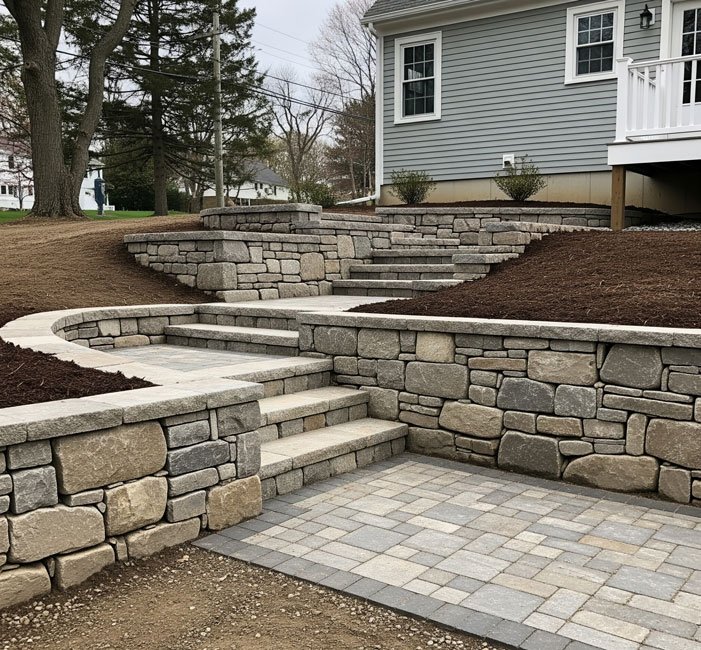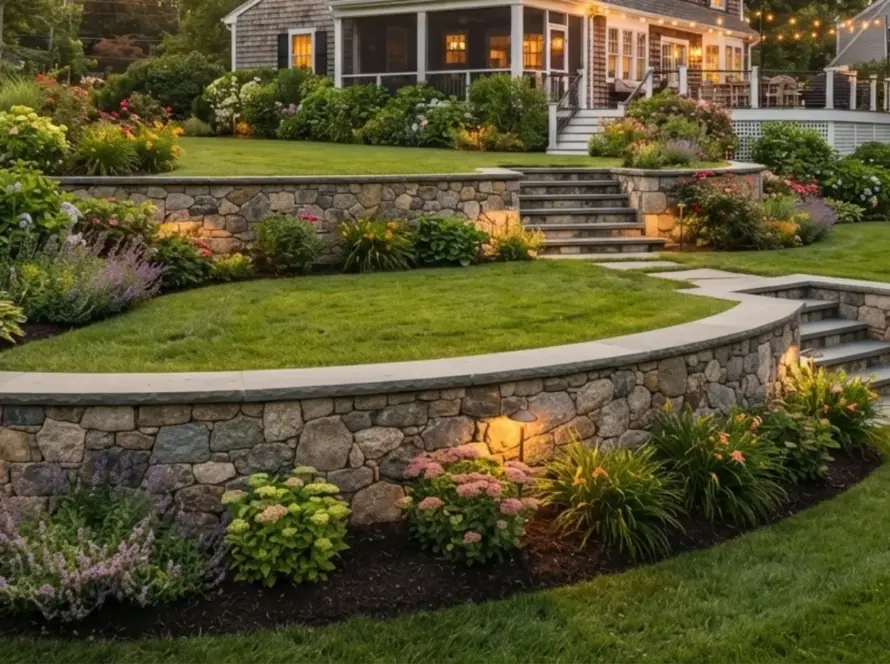
A retaining wall solves two problems at once. First, it holds back soil on sloped or uneven land. Second, it gives your yard a defined, polished look that adds real value to your home.
Whether you’re managing a steep backyard slope or simply adding a garden border, the right wall can completely transform your outdoor space. The good news is there are options for every budget — from affordable timber at around $10 per square foot to premium limestone at $65 per square foot.
In this guide, The Pros, Inc. team shares 17 proven retaining wall ideas from our work across Massachusetts. Each idea includes a cost range, the best use case, and a practical tip from our crew. By the end, you’ll know exactly which style suits your yard, your budget, and your vision.
Why Retaining Walls Matter More Than You Think
Retaining walls do far more than hold soil in place. They prevent erosion, create level areas for patios and gardens, reduce water runoff, and protect your foundation from shifting ground.
According to the National Association of Realtors, hardscape improvements — including retaining walls — can return up to 80% of their cost in home resale value. That makes a well-designed retaining wall one of the smartest outdoor investments you can make.
However, not every wall type suits every yard. The best choice depends on your slope height, soil type, drainage needs, and design style. That’s why we’ve organised these 17 ideas from most budget-friendly to most premium. Therefore, you can easily find the right fit without reading the whole list.
#1 — Timber and Railroad Tie Retaining Wall
Best for: Garden beds, low walls under 3 feet, rustic yards Cost: $10–$20 per square foot installed
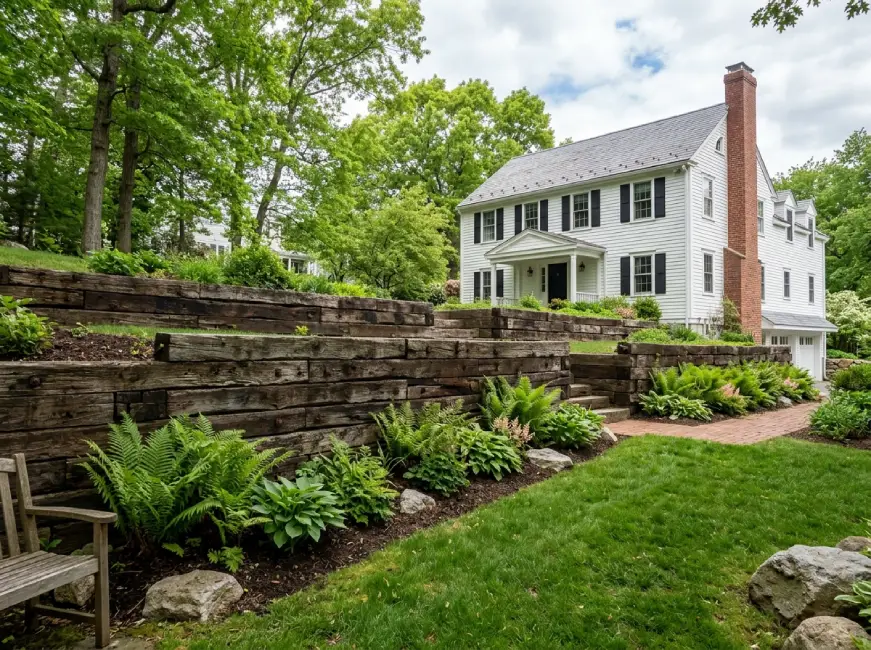
A timber retaining wall is the most affordable option available. It uses pressure-treated lumber or reclaimed railroad ties stacked horizontally to hold back soil. This style looks natural and warm, especially in cottage gardens or wooded properties.
Timber walls are also the most beginner-friendly DIY option. However, they have a shorter lifespan than stone or concrete — typically 15 to 20 years depending on the wood treatment and drainage.
Pro Tip from The Pros, Inc.: Always use lumber rated “UC4B” or higher for ground contact in New England. Our freeze-thaw cycles accelerate rot in lower-grade timber.
Book a Project Consultation With Us
Thank You!
Your request has been received. Our team will contact you within 24 hours.
#2 — Cinder Block Retaining Wall
Best for: Budget projects, walls that need height, industrial or modern style Cost: $15–$25 per square foot installed
Cinder block walls deliver serious structural strength at a low cost. They handle tall walls — over 4 feet — better than most other budget materials. Additionally, hollow cores can be filled with concrete and rebar for even greater stability.
On their own, cinder blocks look plain. However, you can dramatically upgrade their appearance by applying a thin stone veneer or stucco coat. This gives you structural strength at a low price with a premium finish.
Pro Tip from The Pros, Inc.: A stone veneer finish over cinder block adds roughly $8–$12 per square foot but transforms the look entirely. It’s one of the best value upgrades we offer.
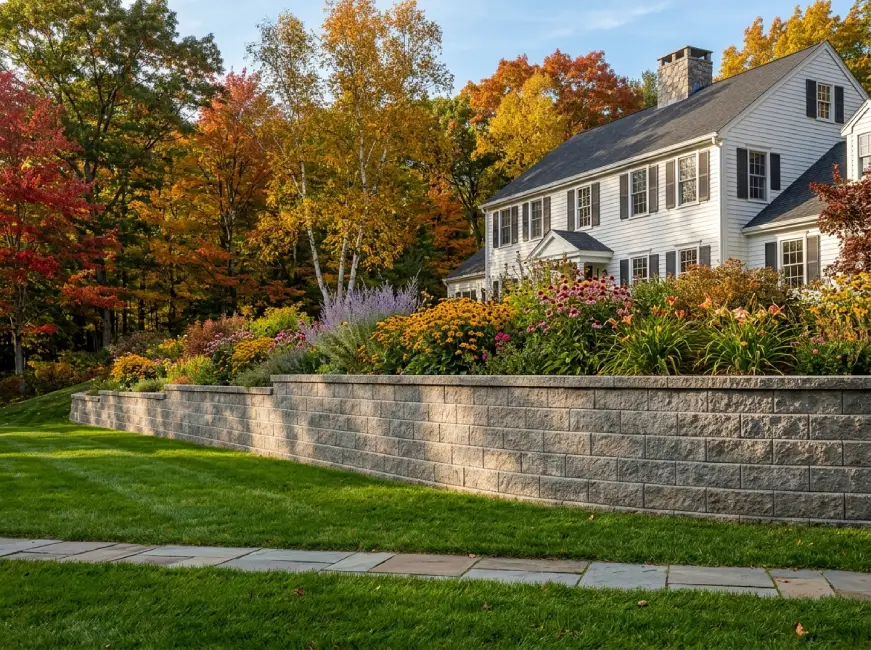
#3 — Precast Concrete Block Wall (Segmental)
Best for: Clean modern look, DIY installs, walls up to 4 feet Cost: $15–$30 per square foot installed
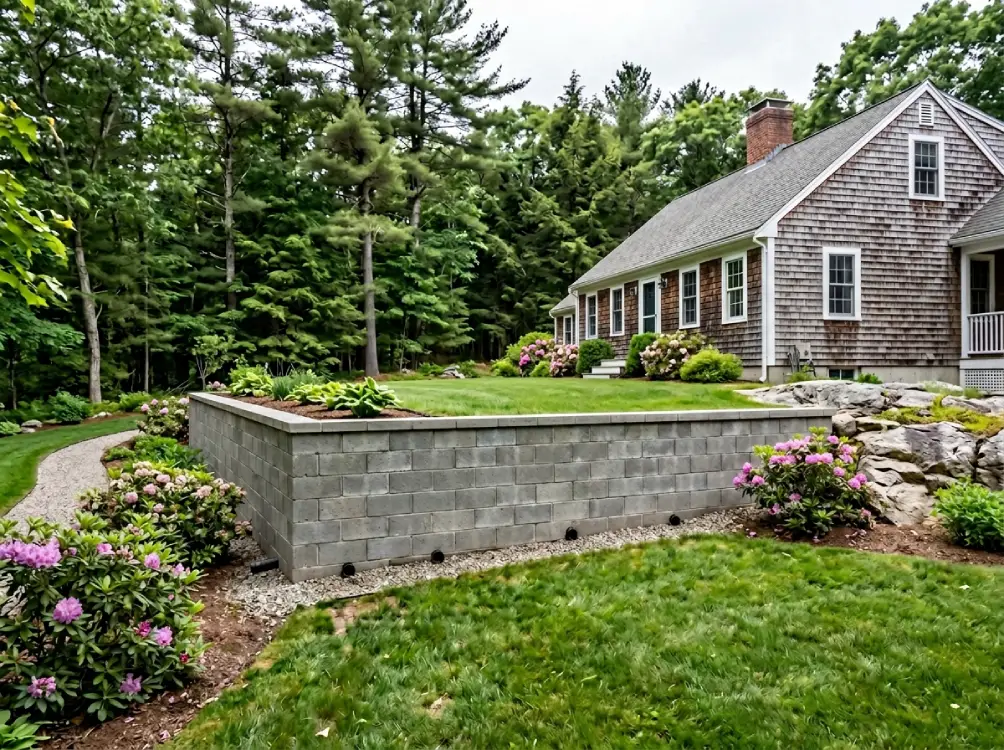
Precast concrete blocks — like Allan Block or Versa-Lok — are the most popular choice for residential retaining walls in the US. They interlock without mortar, which makes installation faster and more forgiving. Furthermore, they come in dozens of textures and colours to match almost any home style.
These blocks are excellent for DIY installs up to 3 feet. Above that height, a professional installer ensures proper geogrid placement and footing work.
Pro Tip from The Pros, Inc.: Always check your local building department before starting. In most Massachusetts towns, any wall over 4 feet requires a permit and an engineer’s stamp.
#4 — Poured Concrete Retaining Wall
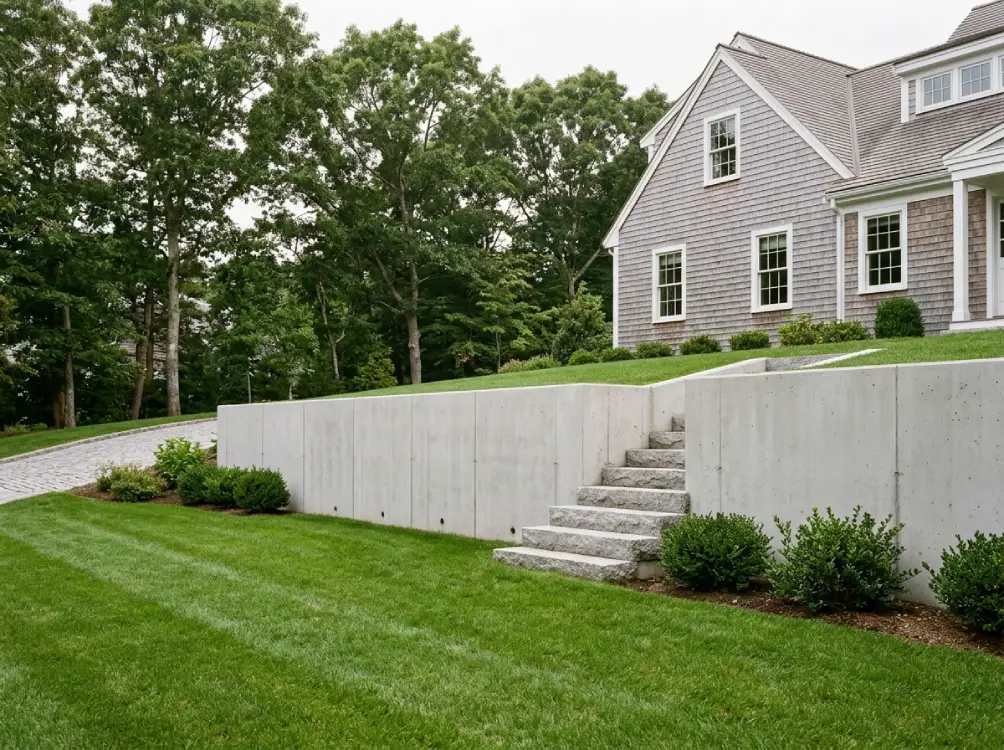
Best for: Heavy load-bearing, driveways, commercial sites Cost: $20–$40 per square foot installed
Poured concrete is the strongest retaining wall material available. It handles enormous soil pressure, heavy vehicle loads, and difficult grade changes with ease. Consequently, it’s the go-to choice for driveway retention walls and commercial properties.
The finish can be plain, stamped, or board-formed for a textured look. However, once poured, a concrete wall is permanent — plan your drainage and layout carefully before the pour.
Pro Tip from The Pros, Inc.: In Massachusetts, footings must sit below the 42-inch frost line. Cutting corners here causes wall failure within a few winters.
Hardscaping Company MA - The Pros, Inc.
Book a Project Consultation With Us
Thank You!
Your request has been received. Our team will contact you within 24 hours.
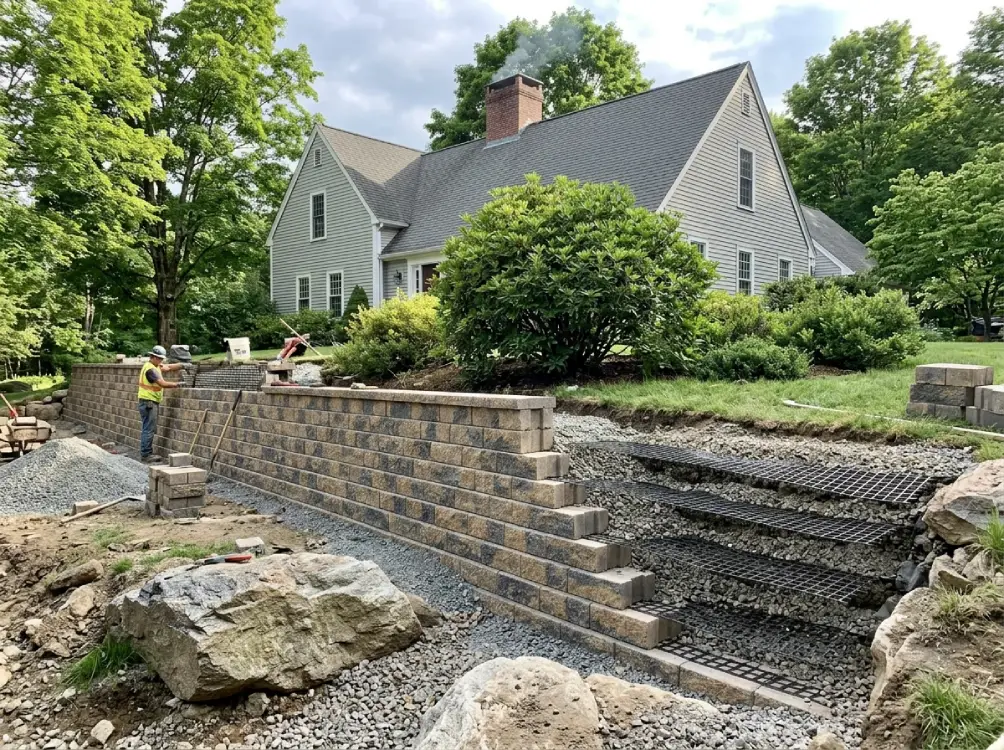
#5 — Segmental Retaining Wall with Geogrid Reinforcement
Best for: Walls above 4 feet, sloped driveways, structurally demanding sites Cost: $22–$38 per square foot installed
Geogrid reinforcement turns a standard block wall into a mechanically stabilised earth structure. Layers of polymer mesh are embedded into the soil behind the wall at regular intervals. This distributes the load over a much larger area and allows walls to safely reach 10 feet or more.
This system is the professional standard for tall residential and commercial walls. Moreover, it uses standard precast blocks on the face — so the finished look is clean and attractive.
Pro Tip from The Pros, Inc.: Geogrid spacing and length must follow the manufacturer’s engineering tables. Using the wrong layout voids your warranty and risks structural failure.
#6 — Curved Segmental Block Wall
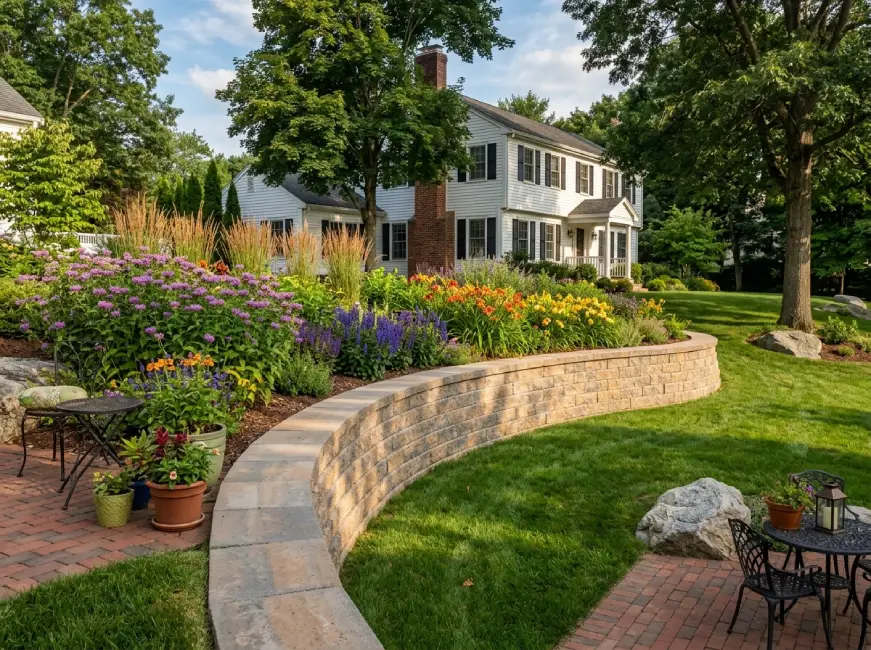
Best for: Circular patios, softening angular yards, organic landscape flow Cost: $20–$35 per square foot installed
A curved retaining wall is one of the most visually striking choices you can make. It softens the hard angles that dominate most suburban yards and creates a sense of natural flow. Curved walls work especially well around circular patios, trees, and garden focal points.
The key is using blocks designed specifically for curved installation. Standard square-cut blocks create awkward gaps when forced into curves. Therefore, ask your supplier for curved landscape blocks — they create a cleaner, tighter finish.
Pro Tip from The Pros, Inc.: Plan the curve first using a garden hose laid on the ground. Photograph it from above (a phone on a ladder works) before committing to the layout.
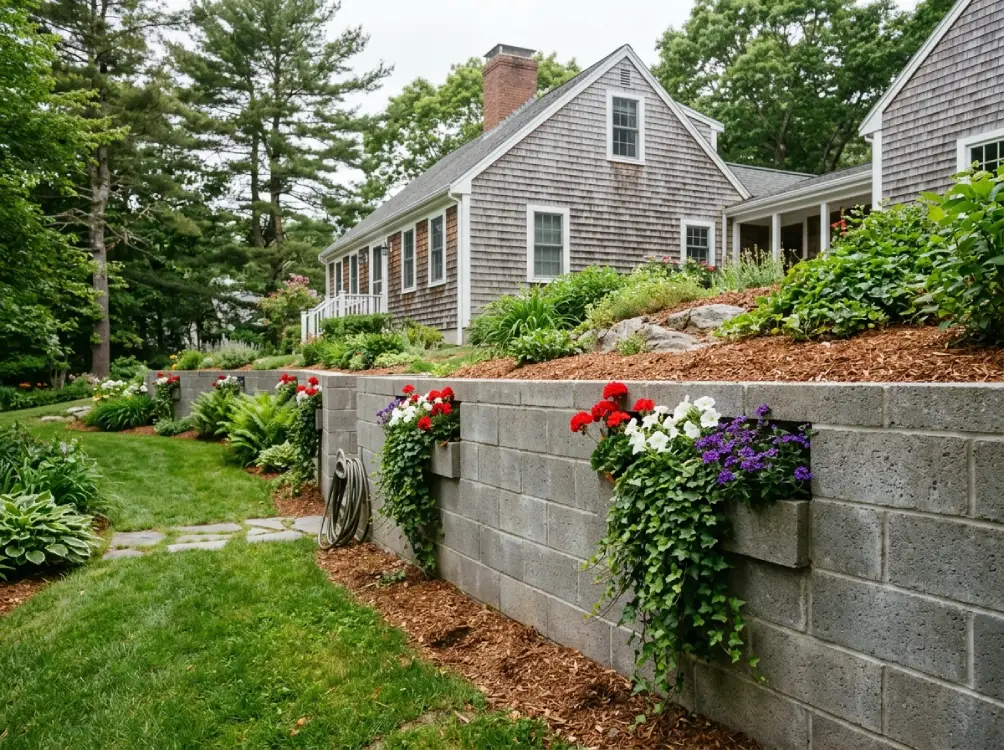
#7 — Cinder Block Wall with Built-In Planters
Best for: Garden lovers, functional decorative walls, small backyards Cost: $18–$28 per square foot installed
This idea turns a plain structural wall into a living garden feature. The hollow cores of cinder blocks are filled with potting soil and planted with trailing plants — succulents, herbs, strawberries, or ornamental grasses look fantastic.
This approach is especially popular in smaller yards where garden bed space is limited. Additionally, the planting softens the industrial look of the blocks and adds seasonal colour all year round.
Pro Tip from The Pros, Inc.: Use blocks with larger cores (6-inch or 8-inch) for planting. Standard 4-inch cores dry out too quickly for most plants.
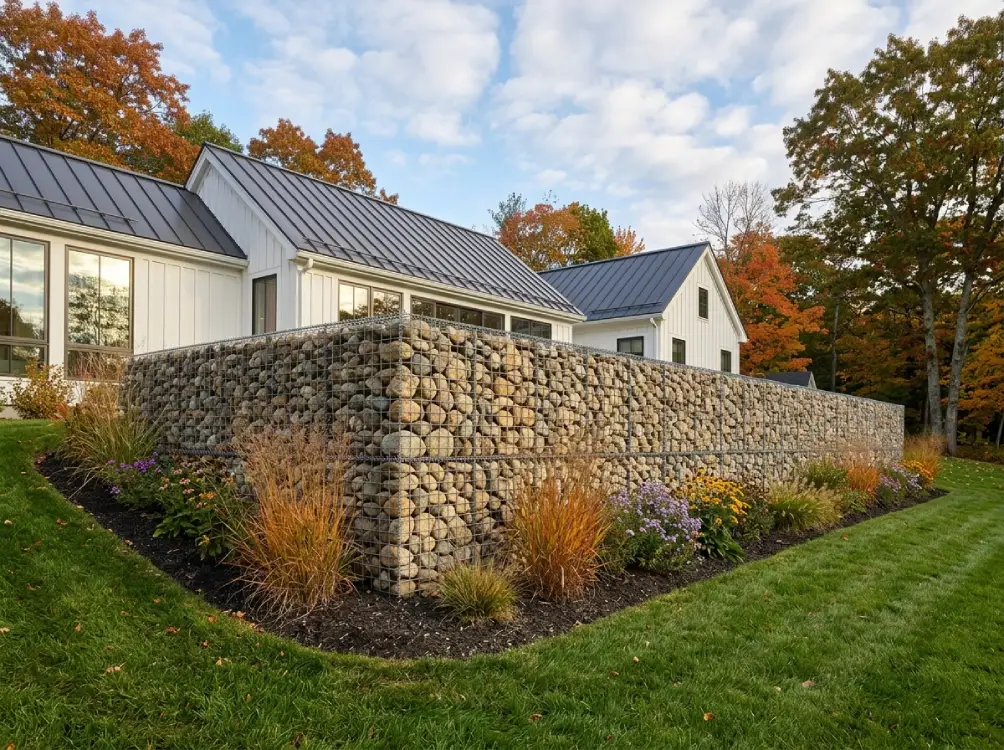
#8 — Gabion Cage Retaining Wall
Best for: Modern/industrial style, water-heavy slopes, stream banks Cost: $20–$35 per square foot installed
Gabion walls use wire mesh cages filled with rock, gravel, or stone. They are permeable by design — water flows through freely, which eliminates the hydrostatic pressure that destroys conventional walls. As a result, gabion walls are ideal for slopes with poor drainage or near water features.
The industrial-meets-natural aesthetic is having a major moment in landscape design. Mix rock sizes and colours inside the cages for a layered, textured look that ages beautifully.
Pro Tip from The Pros, Inc.: Use galvanised or PVC-coated wire mesh — bare steel rusts within a few years in New England’s wet climate.
Book a Project Consultation With Us
Thank You!
Your request has been received. Our team will contact you within 24 hours.
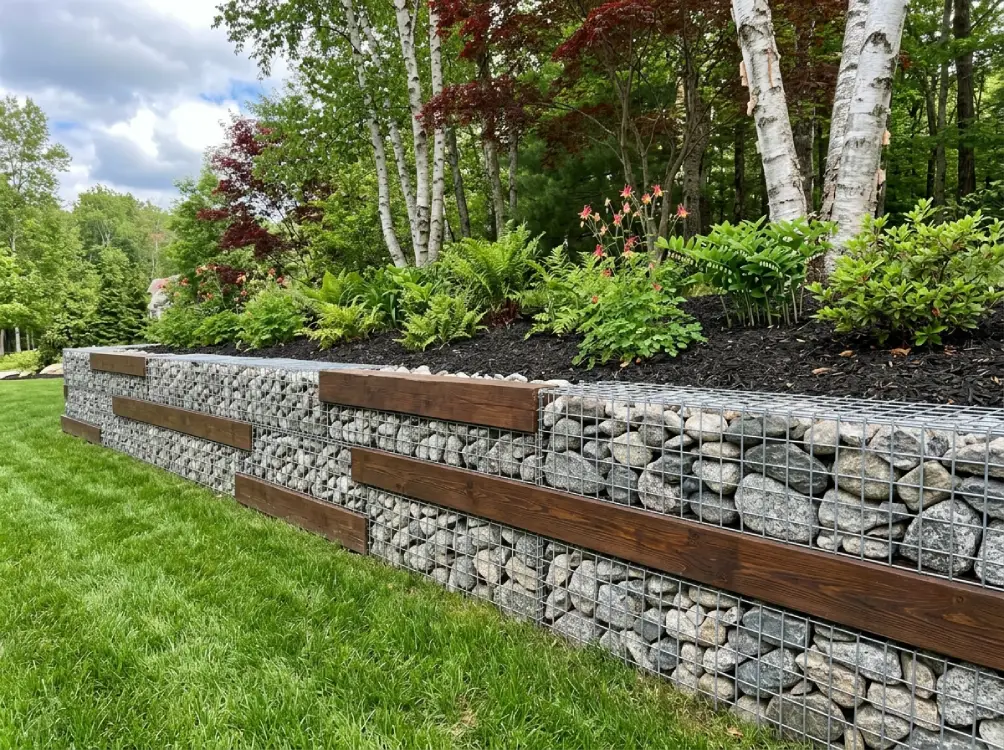
#9 — Gabion and Timber Hybrid Wall
Best for: Contemporary landscapes, multi-use walls, built-in seating Cost: $25–$45 per square foot installed
Combining gabion panels with timber posts creates a wall that is both structurally sound and visually layered. The timber sections break up the stone texture and add warmth. Furthermore, the flat-top timber sections work perfectly as built-in bench seating.
This design is one of our most-requested styles for outdoor entertainment areas. It solves the slope problem while adding functional seating without any extra cost — a genuinely clever two-in-one solution.
Pro Tip from The Pros, Inc.: Cap the timber sections with a 2-inch hardwood seat board — cedar or ipe both hold up well outdoors and feel comfortable to sit on.
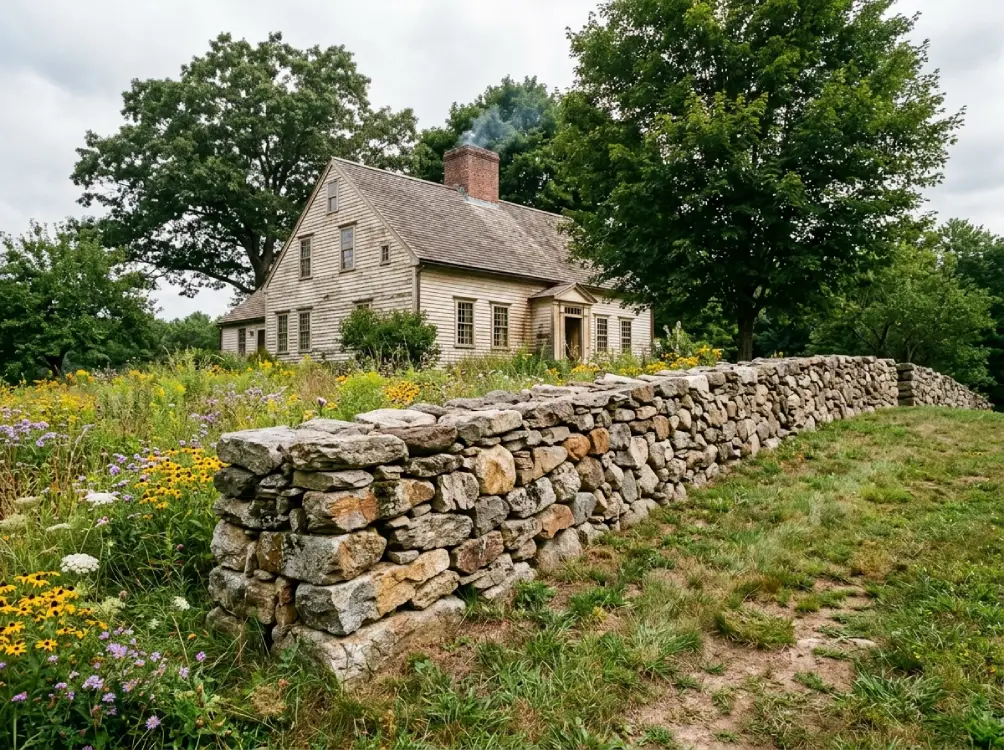
#10 — Fieldstone Dry-Stack Wall
Best for: Rural properties, New England farmhouse style, cottage gardens Cost: $25–$40 per square foot installed
A dry-stack fieldstone wall needs no mortar. Stones are fitted together by weight and friction alone. The result is a wall that looks like it’s been there for centuries — because in New England, many have.
Dry-stack walls also drain naturally, which makes them resistant to frost heave. However, they require skill to build well. Poorly placed stones shift and topple quickly. Therefore, this style rewards experienced builders who understand stone selection and placement.
Pro Tip from The Pros, Inc.: Source stone locally — either from your own property or a regional quarry. Local stone matches the landscape naturally and cuts transport costs significantly.
#11 — Natural Stacked Stone Retaining Wall
Best for: Traditional and upscale residential homes, walls up to 4 feet Cost: $25–$45 per square foot installed
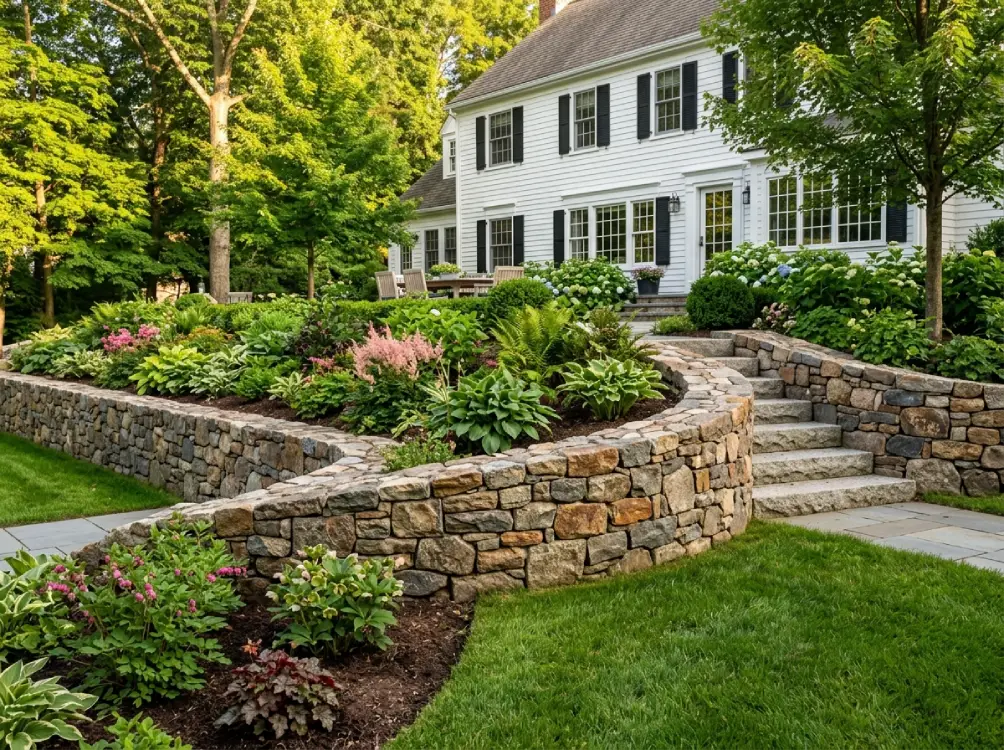
Stacked natural stone walls are the gold standard for residential landscaping in New England. Each stone is hand-selected and placed for both stability and appearance. The result is a wall with texture, depth, and character that no manufactured product can replicate.
This style suits traditional colonial, craftsman, and cottage-style homes perfectly. Moreover, a well-built natural stone wall can last 50 to 100 years with minimal maintenance.
Pro Tip from The Pros, Inc.: Batter the wall slightly — lean it back into the slope by 1 inch for every foot of height. This subtle angle dramatically increases stability.
#12 — Raised Patio with Retaining Wall Edge
Best for: Flat entertaining areas on sloped lots, outdoor living expansion Cost: $28–$50 per square foot (wall portion)
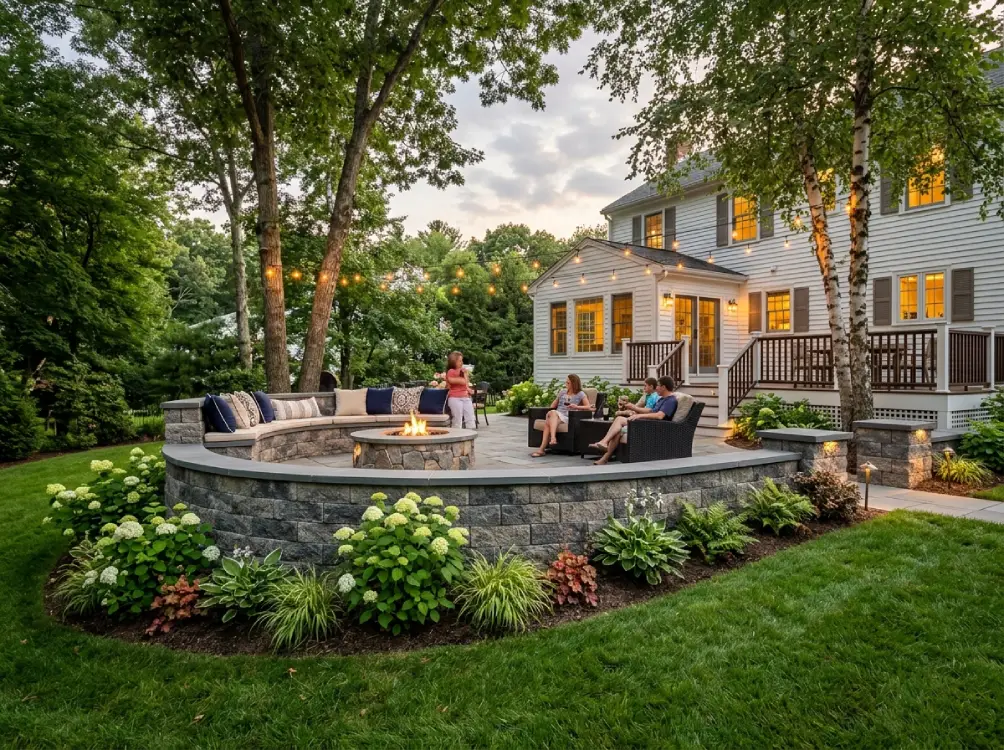
This is one of the most transformative ideas on this list. A retaining wall along the lower edge of a patio holds back the slope and creates a level entertaining surface. The wall doubles as a decorative border and, often, as additional seating.
The wall and patio are designed together as one integrated hardscape feature. Additionally, lighting embedded in the cap blocks creates a stunning effect after dark and improves safety around the patio edge.
Pro Tip from The Pros, Inc.: Plan your lighting conduit during wall construction — not after. Retrofitting lighting into a finished wall costs three to four times more and rarely looks as clean.
How to Choose the Right Retaining Wall for Your Property
Choosing the right wall comes down to four factors. Work through each one to narrow your options quickly.
- Wall height. Walls under 3 feet are DIY-friendly. Walls between 3 and 4 feet are manageable for experienced homeowners. Walls above 4 feet require a licensed contractor and usually a building permit in Massachusetts.
- Soil and drainage. Heavy clay soils hold water and create high hydrostatic pressure behind walls. In these conditions, gabion walls or systems with French drain backing perform best.
- Design style. Match your wall material to your home’s architecture. Natural stone suits traditional and colonial homes. Concrete block and gabion suit modern and contemporary styles. Timber suits cottage and farmhouse properties.
- Budget. Timber and cinder block give you the most wall for the least money. Natural stone and boulders offer the highest visual impact and longest lifespan but require a larger upfront investment.
Book a Project Consultation With Us
Thank You!
Your request has been received. Our team will contact you within 24 hours.
FAQ — Retaining Wall Ideas (People Also Ask)
How much does a retaining wall cost in Massachusetts?
A retaining wall in Massachusetts costs between $15 and $70 per square foot installed, depending on the material. Timber and cinder block walls start at $10–$25 per square foot. Natural stone, limestone, and boulder walls range from $35 to $70 per square foot. The average residential retaining wall project in MA costs between $3,500 and $12,000 in total.
Do I need a permit to build a retaining wall in Massachusetts?
Yes, in most Massachusetts municipalities, a building permit is required for any retaining wall over 4 feet in height. Some towns set the threshold at 3 feet. Additionally, walls near property lines, septic systems, or wetlands may require additional approvals. Always check with your local building department before starting.
What is the cheapest type of retaining wall?
Timber and railroad tie walls are the most affordable option at $10–$20 per square foot installed. Cinder block walls are the next most affordable at $15–$25 per square foot. Both are suitable for walls under 4 feet and garden bed applications.
What is the longest-lasting retaining wall material?
Boulder walls and natural dry-stack fieldstone walls last the longest — often 75 to 100 years or more. Poured concrete and precast concrete block walls typically last 50 or more years. Timber is the shortest-lived option at 15 to 20 years.
Can I build a retaining wall myself?
Yes, for walls under 3 feet using timber or precast concrete block systems. DIY installation requires proper base preparation, drainage gravel, compaction, and level placement. For walls above 3 feet, or on slopes near structures, professional installation is strongly recommended. Structural failures in tall DIY walls can be dangerous and expensive to repair.
How long does a retaining wall take to build?
A typical residential retaining wall takes 2 to 5 days to build professionally, depending on wall height, length, material, and site conditions. Larger projects — like terraced walls or boulder walls requiring equipment — may take 1 to 2 weeks.
What is the best retaining wall for a sloped backyard?
Terraced multi-tier walls are the best solution for steep backyard slopes. They divide the slope into manageable levels and reduce pressure on any single wall. Segmental block walls with geogrid reinforcement are also excellent for tall, steep slopes. Both require professional design and installation on gradients above 15 degrees.
Why Choose The Pros, Inc. for Your Retaining Wall Project?
The Pros, Inc. has designed and built retaining walls across Massachusetts’s North Shore for over a decade. Our team handles every step — from site grading and drainage design to material selection, engineering consultation, and installation.
We work with all the wall types in this guide. Whether you want an affordable cinder block garden wall or a dramatic boulder feature wall, we bring the same level of craftsmanship and attention to every project.
Here is what you get when you work with The Pros, Inc.:
- Free on-site consultation and project estimate
- Licensed and insured Massachusetts contractor
- Permit coordination and engineering referrals when required
- 5-star rated by homeowners across Lynn, Salem, Marblehead, Swampscott, and Beverly
- Integrated hardscape design — walls, patios, driveways, and outdoor living designed together
Get a Free Retaining Wall Estimate Today
Ready to get started? The Pros, Inc. offers free on-site estimates for all retaining wall projects across Massachusetts’s North Shore.
Call us: 857-574-4380 Or visit: theprosincorporated.com/contact-us
We’ll assess your slope, your soil, your drainage, and your design goals — then recommend the wall type that fits your yard and your budget perfectly.
Contact Top-rated Landscaping Contractors - The Pros, inc