Winter in Massachusetts is tough — and your yard takes the hit. Between freeze-thaw cycles, heavy snow, road salt, and frost heave, your outdoor space needs real attention every spring. That’s why this spring landscaping checklist for Massachusetts homeowners covers everything you need to do, in the right order, to get your property looking its best.
Whether you’re in Lexington, Marblehead, Beverly, Andover, or Melrose, this guide is built for the New England climate — not a generic national template. Follow these steps now, and you’ll have a thriving yard by Memorial Day.
Why Spring Cleanup Is Critical in Massachusetts
Massachusetts winters are unlike most of the country. Our region experiences extended hard freezes, heavy snow loads, ice dam damage, and road salt runoff every single year.
That combination creates specific problems. Frost heave lifts pavers and retaining walls. Salt burn kills grass along driveways and sidewalks. Saturated soil compacts under early foot traffic. As a result, a spring cleanup in North Shore MA looks very different from a cleanup in a warmer state.
Getting the sequence right matters. Doing the wrong task too early can actually make things worse.
✅ Step 1: First, do a thorough walk-around
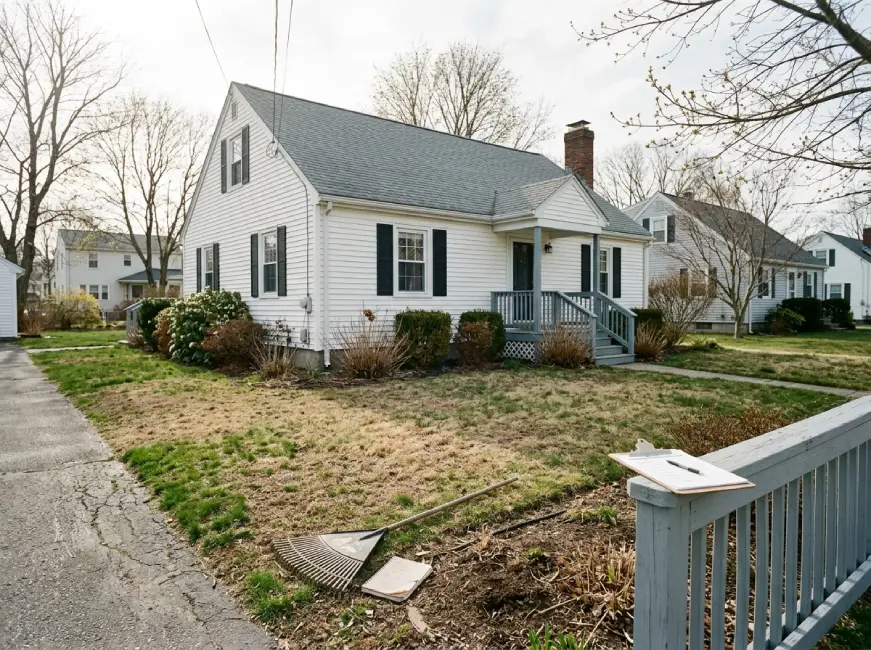
Explore the entire property before you start. Write it down and take pictures. This will determine your future actions.
Check for these post-winter issues:
- Rising and cracked patio slabs (frost heave)
- Bowed or moved retaining walls
- Damaged tree limbs due to snow and ice
- Brown “worms” in the lawn
- Lawn edge damage from salt
- Pooled water or water runoff around the foundation
- Crowded or leaning fence posts
- Pool cover tears or debris buildup
Pro Tip: Do this for at least 30 minutes. Now’s the time to identify issues to avoid surprises. Email your landscaping expert to expedite quotes.

✅ Step 2: Check for Frost Damage
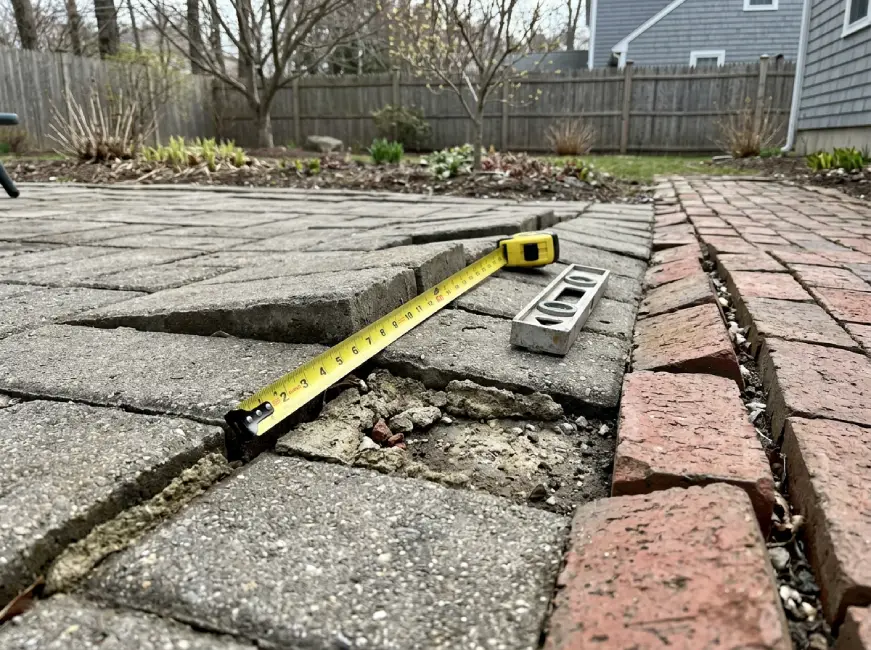
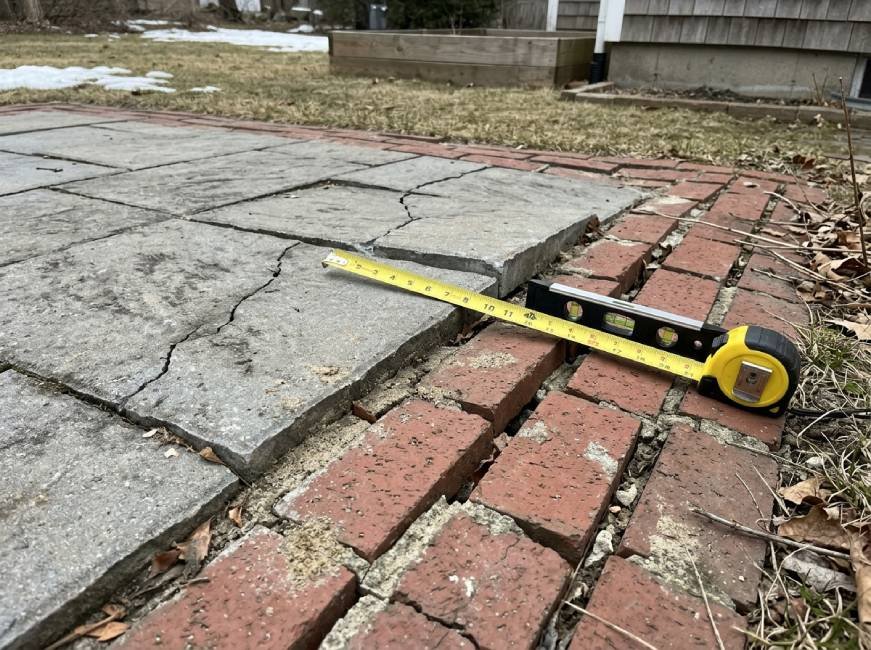
This is critical for Massachusetts homeowners. Our hardscape surfaces are very susceptible to damage from our freeze-thaw cycles.
How frost heave occurs Water gets into small cracks between stones. It then freezes, expands and cracks the stones. Within a winter, an entire patio can form lips and bumps.
Check these areas carefully:
- Patio pavers – check for lifting, settling or cracks
- Joints in walkways – see if the sand has come out
- Retaining walls – check for bulging, leaning or displaced blocks
- Concrete steps – look for cracks or spalling
- Driveway joints – look for deterioration
Action: Check and replace any lifted pavers; re-sand to stop weed invasion and frost damage. And check out any shifting retaining walls right away. A damaged wall can be dangerous and only gets worse.
✅ Step 3: Evaluate Your Lawn – But Don’t Rush
This is the biggest mistake Massachusetts homeowners make: working their lawns too soon.
- Don’t work saturated soil: Treading on and mowing a wet lawn hardens the soil under the grass, destroying root systems. This will affect the grass for months. Most of eastern Massachusetts soils are ready for walking on by late April at the earliest and perhaps not until early May in shady or clayey places.
- When the soil is ready, do this:
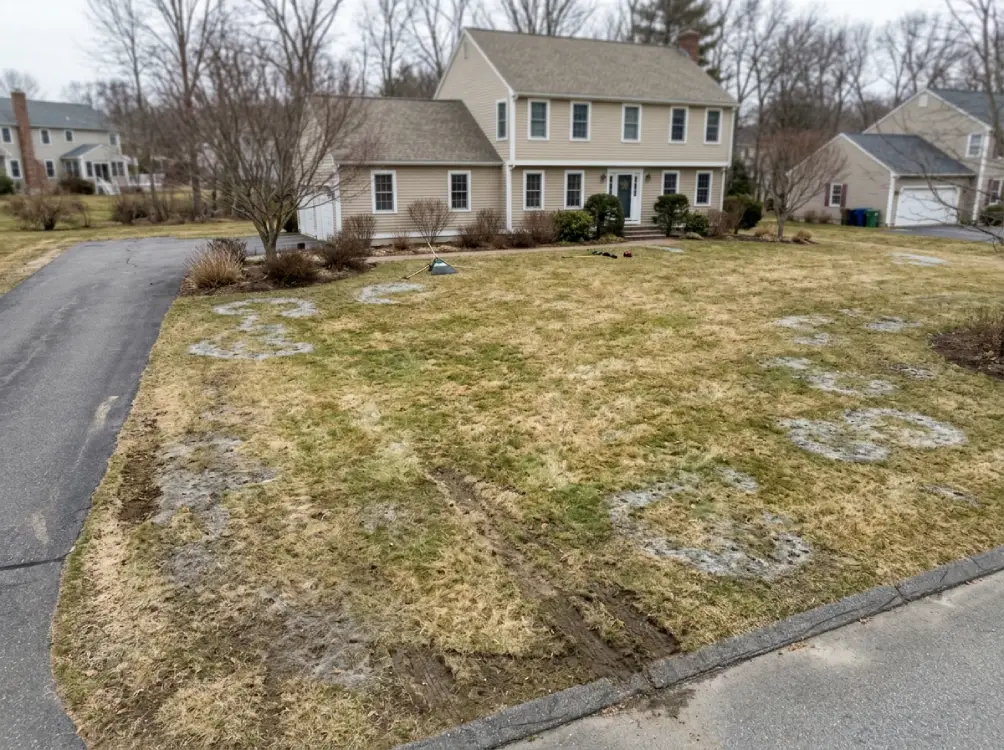
- First, rake thoroughly. Pull up dead grass, clumps and snow mold. Snow mold is a whitish-gray fungus that forms after snowmelt. Raking opens up the turf and allows air circulation.
- Second, find the bare spots. Note thin areas for overseeding. Foot traffic, salt damage and snow mold are typical in Massachusetts.
- Next, check the pH of your lawn. Soils in Massachusetts are naturally acidic. Winter makes it even more acidic. A soil test (available at most garden centers or from UMass Extension) tells you if you need to apply lime. Lime can be the most effective thing you can do for a MA lawn.
- Finally, try a pre-emergent. If you have had problems with crabgrass in the past, consider using a pre-emergent herbicide before the soil has warmed to 55°F (typically mid-April in Massachusetts). But remember, pre-emergents also stop grass seed from germinating. So, select either a pre-emergent or overseeding – not both.
✅ Step 4: Prune Trees and Shrubs Right
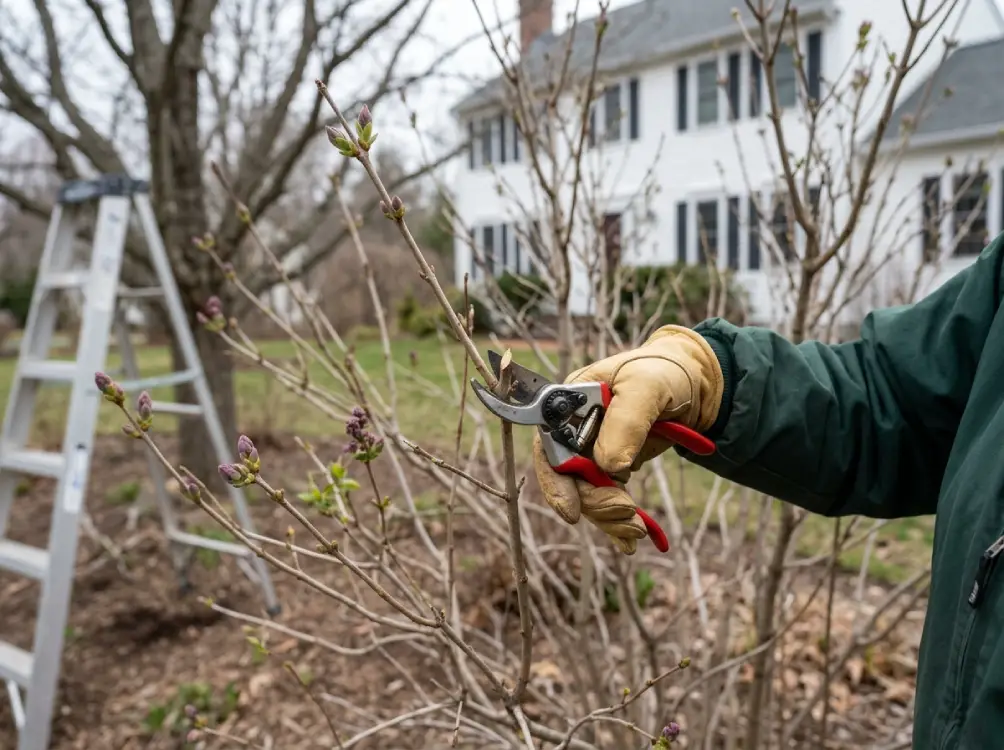
In New England, early spring, just before new growth begins, is the best time for most pruning.
But it depends on the plant. Here’s how to do it:
- Winter damaged branches: Prune as soon as possible. Ice-damaged branches are unsightly and potentially hazardous.
- Shrubs that bloom in summer (hydrangeas, roses): Early spring (before the flush of new growth).
- Spring-blooming shrubs (forsythia, lilac): Prune after flowering. You’ll cut off this year’s buds.
- Ornamental grasses: Trim to 4-6 inches before the new shoots start to grow.
- Perennials: Cut back dead stalks from last year.
Safety tip: If large trees have major limbs that have split or other signs of structural weakness from recent storms, have them inspected by a certified arborist before spring rains and winds hit. Compromised trees are a major risk – during a North Shore MA storm.
✅ Step 5: Fix Lawn Edges Damaged by Salt
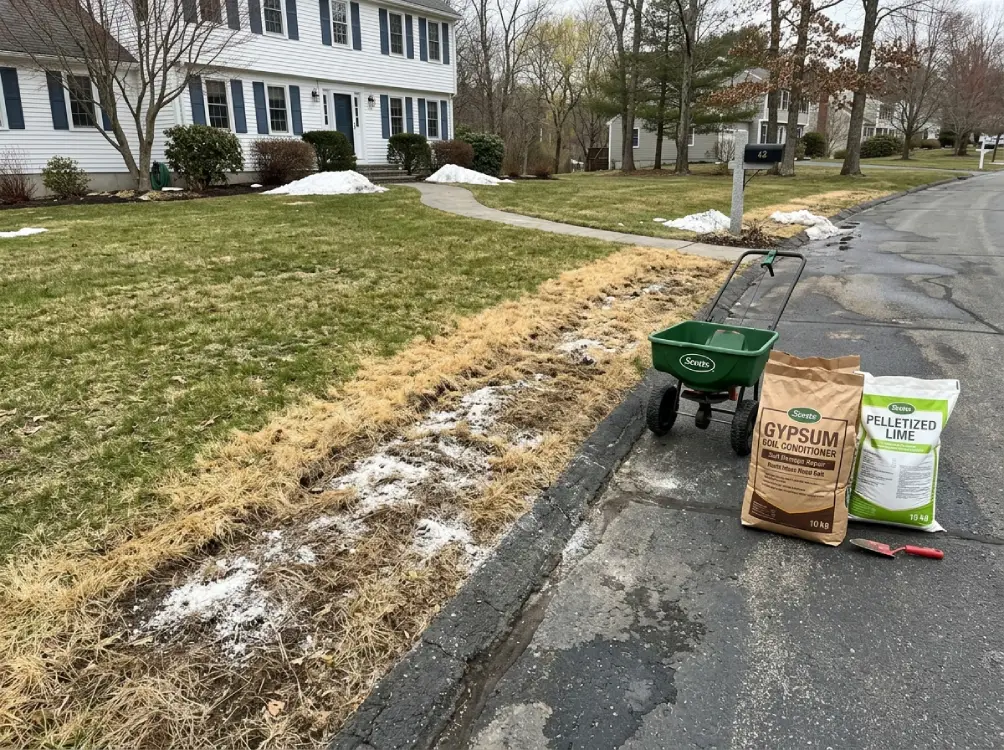
If your lawn is next to a street, driveway, or walkway, you most likely have a band of salt-damaged grass. This is a widespread Massachusetts springtime issue.
Signs of salt damage: You’ll see grass at the edge of your lawn turn yellow or brown. Soils may have white crust. Chunks of lawn that were green last year may not turn green this spring.
Here’s how to rehabilitate salt-damaged areas:
- Remove the dead grass from the area
- Irrigate multiple times to leach salt out of the soil
- Spread gypsum to replace sodium ions on soil
- Spread compost to add organic matter
- Overseed when the weather is suitable
In extreme cases, you may have to replace the topsoil before overseeding.
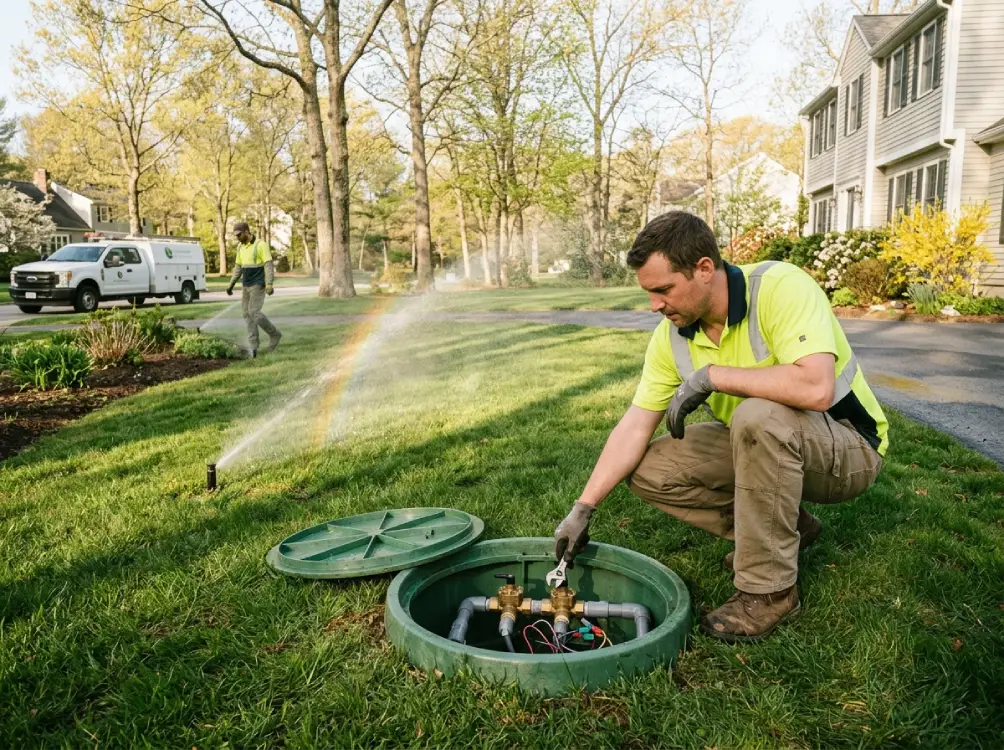
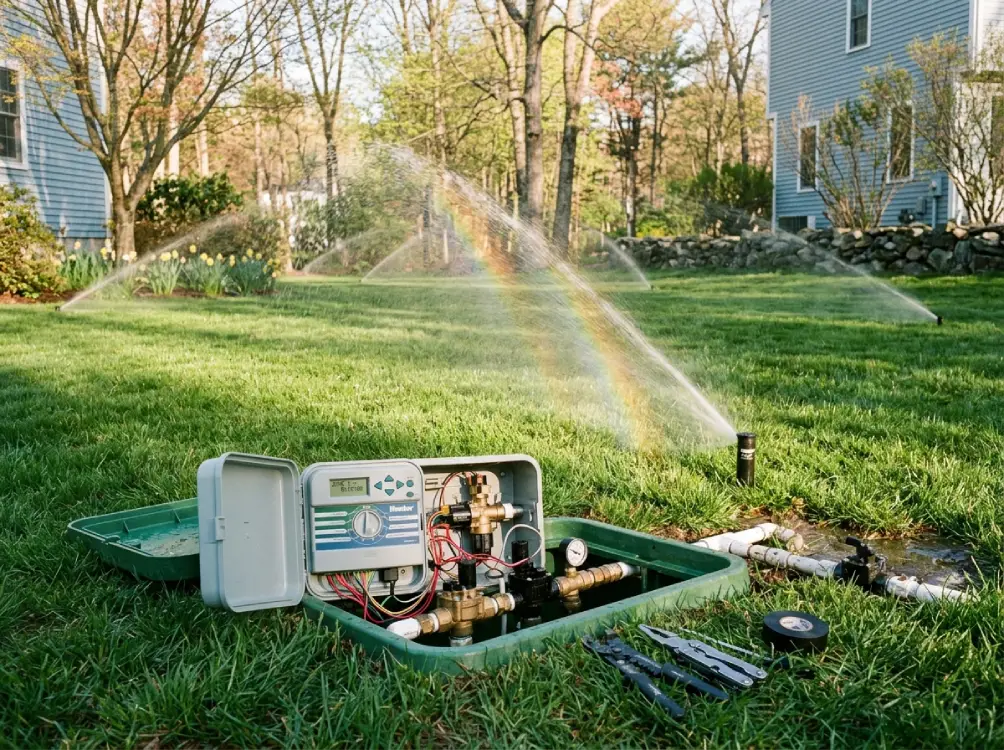
✅ Step 6: Carefully Turn on Irrigation
In Massachusetts, irrigation systems are winterized – that means your system is dry since October. So, startup needs to be gradual or you will risk cracked pipes or broken heads.
Spring irrigation startup checklist:
- Check the backflow preventer for cracks or damage
- Start the main shut off valve – never fully (water hammer will damage pipes)
- Turn on each zone and walk to ensure it is covering the desired area
- Check for broken heads, heads that don’t pop up or zones that don’t run
- Inspect the controller for programming for spring watering
- Look for blocked emitters or frost damage to drip lines
Don’t wait until it’s hot to find an irrigation problem. An irrigation problem can waste thousands of gallons and damage your lawn and garden. If you haven’t had your system serviced lately, the beginning of the irrigation season is a good time to call The Pros, Inc. for a professional irrigation audit.
✅ Step 7: Re-Mulch Planting Beds
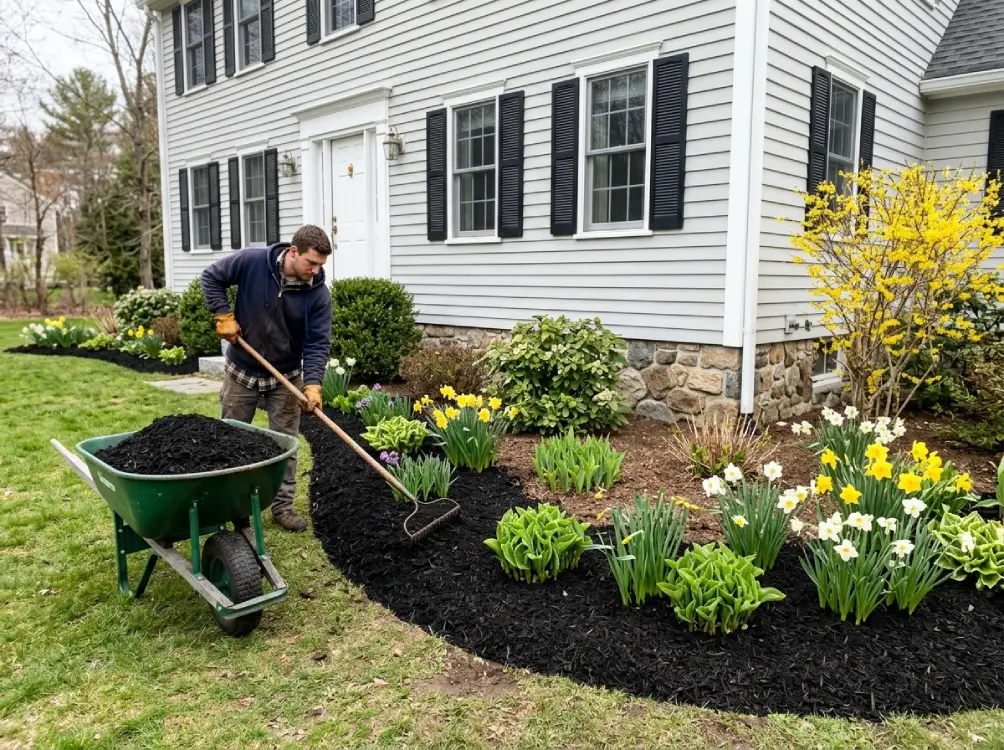
During the Massachusetts winter, mulch becomes compacted, breaks down and no longer holds as much water or prevents weeds. To prepare for the growing season, it’s time to refresh.
How to refresh mulch:
- Clear gardens of leaves and other debris
- Measure mulch depth – should be 2-3 inches deep
- Remove early weeds that have emerged
- Add new mulch to existing plant beds and trees
Note: Mulch should not be placed against plant and tree trunks. Be careful not to mulch directly on stems, which will rot and attract pests. Also, in Massachusetts, we find shredded hardwood bark mulch works best for us with our wet springs and hot summers.
✅ Checklist 8: Open Your Pool the Right Way
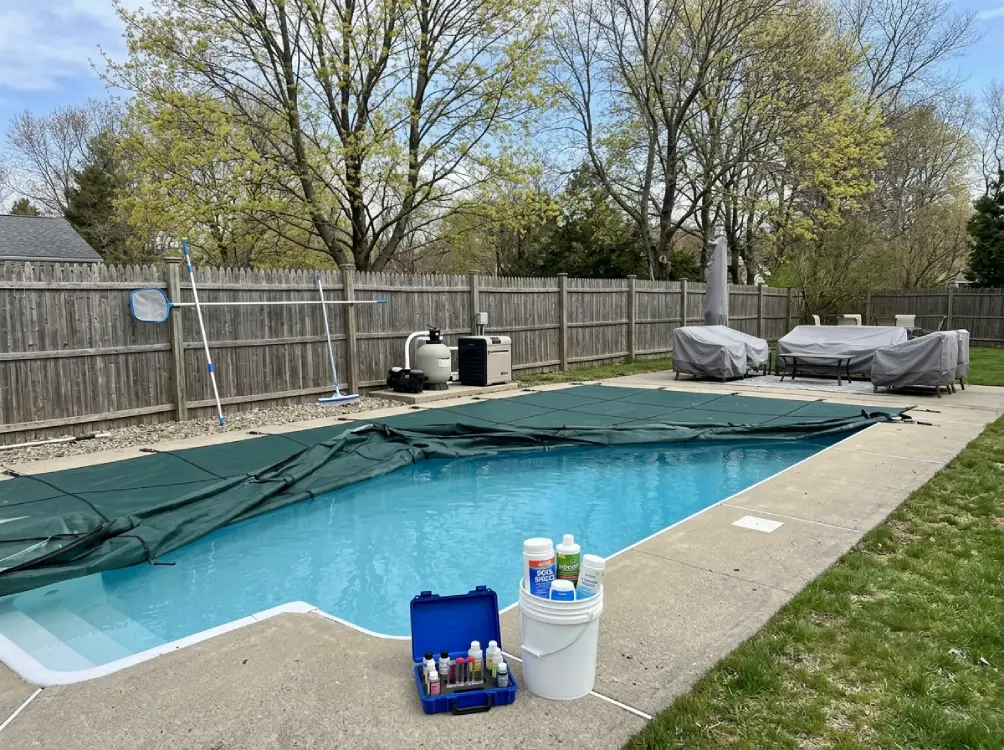
For pool owners, spring opening is a several-step process. Too early can mean a waste of chemicals and algae growth. Opening too late means you are late for swim season. For most of eastern Massachusetts the pool opening time of choice is late April to mid-May.
Spring pool opening checklist:
- Properly remove, clean and store the cover
- Reinstall the pump, filter, heater, and/or water features
- Put the ladders, handrails and diving boards back in place
- Inspect for damage from freezing or damaged fittings
- Fill the pool to the proper water level
- Shock and balance all water chemistry (pH, alkalinity, calcium hardness)
- Run the pool filter 24-48 hours after opening
- Check the pool deck for frost heave, cracks in coping, or loose tiles
An annual pool opening service identifies early signs of damage – before it leads to a mid-season repair.
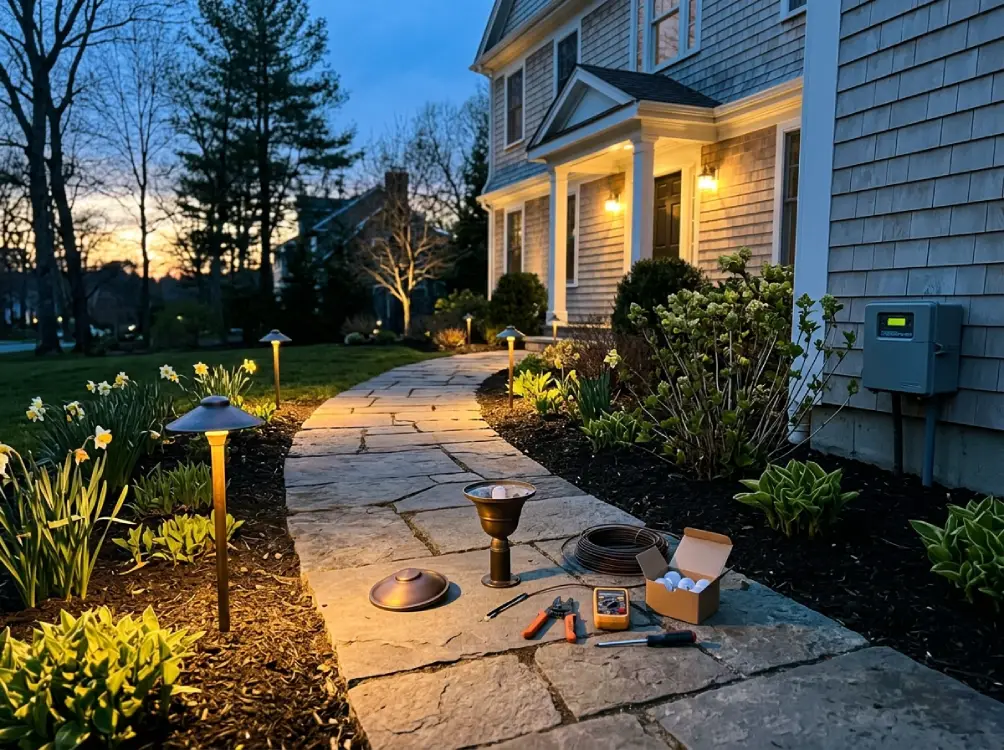
✅ Step 9: Check and Repair Your Exterior Lighting
Frost heave moves underground wires. Moisture infiltrates fixtures. Lights that were fine in October may not light up in spring. So, a lighting tour is in order.
Spring outdoor lighting checklist:
- Take a walk around at dusk and switch on all zones
- Replace all burned bulbs (consider LED bulbs)
- Ensure lights are properly aligned – frost can cause path lights to move
- Check transformer and wire connections
- Wash lenses, which get dirty over winter
- Adjust timer settings for lengthening spring and summer days
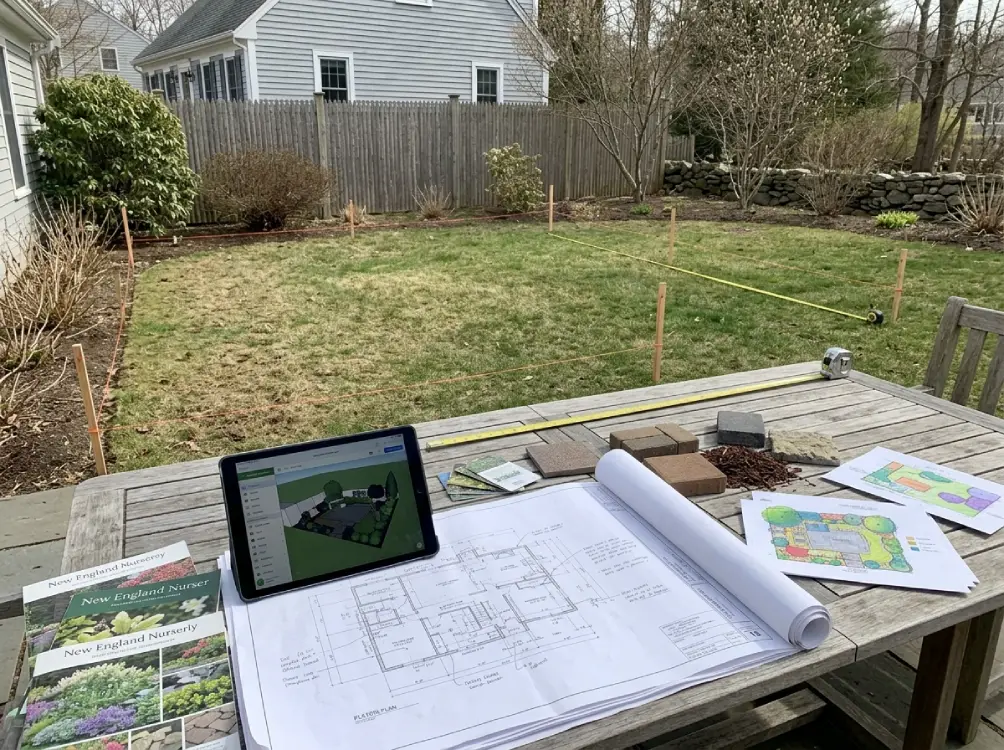
✅ Step 10: Start New Projects – Before the Schedule Fills
Spring isn’t only a time for recovery. It’s also a time to start new landscaping projects. By March or April, landscape and pool companies’ spring schedules are full in Massachusetts.
Massachusetts planting windows to know:
- Cool-season flowers and vegetables: April-May
- Annuals: After the last frost (usually May 15-25 in eastern Massachusetts)
- Trees and shrubs: Early spring, before hot weather, or late August
- Sod: Mid April through May – or late August through September
If you’ve been wanting a new patio, pool, outdoor kitchen, retaining wall, fence or deck, now’s the time to schedule a consultation. The earlier you begin the design process, the earlier you can begin construction – and the sooner you can enjoy your new outdoor living room.
Spring Landscaping Timeline for Massachusetts Homeowners
Timeframe | Priority Tasks |
Early April | Property walkthrough · Hardscape inspection · Pruning · Rake-out |
Mid-April | Soil test results · Lime application · Pre-emergent · Irrigation startup |
Late April | Mulch refresh · Pool opening · Overseeding bare spots |
Early May | Annual planting · Fertilization · Lighting system check |
Mid-May | Full planting season open · Outdoor living projects underway |

When Should You Call a Professional?
There are many spring projects that you can do yourself. Lawn raking, pruning and mulching come to mind. But there are lots of spring landscaping tasks that can only be done with professional equipment, skills and experience.
Hire a pro landscaping service when:
- Retaining walls are leaning, bulging or cracking
- Large trees are severely damaged due to storms or ice
- You are preparing to add a patio, deck, or pool or are renovating the landscape
- Irrigation zones are not working correctly
- You have serious or extensive damage from salt
- You want a professional spring cleanup done right
The Pros, Inc. provides full service spring cleanup and property evaluation services in North Shore MA, Essex County, and Middlesex County – Marblehead, Lexington, Beverly, Andover, Reading, Melrose, Swampscott, North Reading, Winchester and more.
What’s the best time to do spring landscaping in Massachusetts?
For most of eastern Massachusetts, spring landscaping starts in early to mid April. But don’t start working in the lawn or garden until the soil is dry enough to walk on without sinking in. Soil compaction is detrimental to grass roots. In shady or clayey parts of the lawn, wait until late April or early May.
What is the last frost date in Massachusetts?
Most of eastern Massachusetts and the North Shore have an average last frost date of May 10 to May 25. So, don’t plant frost-sensitive annuals, vegetables and tropical plants until after this date.
How can I repair frost heave on my patio or walkway?
Frost heave is caused by water freezing under or between pavers. To repair, lift the affected pavers, regrade and compact the base (usually crushed stone), replace the pavers and fill the joints with polymeric sand. This repair is best done quickly by a hardscape contractor to avoid future frost-heave problems.
How do I fix salt damaged lawn in Massachusetts?
To fix salt damage on lawn edges in Massachusetts, remove dead grass, thoroughly water to remove salt, apply gypsum to the soil, add compost and overseed with a grass type appropriate to the amount of sunlight your lawn receives. In some cases, you may need to remove the topsoil and replace it to repair extensive damage before seeding.
When should I open my pool in Massachusetts?
In Massachusetts, most pool experts prefer to open pools in late April or mid-May, when the water reaches a temperature above 60°F. Opening too early will waste chemicals and encourage algae growth. Opening too late is too late for the swimming season.
When should I mulch in Massachusetts?
Add new mulch to planting beds each spring, 2 to 3 inches deep. For Massachusetts, shredded hardwood bark mulches are ideal for moist springs and hot summers. Be sure to keep mulch away from the stems of plants and trunks of trees to avoid rotting.
Time to Prepare Your Massachusetts Yard for Spring?
Another New England winter has passed – it’s time to wake up your outdoor living space. From a springtime cleanup to getting your irrigation system running, fixing damage to your hardscape, opening your pool, or if you’re ready to tackle a complete landscape makeover, we can help. We’ve been landscaping for more than two decades, in properties throughout Massachusetts.
📞 Call: (857) 574-4380 📧 Email: services@theprosincorporated.com 🌐 Book Online
Serving Essex County, Middlesex County, and the North Shore — from Marblehead to Newburyport and everywhere in between.
The Pros, Inc. Landscaping Company MA