
Think your yard is too small for a pool? Think again. A plunge pool proves that you don’t need a sprawling backyard to get the summer dip, the wellness soak, and the resort feel. These compact pools pack the lifestyle of a full-size pool into a small footprint. And that footprint fits tight New England lots. Better still, they cost less to build, less to heat, and far less to maintain. So if space or budget has been holding you back, this is the design that changes the math.
Key Takeaways
- Small footprint, big payoff: most compact pools need just an 8×10 to 12×12 area, yet deliver cooling, wellness, and entertaining.
- Plunge vs spool vs cocktail: plunge = deeper for immersion; spool = heated + jets for year-round use; cocktail = shallow, seating-focused for socializing.
- New England edge: add a heater or heater-chiller and the pool works spring through fall — and doubles as a cold plunge for recovery.
- Lower running costs: smaller water volume means fewer chemicals, less heat, and easier upkeep than a full pool.
- Real value: the National Association of Realtors estimates a pool can add up to 8% to home value, and a compact one can make a small yard feel bigger, not smaller.
What Exactly Is a Plunge Pool (and How Is a Spool Different)?
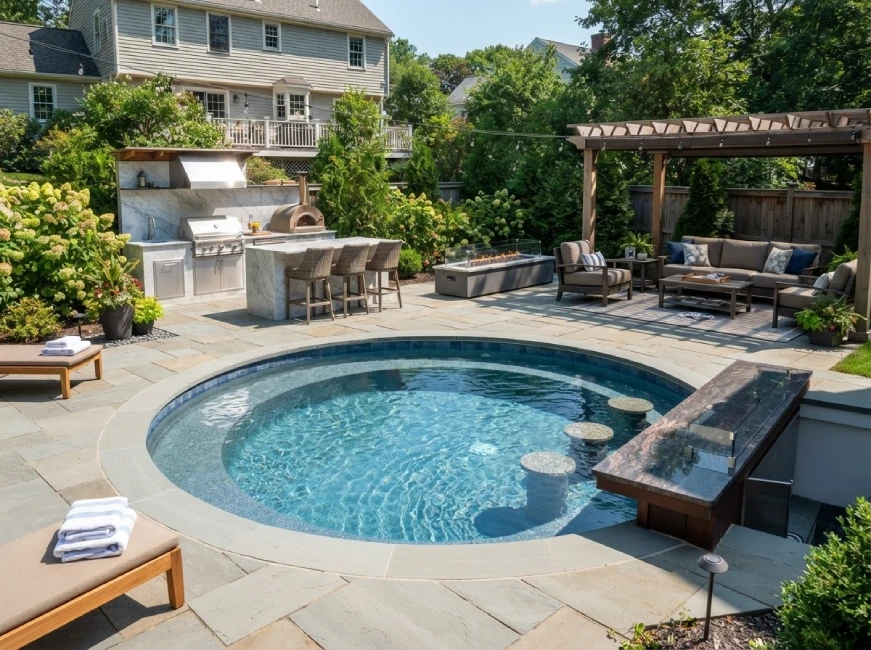
Let’s clear up the names first, because they overlap. This compact pool is a small, deep design — typically 4 to 5 feet deep — meant for wading, soaking, cooling off, and low-impact exercise. You won’t swim laps, but that isn’t the point. Instead, you get your own private oasis without surrendering the whole yard.
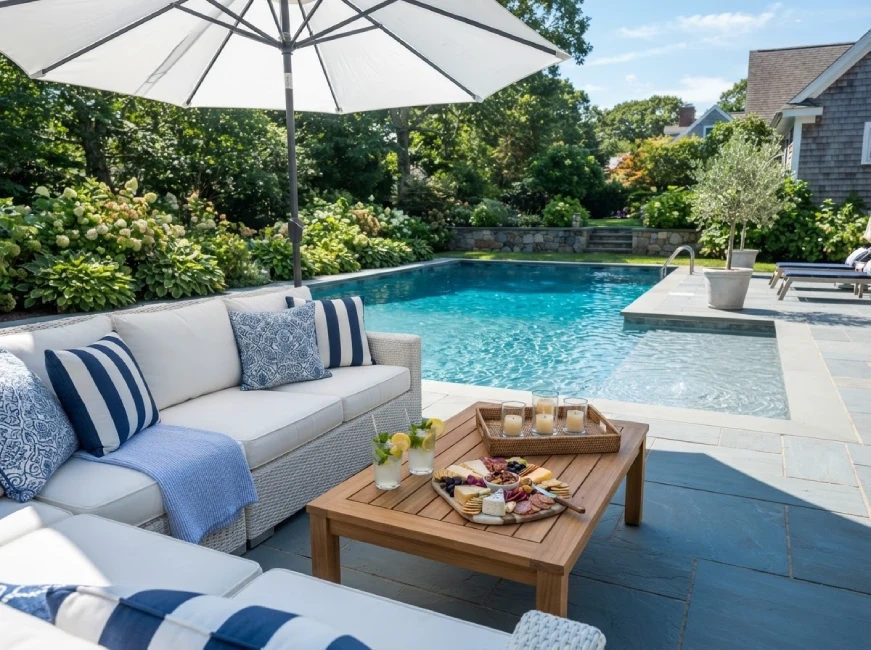
A spool blends “spa” and “pool.” It’s heated, fitted with jets, and built for year-round use. Think of it as an oversized hot tub you can also cool down in summer. Meanwhile, a cocktail pool sits shallower, with built-in seating. It’s designed for standing around with a drink in hand.
The terms blur in practice, and that’s fine. What matters is matching the design to how you’ll actually use the water.
Why These Pools Fit Massachusetts Yards So Well
New England lots are often compact, sloped, or shaded by mature trees. A full-size pool simply doesn’t fit — or it swallows the entire yard. A compact pool solves that. Most need only a 7×7 to 12×12 area. So they slot into side yards, courtyards, and tight urban lots with room to spare.
Furthermore, the shorter footprint leaves budget and space for the things that make a yard livable: a patio, a fire pit, a lounge zone, and planting. As a result, the pool becomes the centerpiece of an outdoor room rather than the whole room itself.
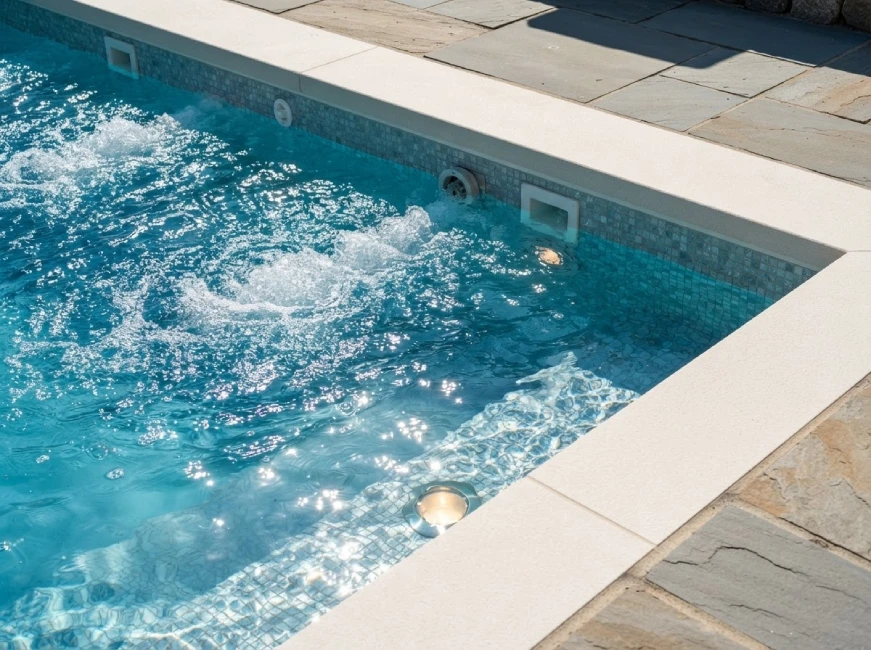
There’s a climate bonus, too. Because the water volume is small, a heater warms it quickly and cheaply. Add a heater-chiller unit, and you can run warm soaks in cool months or icy cold plunges after a workout. That’s a genuinely four-season feature in a state with a short swim window.
7 Small-Pool & Spool Design Ideas for Small Yards
Here’s where it gets fun. These design directions all work in New England spaces.
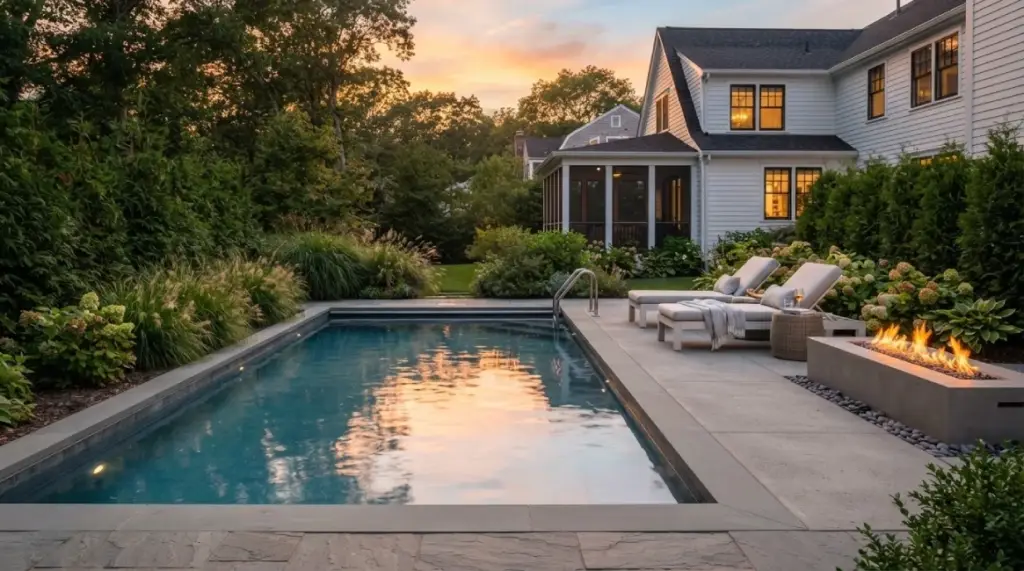
- Flush and modern. Set a rectangular pool flush with a paver or concrete patio — no raised edges, clean lines, minimal planting. It doesn’t fight for space, so it makes a small yard read as calm and intentional.
- The natural swimming hole. Wrap the water in natural stone coping, timber decking, and native plantings. The result feels less like a pool and more like a hidden pond you stumbled onto on vacation.
- Raised and clad. On a sloped lot, go semi-recessed. A raised shell clad in wood or stone becomes an architectural feature. It also dodges the deep excavation that steep yards make hard.
- The wellness corner. Pair a spool with a sauna or a cold-plunge chiller for hot-cold therapy. Athletes have used the practice for centuries, and it’s the fastest-growing reason homeowners add compact pools today.
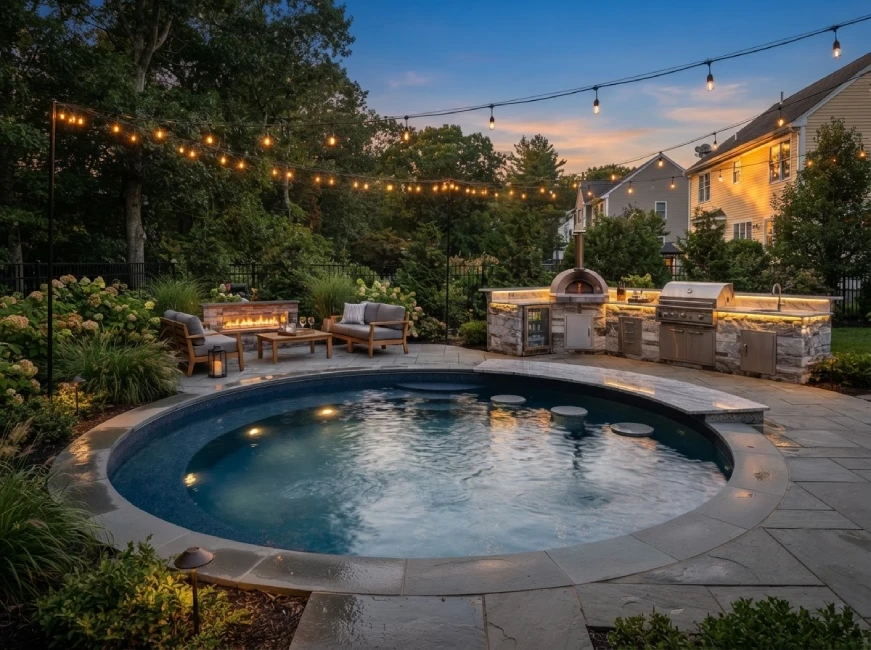
- The entertainer’s centerpiece. Position the pool beside an outdoor kitchen or dining space. Add a fire pit on one side and a lounge zone on the other. Small water, big gathering.
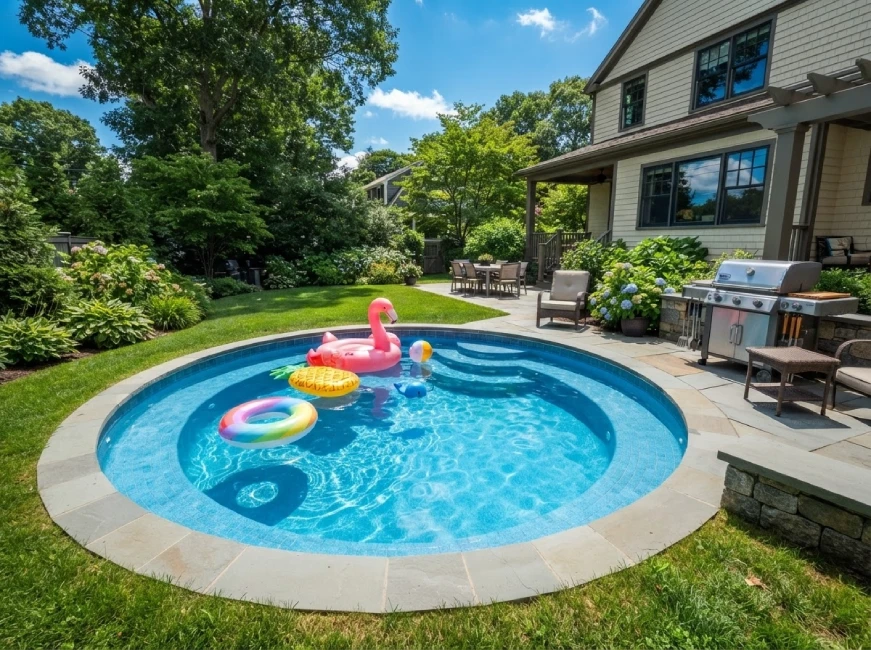
- Round and soft. A circular shape creates a spa-like feel. It also tucks neatly into a corner or courtyard where a rectangle would feel forced. It’s a smart pick for architecturally modern homes.
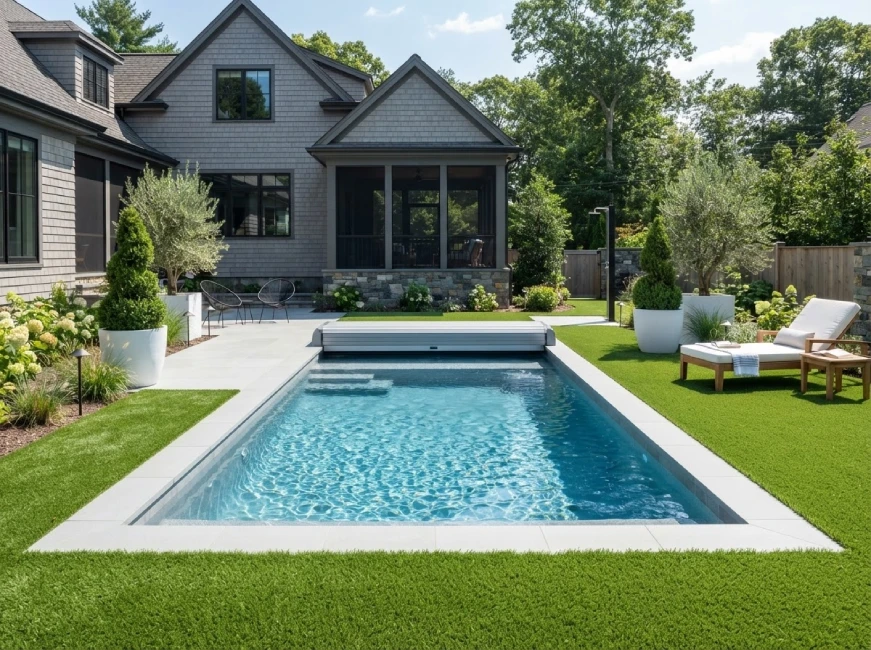
- Low-maintenance luxe. Surround the pool with artificial turf or hardscape instead of lawn, and add an automatic cover. Now you’ve got a tidy retreat with almost nothing to mow or skim.
Sizing: How Small Can You Go?
Compact doesn’t mean cramped. Here are the sizes that actually get used:
| Type | Typical Footprint | Depth | Best For |
| Cold plunge / micro | 6×8 to 7×7 | 4 ft | Wellness, tight courtyards |
| Classic plunge | 8×10 to 10×15 | 4–5 ft | Cooling, soaking, light exercise |
| Spool (spa hybrid) | 8×10 to 12×12 | 4 ft | Year-round jets + heat |
| Cocktail pool | 10×15 to 12×16 | 3.5–4 ft | Socializing, seating, families |
To find your depth, picture yourself standing in waist-deep water — for most people, that lands around 3.5 to 4 feet. If cold plunges or water aerobics are the goal, lean toward the deeper end.
What Does a Compact Pool Cost in Massachusetts?
Design first, but budget matters. Installed projects generally land between $25,000 and $60,000+ here, driven mostly by material and finishes. Fiberglass and precast concrete shells sit at the friendlier end and install fast, sometimes in days. Custom concrete climbs higher. On top of the shell, plan for decking, a safety fence, electrical, and heating too.
The savings show up later, too. Smaller water volume means chemical costs of roughly $40–$60 a month in season versus $100–$200 for a full pool. For the complete breakdown across every pool type, see our inground pool cost guide.
New England Build Notes (Don’t Skip These)
A compact pool still lives in a freeze-thaw climate, so the build details matter. First, the shell and plumbing must be engineered and winterized against frost. Never drain the pool empty over winter. Second, plan a code-compliant safety barrier. Massachusetts requires a fence at least 48 inches tall, with a self-closing, self-latching gate, around water deeper than 24 inches.
Finally, think about access. Many small lots have tight side yards. So your builder should confirm that equipment, or a delivered shell, can actually reach the spot. A local team that builds in New England will plan for all three from day one.
Is a Small Pool Worth It?
For most homeowners with compact yards, yes. You get the cooling, the wellness, and the entertaining of a pool. And you skip the space demands and running costs of a full-size build. On top of that, a well-designed compact pool can make a small yard feel larger. It also adds a genuine lifestyle feature buyers notice. Since it’s still an investment, many homeowners use flexible financing to spread the cost.
Frequently Asked Questions
What is a plunge pool? It’s a small, deep pool, typically 7 to 15 feet long and 4 to 5 feet deep. It’s built for cooling off, soaking, and wellness rather than lap swimming. It fits small yards where a full-size pool won’t, and it costs far less to build and maintain.
What’s the difference between a spool and a cocktail pool? A spool is a spa-pool hybrid with jets and heating for year-round use. A cocktail pool is shallower, with built-in seating, designed mainly for socializing. Both are compact small-pool options, and the terms are often used interchangeably.
How small a yard can fit a compact pool? Most need only a 7×7 to 12×12-foot area, which fits side yards, courtyards, and tight urban lots. Semi-recessed and above-ground installs also work well on sloped New England properties.
Can I use a small pool year-round in Massachusetts? Not for swimming all winter. But a heated spool extends the season into cool months, and a heater-chiller unit lets you run warm soaks or cold plunges year-round. Small water volume heats quickly and cheaply.
How much does a small pool cost in Massachusetts? Most installed projects run $25,000 to $60,000+, depending on material and finishes, plus decking, fencing, and heating. Fiberglass and precast concrete are the most budget-friendly and install fastest.
Do small pools add home value? They can. The National Association of Realtors estimates a pool may add up to 8% to home value. A well-designed compact pool can also make a small yard feel larger while adding a feature buyers appreciate.
Are small pools cheaper to maintain? Yes. Smaller water volume needs fewer chemicals, less heat, and less power for pumps — often $40 to $60 a month in season versus $100 to $200 for a full-size pool.
Do I need a fence for a small pool in Massachusetts? Yes. State code requires a safety barrier around any pool deeper than 24 inches, and that includes compact pools. It must be at least 48 inches tall, with a self-closing, self-latching gate.
Why Homeowners Choose The Pros, Inc.
With 20+ years of experience, The Pros, Inc. designs and builds pools and spas of every size across the North Shore, Essex County, and Middlesex County. We specialize in making small yards work harder. We pair compact pools with patios, lighting, and planting into one cohesive outdoor room, all engineered for New England winters.
Because we design and build in-house, your compact pool arrives as part of a complete plan — not a shell dropped in a bare yard.
Curious what would fit your space? Get a free, no-obligation design consultation.
📞 Call (857) 574-4380 or request your consultation online.
The Pros, Inc. Luxury Pool Building Company
Book a Project Consultation With Us
Thank You!
Your request has been received. Our team will contact you within 24 hours.

