Picking a fence is easy. Picking the right one for a Massachusetts yard is harder. The best privacy fence for Massachusetts depends on two things most national guides never mention. How well it handles wind. And whether it works on a sloped lot. This guide compares every major style on the details that matter here, not just national average pricing.
Key Takeaways
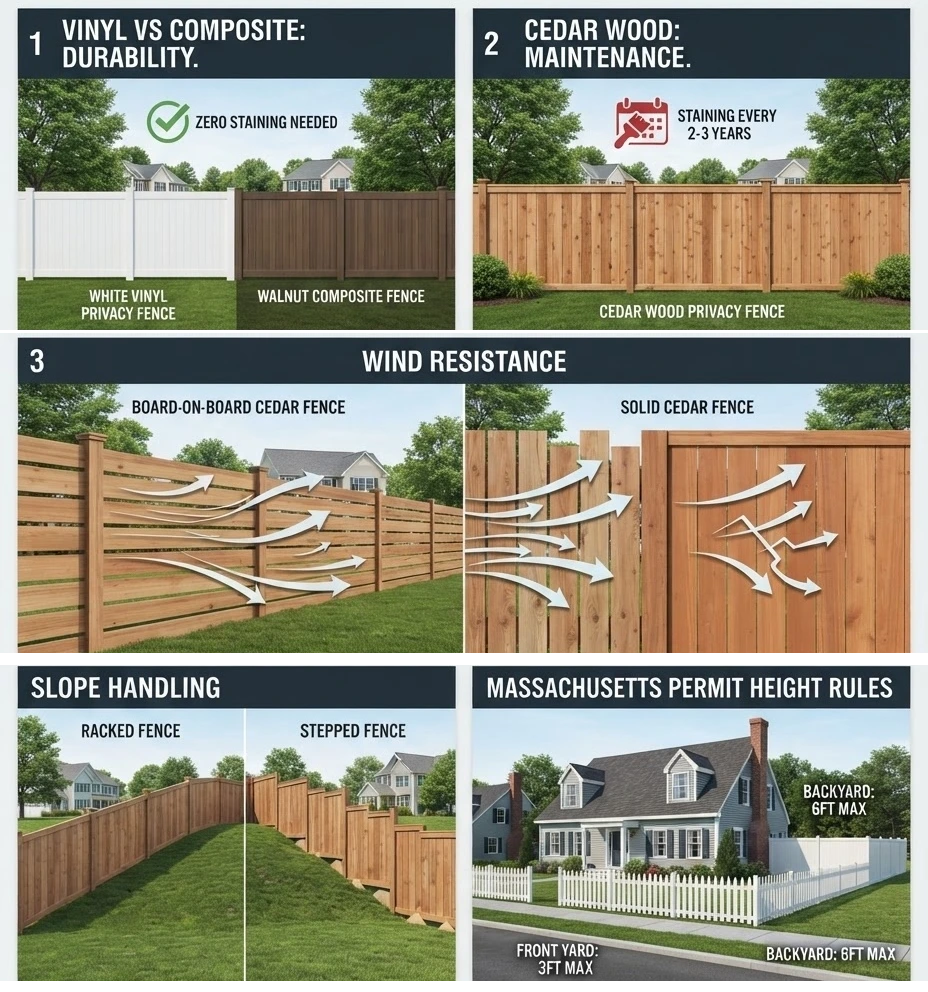
- Vinyl and composite win on maintenance. Zero staining, and both resist our freeze-thaw winters well.
- Wood costs less upfront but needs staining every 2 to 3 years to hold up.
- Board-on-board beats solid panels in wind. The small gaps let air through instead of catching it like a sail.
- Sloped yards need racked panels, not stepped ones, or you’ll get privacy-killing gaps at the bottom.
- Most towns require a permit for fences over 4 feet, and height limits often differ for front and back yards.
Comparing the Main Privacy Fence Styles
Four materials cover most Massachusetts privacy fences. Each one trades off cost, upkeep, and lifespan in its own way.
| Material | Cost per Linear Ft | Lifespan | Maintenance |
| Wood | $20 – $50 | 15–25 years | Stain every 2–3 years |
| Vinyl | $25 – $55 | 20–30+ years | None |
| Composite | $28 – $65 | 25–35 years | None |
| Aluminum (privacy panel) | $30 – $55 | 30–50 years | Minimal |
Wood wins on upfront cost and natural looks. Vinyl and composite cost more at install. But they skip the ongoing staining bill entirely, and that closes the price gap over 15 to 20 years. Aluminum privacy panels exist. But they’re less common for full screening, since most styles use wider gaps between pickets.
Wood: The Classic, Budget-Friendly Choice
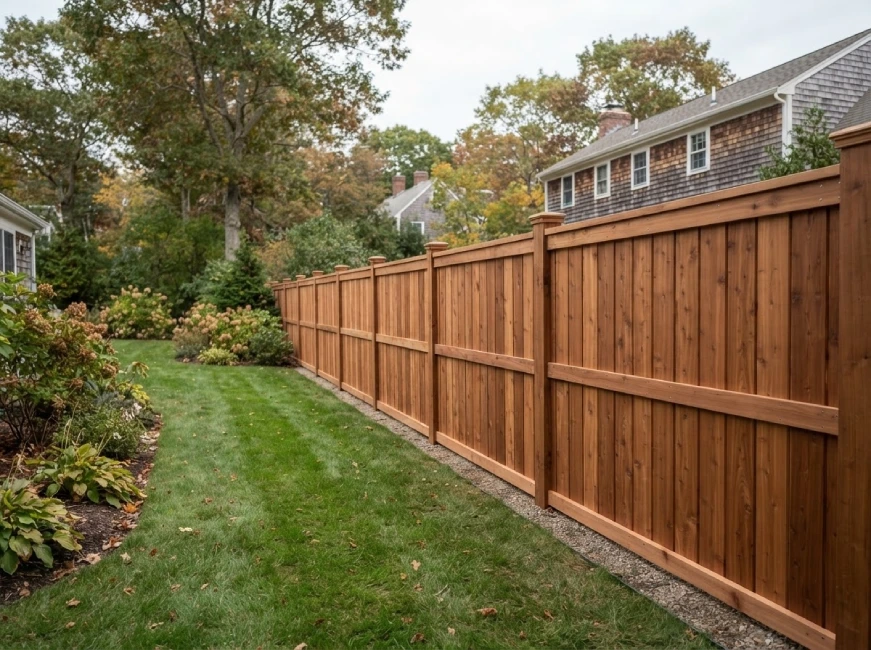
Wood remains the most popular privacy fence material in Massachusetts. Pressure-treated pine and cedar both work well here. Cedar costs a bit more. But it resists rot naturally, so it needs less repair over time.
The real cost isn’t the install. It’s the upkeep. Plan on staining or sealing every 2 to 3 years. Each round costs roughly $1 to $3 per linear foot. Skip that maintenance, and boards start warping and graying within a few winters.
Vinyl: Zero Maintenance, Strong in Our Climate
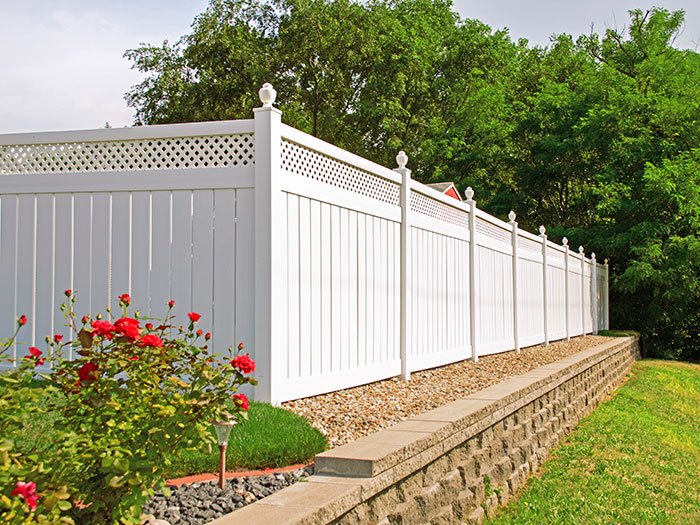
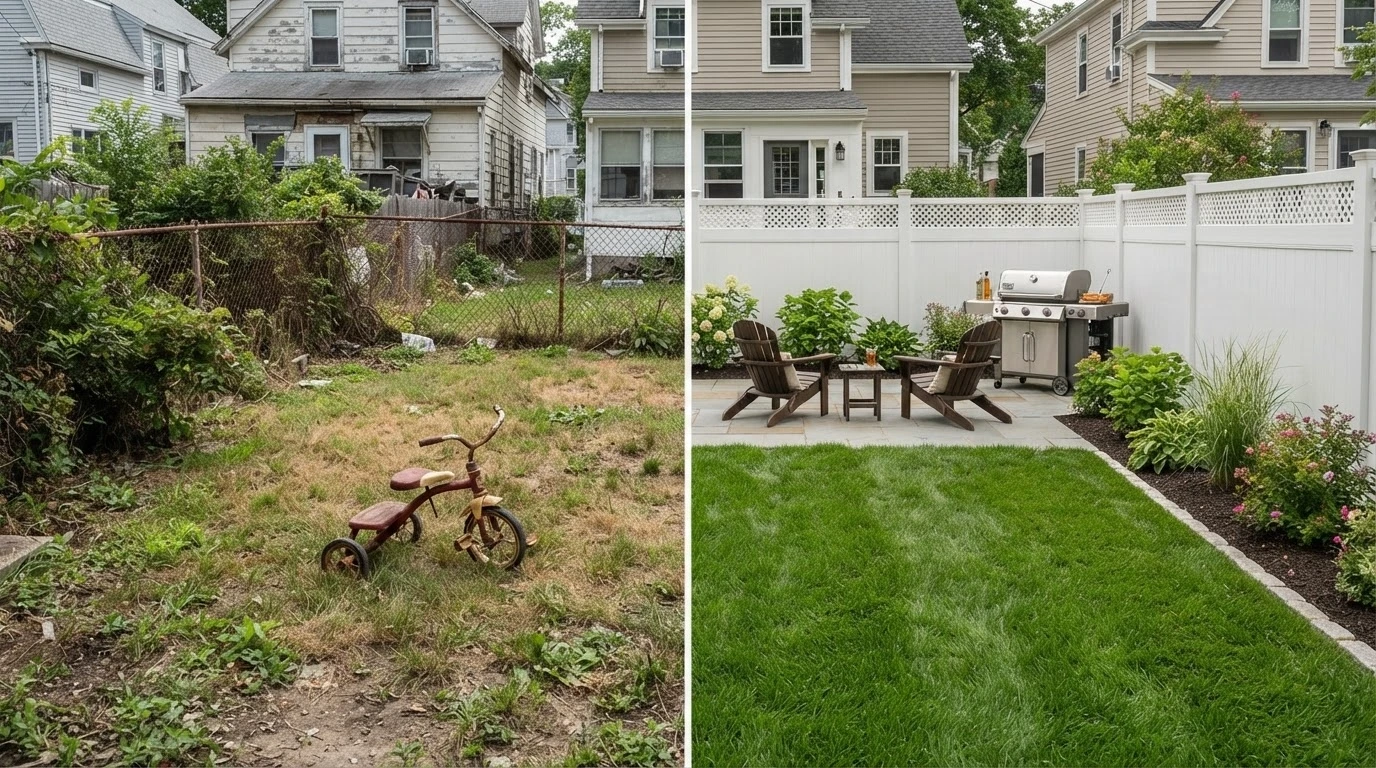
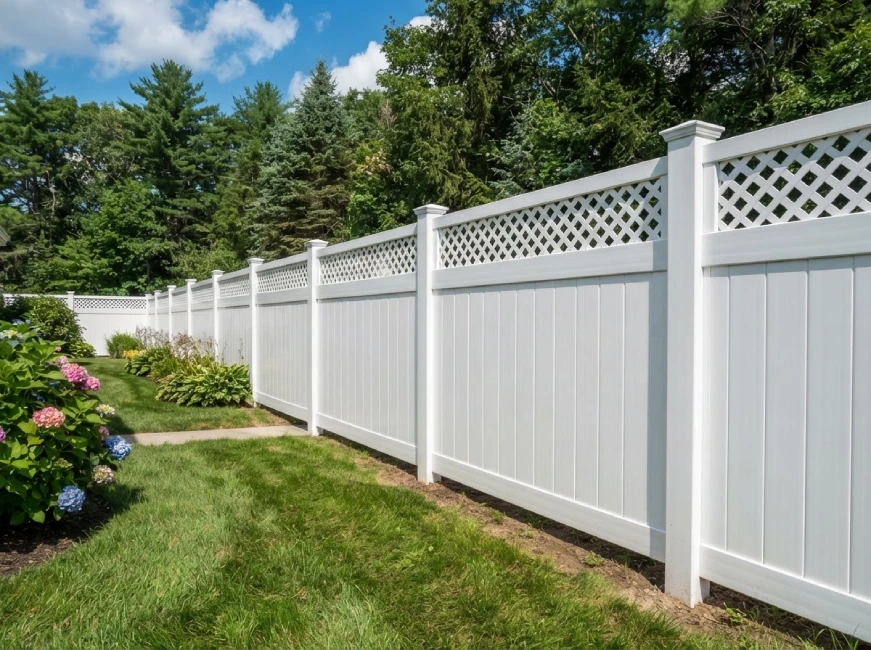
Vinyl privacy fencing costs more upfront than wood. But it never needs staining, painting, or sealing. It won’t rot. It also resists the freeze-thaw cycles that damage lower-quality materials here. Most vinyl privacy fences carry a limited lifetime warranty from the maker. That’s worth checking before you buy.
For homeowners who want a clean, maintenance-free fence, vinyl is usually the best privacy fence in Massachusetts by total cost over time, not just sticker price.
Top Rated Fence Company MA
Book a Project Consultation With Us
Thank You!
Your request has been received. Our team will contact you within 24 hours.
Composite: The Premium, Longest-Lasting Option
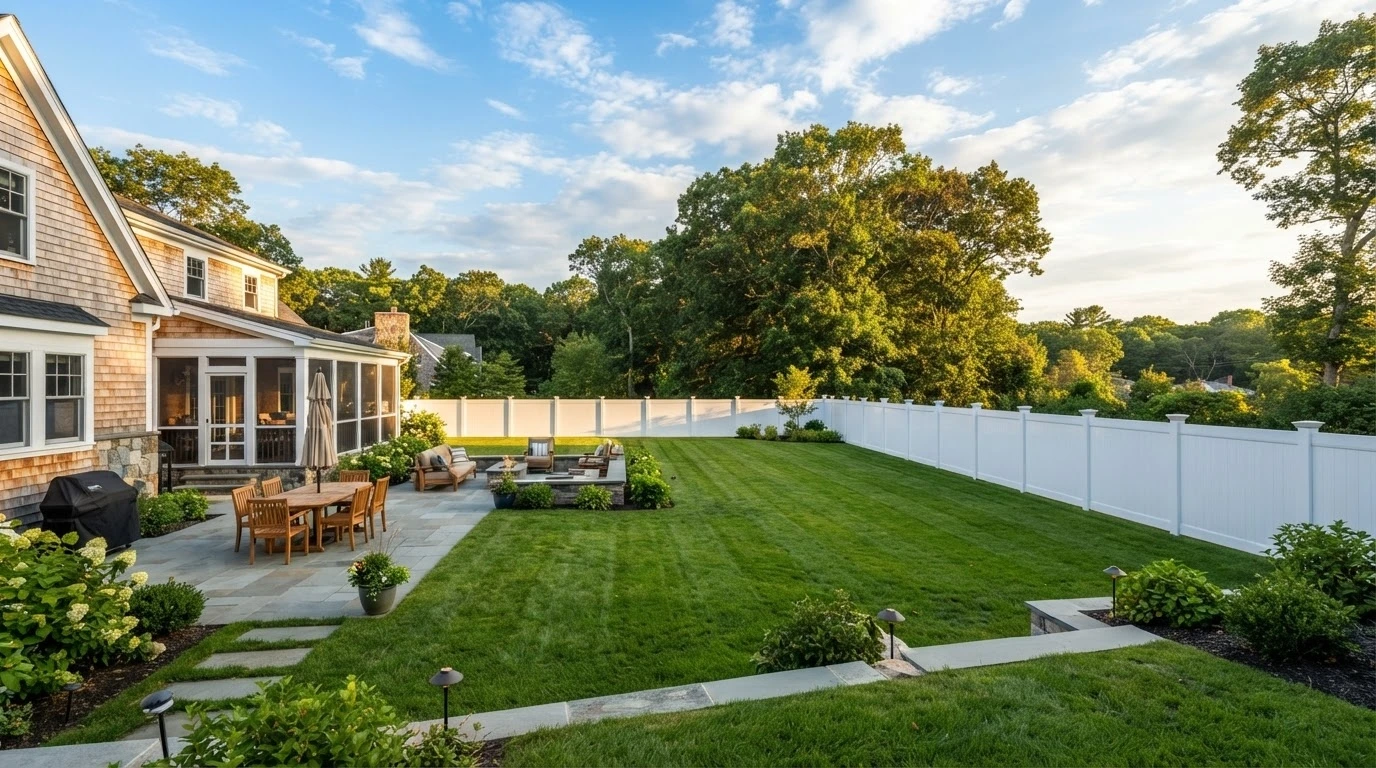
Composite fencing blends wood fiber with plastic. It gives you a wood-like look with none of the upkeep. It costs the most per foot. But it also lasts the longest of the common materials, often 25 to 35 years without upkeep. For homeowners who want the look of wood without ever touching a paintbrush, composite is the strongest long-term pick.
The Wind Factor Nobody Talks About
Here’s the detail that separates a fence that survives a Massachusetts winter from one that doesn’t. A solid privacy panel acts like a sail in strong wind. Air has nowhere to go but around and against it. During a nor’easter, that wind load knocks panels loose or snaps posts.
Board-on-board construction solves this. Overlapping boards still block sightlines completely. But small gaps between them let wind pass through, instead of slamming into a flat surface. If your yard is exposed, on a hill, or near the coast, board-on-board is worth the extra thought over a solid panel. This holds true no matter which material you choose.
Sloped Yards Need a Different Panel Style
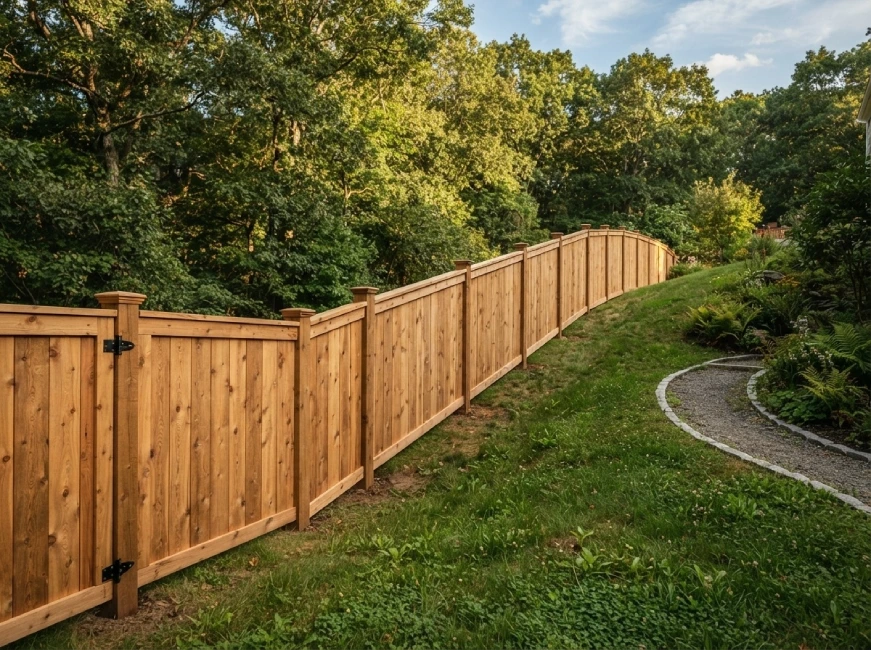
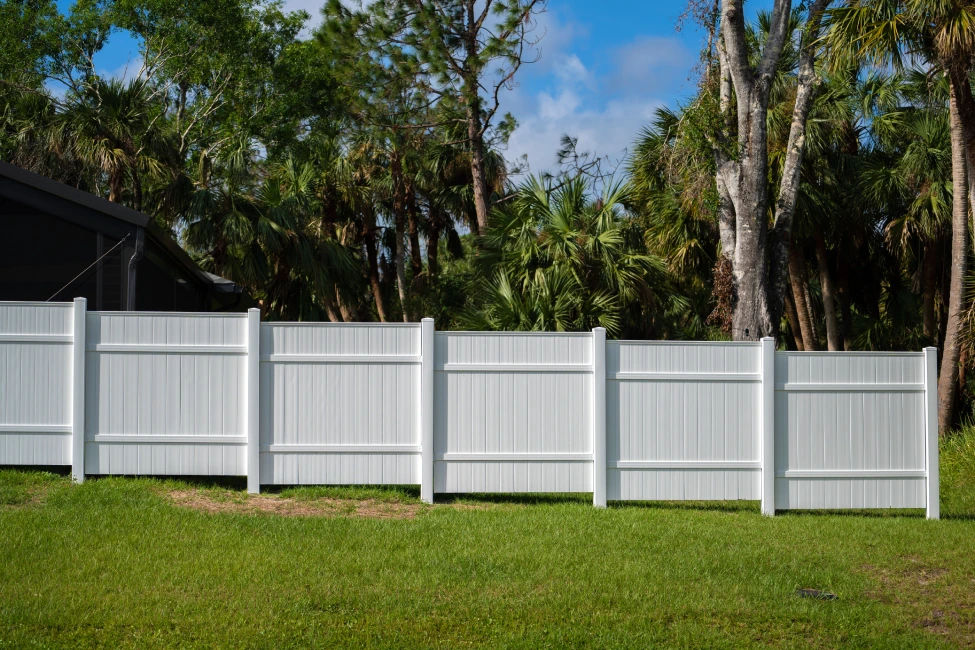
New England yards are rarely flat. That creates a privacy problem most guides never mention. Standard stepped panels follow the ground in steps. On a slope, that leaves small triangular gaps at the bottom of each section. Those gaps defeat the whole point of a privacy fence.
Racked, or raked, panels solve this. The boards angle to follow the slope with no gaps at the bottom. If your yard has any real grade to it, ask specifically for racked panels. Not every contractor offers them by default.
Height and Permit Rules
Most Massachusetts towns allow fences up to 6 feet in a backyard without a permit. Rules vary by town, though. Front yards often have stricter limits, sometimes capped at 3 to 4 feet for visibility. Fences over 6.5 feet typically need a permit, and sometimes an engineer’s review. Taller structures face higher wind loads.
Always confirm your town’s rules before ordering materials. A fence built to the wrong height is an expensive mistake to fix later.
Additional Costs to Plan For
| Item | Typical Cost |
| Old fence removal | $3 – $8 per linear ft |
| Permit fees | $50 – $200 |
| Gate (walk or double) | $200 – $800 |
| Land grading for slopes | $400 – $6,000 |
| Post cap upgrade | $0.30 – $1 per linear ft |
Land grading is easy to skip in a budget. But it can be one of the largest line items on a sloped lot. Get a firm number before you commit to a final design.
Which Privacy Fence Is Best for Your Yard?
If budget matters most, and you’re willing to maintain it, wood remains a solid, attractive choice. If you want to install it once and forget it, vinyl or composite both deliver on that. If your yard sits exposed to wind, choose board-on-board over a solid panel. If it slopes, insist on racked panels instead of stepped ones. Match the style to your site, not just your budget. Then the fence will actually do its job for decades.
Frequently Asked Questions
What is the best privacy fence for Massachusetts? For most yards, vinyl or composite offers the best mix of durability and low upkeep. Expect $25 to $65 per linear foot. Wood costs less upfront but needs staining every 2 to 3 years to hold up in our climate.
Does fence style affect wind resistance? Yes. Board-on-board lets wind pass through small gaps, instead of hitting a solid surface like a sail. This matters most in exposed or coastal yards that see strong nor’easter winds.
What fence panel style works on a sloped yard? Racked, or raked, panels angle to follow the slope. They avoid the triangular gaps that stepped panels leave at the bottom. Ask for racked panels specifically if your yard has any real grade.
How tall can a privacy fence be in Massachusetts? Most towns allow up to 6 feet in a backyard without a permit. Front yards often face stricter limits, though. Fences over 6.5 feet typically need a permit, and rules vary by municipality.
How much does a privacy fence cost in Massachusetts? Wood runs $20 to $50 per linear foot, vinyl $25 to $55, and composite $28 to $65. A typical 150-foot backyard fence totals $3,000 to $9,000, depending on material.
Why Homeowners Choose The Pros, Inc.
The Pros, Inc. has installed privacy fences across the North Shore, Essex County, and Middlesex County for 20+ years. We work in wood, vinyl, composite, and aluminum. We size every fence for real Massachusetts wind and slope conditions. That includes racked panels on sloped lots and board-on-board where wind exposure calls for it. See our full fence installation cost guide for detailed pricing across all 12 of our fence styles.
Not sure which fence fits your yard? Call (857) 574-4380 or request a free consultation.
The Pros, Inc. Hardscaping Company MA