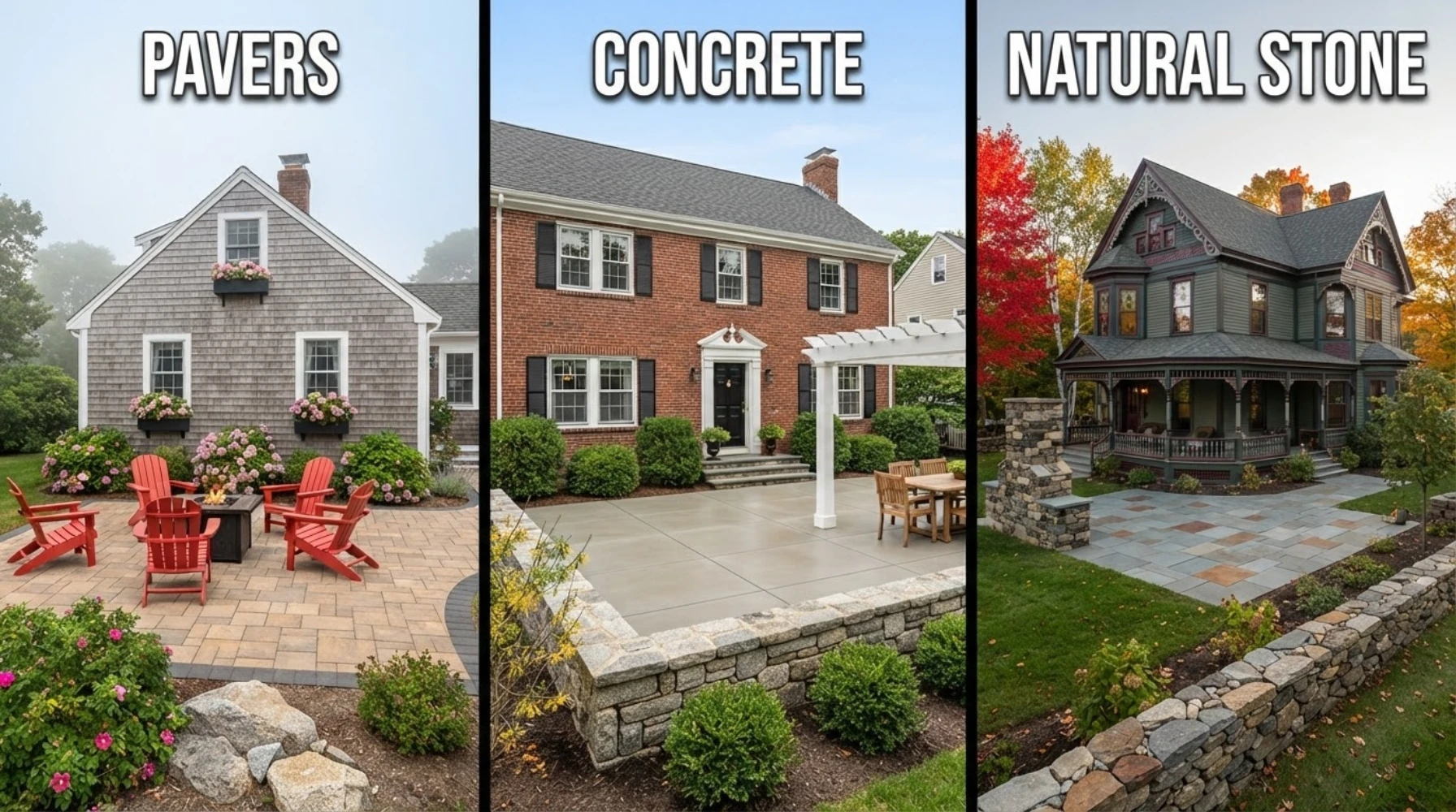
Planning a new patio? You likely face one big choice. Pavers vs concrete vs natural stone all look great in photos. But only one truly survives a New England winter without cracking. Here’s the short version: pavers flex and hold up best. Poured concrete is one rigid slab, and it cracks over time. Natural stone sits in the middle — beautiful, tough, but pricier.
Massachusetts gets dozens of freeze-thaw cycles each year. Water seeps into a surface. It freezes. It expands. Then it pushes back out. A poured slab is one solid piece. It has nowhere to give, so the stress shows up as a crack. Pavers are small, separate units. They shift slightly with the ground instead of fighting it. That’s the real reason pavers hold up so well here.
Factor | Concrete Pavers | Poured Concrete | Natural Stone |
Cost per sq ft | $18 – $45 | $6 – $15 | $25 – $85 |
Winter performance | Excellent | Cracks over time | Good, if dense |
Lifespan | 30–50 yrs | 20–30 yrs | 50–100+ yrs |
Repairs | Swap one piece | Visible patch | Reset one piece |
Style range | Wide | Limited | Widest |
Upkeep | Sand joints, seal | Seal to slow cracks | Seal, tend joints |
Book a Project Consultation With Us
Your request has been received. Our team will contact you within 24 hours.
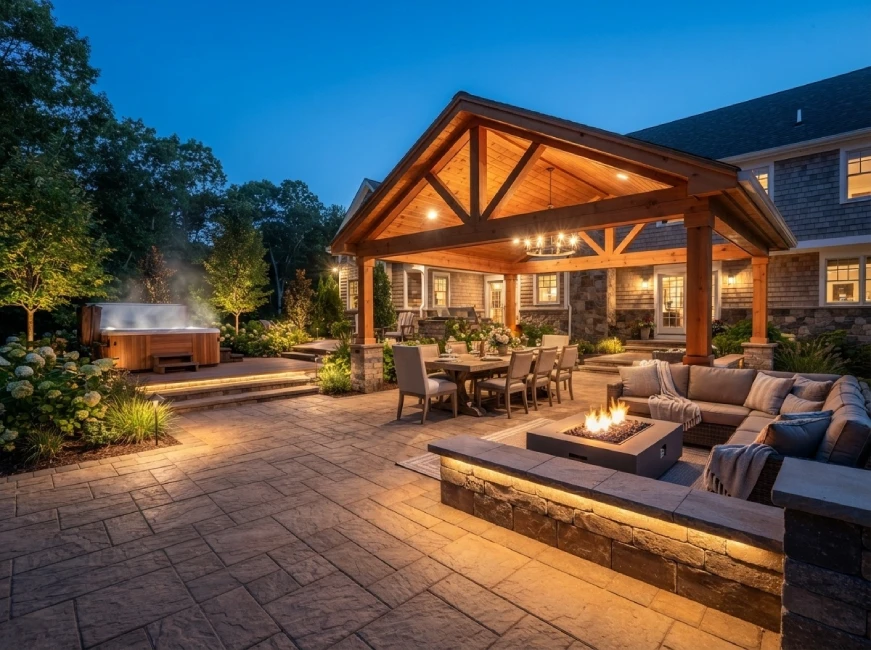
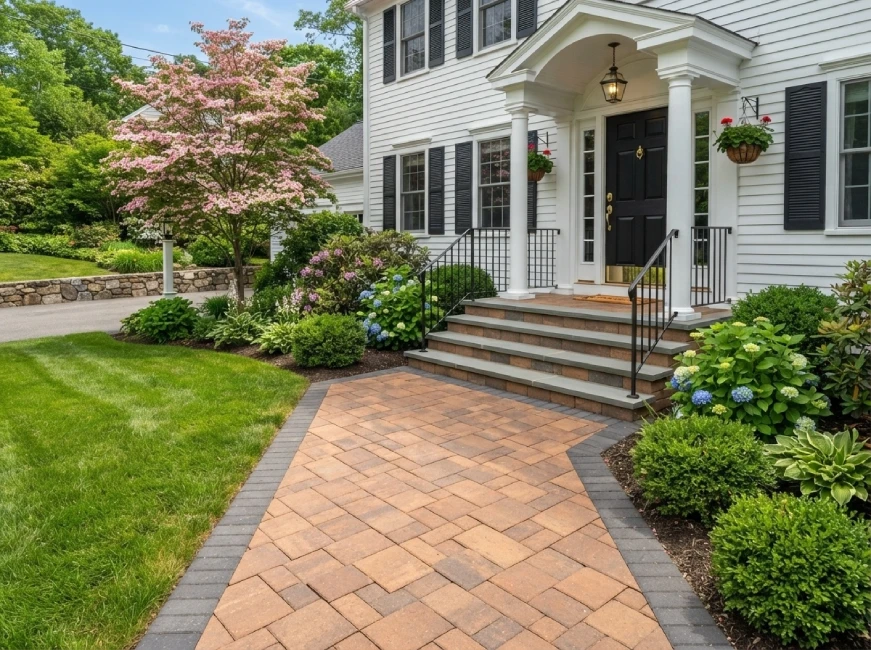
Pavers cost $18 to $45 per square foot installed. Most Massachusetts backyards use them, and for good reason. They come in many colors and shapes. Each unit sits on its own. So if one stains or cracks, you pull it out. You drop in a new one. The rest of the patio stays untouched. For full pricing, see our paver patio cost guide.
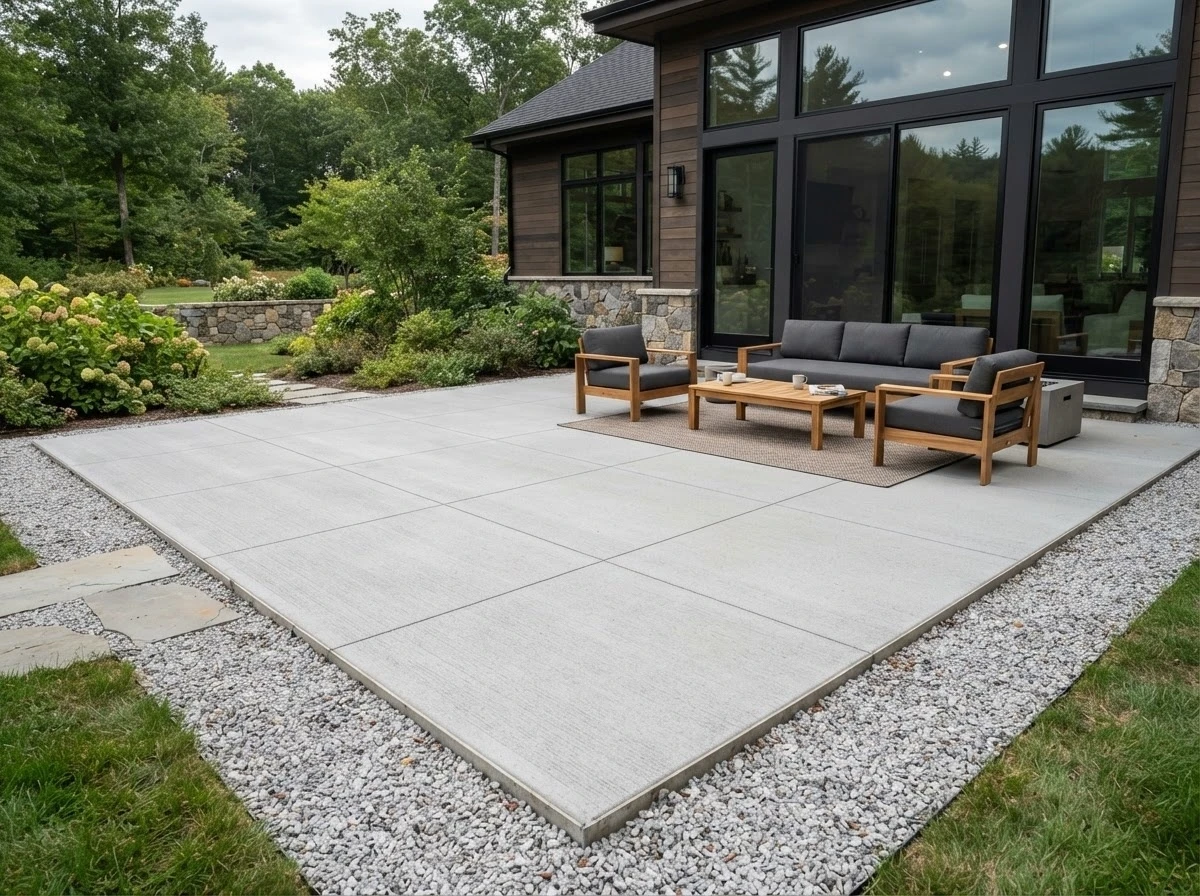
Poured concrete costs $6 to $15 per square foot. That’s the lowest price by far. But here’s the catch. In year eight or ten, hairline cracks show up. They widen each winter. You can patch them, but the patch always shows. Because the slab is one piece, you can’t just swap the bad part. In our climate, that low price often comes with a hidden cost.
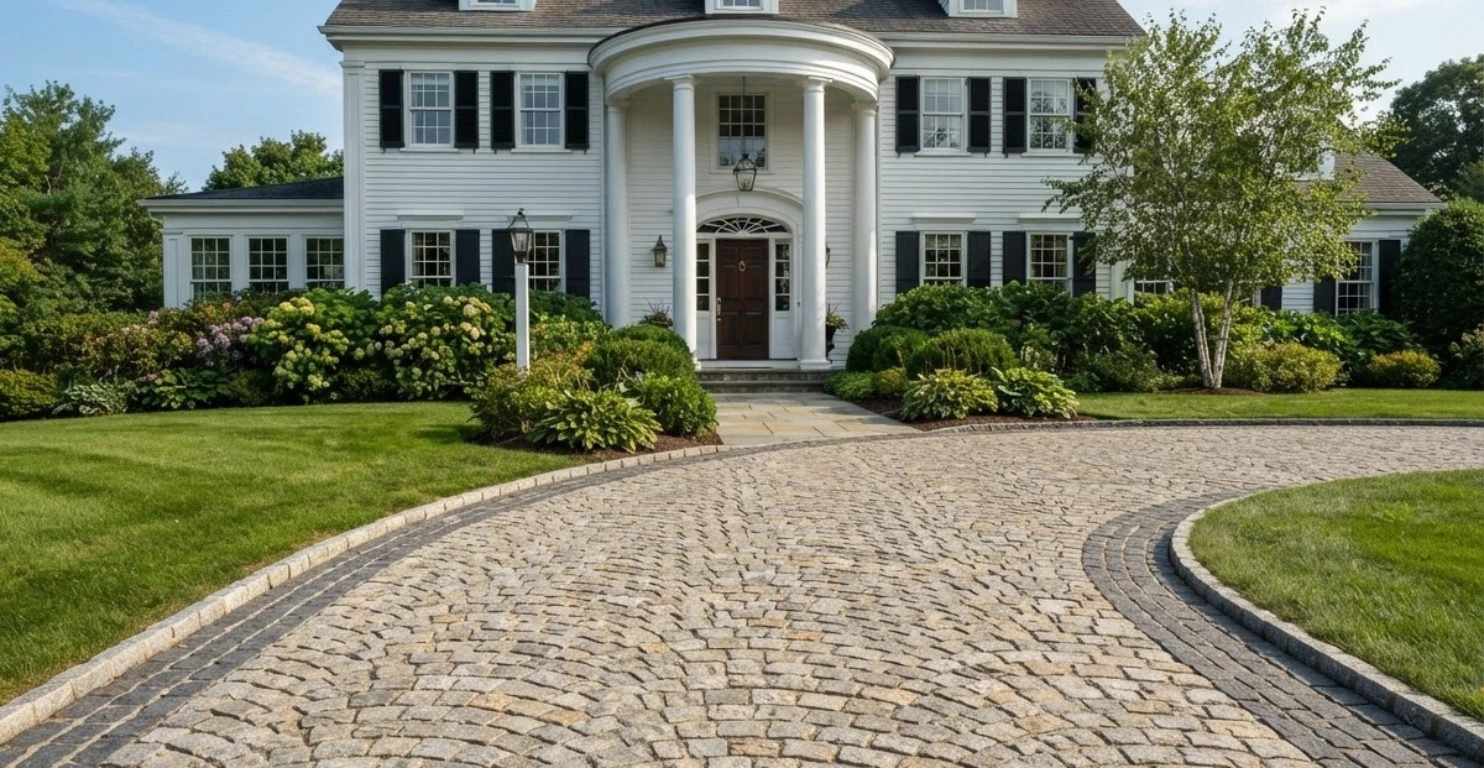
Natural stone includes bluestone, granite, and flagstone. It costs $25 to $85 per square foot. No other material looks quite like it. Density is the key factor here. Dense stone like bluestone or granite handles winter well. Softer, porous stone can flake or crack after enough freeze-thaw cycles. Pick a dense, tested stone, and it can outlast the house beside it.
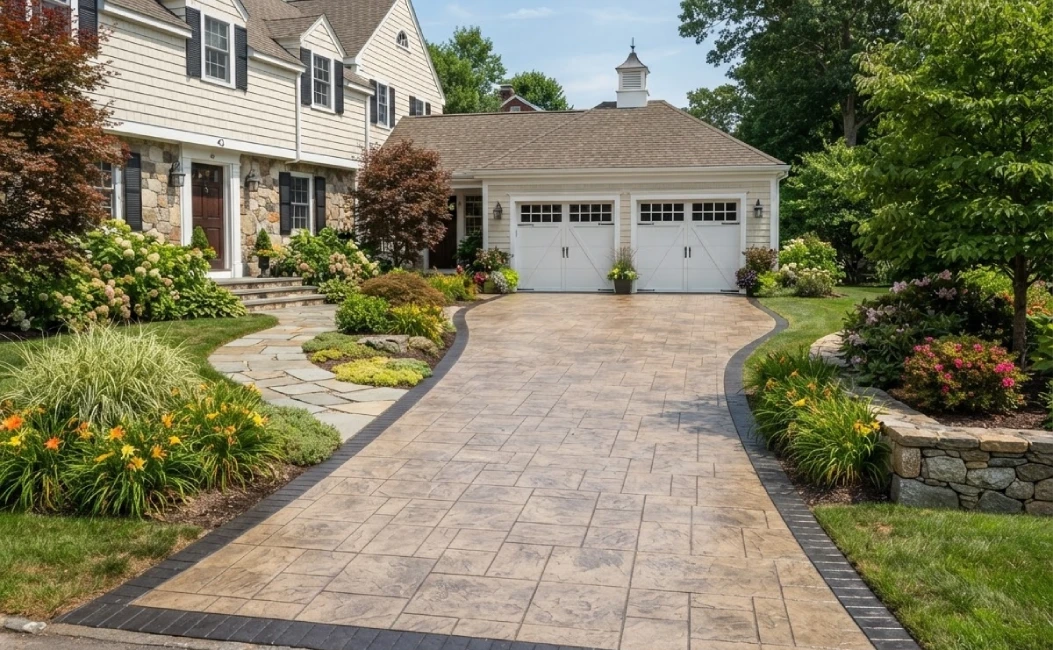
Stamped concrete tries to copy the look of pavers or stone. It costs less than real stone. But it shares the same weakness as poured concrete: it’s still one rigid slab. And a crack in a stamped pattern is even harder to hide, since matching the color years later rarely works.
Weighing pavers vs concrete vs natural stone comes down to your priorities. If price matters most, and you accept some cracking, plain concrete works. If you want the best mix of strength, style, and value, pavers are the smart pick for most homes. If you want a truly unique surface and don’t mind paying more, natural stone wins on looks. Many homeowners even blend two materials. Pavers cover the main patio, while stone forms a border or accent.
Pavers vs concrete vs natural stone: which is best for Massachusetts? Pavers usually win here. They flex with freeze-thaw cycles instead of cracking. Concrete costs less upfront but tends to crack. Natural stone lasts the longest and looks the most unique, at a higher price.
Is natural stone worth the extra cost? For many homeowners, yes. Dense stone like bluestone can last 50 to 100 years or more. It offers a look no paver fully copies, but it does cost more, at $25 to $85 per square foot.
Do pavers crack in cold weather? Rarely. Each unit moves on its own with the ground. It doesn’t fight the freeze the way one solid slab does. That’s why pavers outperform poured concrete through New England winters.
What’s the cheapest patio material? Poured concrete is cheapest at $6 to $15 per square foot. But it’s also the most likely to crack over time here, so the low price can cost more in the long run.
Can I mix pavers and natural stone in one patio? Yes. Many Massachusetts homeowners do this. A common layout uses pavers for the main area and stone for a border, steps, or accent, which balances cost and design.
The Pros, Inc. has built patios across the North Shore, Essex County, and Middlesex County for 20+ years. We work in every material on this list. We also build every base to the correct New England frost depth. That means your surface performs the way it should, no matter which one you pick. See our full hardscape design services or check patio pricing for your project.
Not sure which fits your yard? Call (857) 574-4380 or get a free consultation.