Pavers vs asphalt vs concrete driveway comes down to budget, winter, and how long you plan to stay. In the asphalt vs concrete driveway match-up, asphalt usually wins in Massachusetts on cost and winter performance. Asphalt costs the least, about $7 to $12 per square foot installed in Massachusetts, and it’s the easiest to plow. Concrete costs $10 to $18 and lasts longer, but salt and frost can crack it. Pavers cost $18 to $40, last the longest, and handle freeze-thaw winters best, because single pavers can be replaced.
Key takeaways
- Asphalt is the budget pick. It flexes in the cold and plows easily, but it needs sealcoating every 2 to 3 years.
- Concrete gives a clean look and a 25 to 30 year life, but cracks are hard to hide and new concrete shouldn’t get de-icers in its first year.
- Pavers cost the most upfront, but they move with frost instead of cracking, and you can replace one paver instead of the whole driveway.
- Base matters more than surface. All three fail early in Massachusetts without a deep, compacted gravel base.
- For a standard two-car driveway (about 640 square feet), plan on roughly $4,500 to $7,700 for asphalt, $6,400 to $11,500 for concrete, and $12,000 to $24,000 for pavers.
Pavers vs Asphalt vs Concrete Driveway: Quick Comparison
| Asphalt | Concrete | Pavers | |
| Cost per sq ft (MA, 2026) | $7–$12 | $10–$18 | $18–$40 |
| Two-car driveway (≈640 sq ft) | $4,500–$7,700 | $6,400–$11,500 | $12,000–$24,000 |
| Typical lifespan | 15–20 years | 25–30 years | 25–50+ years |
| Regular upkeep | Sealcoat every 2–3 years, fill cracks | Seal every few years, fix cracks | Re-sand joints, optional sealing |
| Snow plowing | Easiest | Easy | Fine with a rubber or poly plow edge |
| Frost and freeze-thaw | Flexes, but cracks and potholes form | Rigid, so it can crack and heave | Flexes; joints let pavers move |
| Repairs | Patches show | Patches show; slabs may need replacing | Lift and replace single pavers |
| Look | Plain black | Clean and bright; stamped or colored options | Many colors, patterns, and borders |
Asphalt and concrete prices are typical 2026 ranges for new driveways in Greater Boston and the North Shore, including base work. Paver prices come from our paver driveway cost guide. Removing an old driveway, steep grades, and tight access all add cost.
Why Massachusetts Winters Change the Best Driveway Material
Most driveway comparisons online are written for warm states. Here, however, the ground freezes and thaws dozens of times a winter. Water gets into every crack and joint, then freezes and expands. In addition, plows scrape the surface and road salt tracks in on every tire.
That’s why the best driveway material for a cold climate isn’t always the cheapest one. A surface that’s fine in Georgia can crack or heave after two New England winters. So before you compare an asphalt vs concrete driveway on price alone, look at three things: how the surface handles frost, how it handles plowing, and how it handles salt.
Frost Heave: Asphalt vs Concrete Driveway vs Pavers
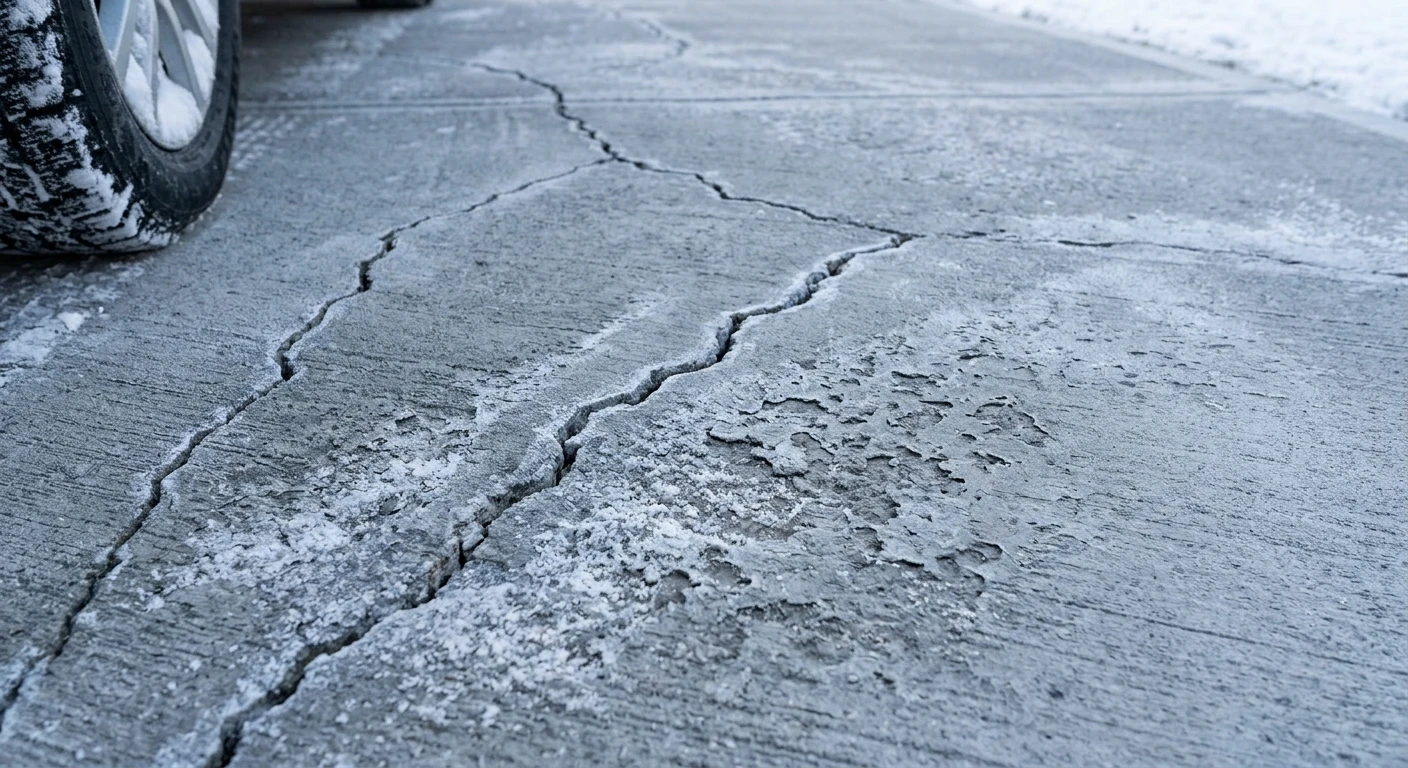
Concrete is rigid. When frost lifts the ground unevenly, a slab can’t bend, so it cracks. Control joints help, because they decide where the cracks go. Still, most concrete driveways here show some cracking over time.
Asphalt is more flexible, so it rides out small movements better. However, water that gets into cracks freezes and widens them, and that’s how potholes start. As a result, yearly crack filling matters.
Pavers are a different system. Each paver sits on sand over a compacted base, and the joints give the surface room to move. When frost shifts the ground, pavers move slightly instead of cracking. Then, if one settles, a crew can lift it, fix the base, and reset it.
Custom Deck & Patio Builders Massachusetts - The Pros, Inc.
Book a Project Consultation With Us
Thank You!
Your request has been received. Our team will contact you within 24 hours.
Snow Plowing on Each Driveway Material
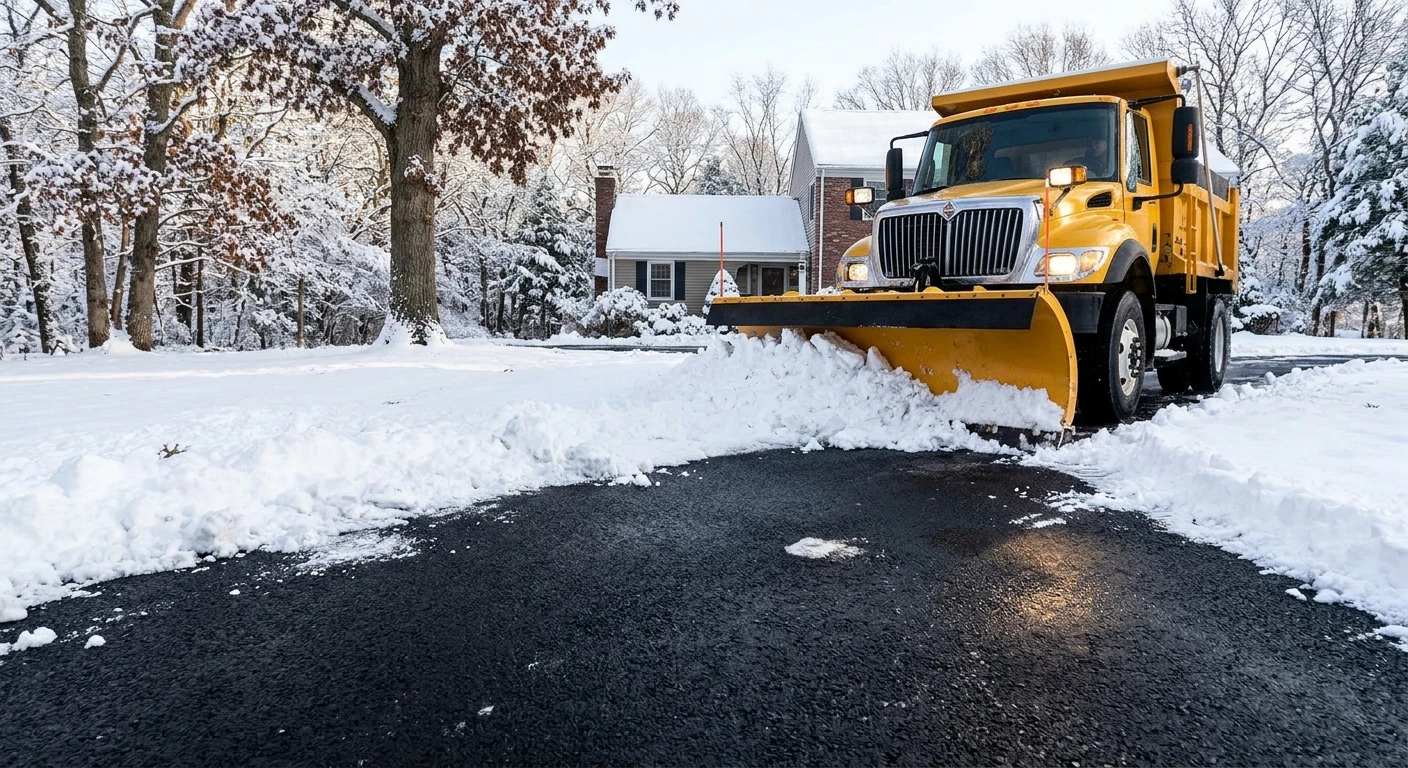
Asphalt is the easiest surface to plow, and its dark color also helps snow melt faster on sunny days. Concrete plows easily too.
You can plow a paver driveway. Use a rubber or polyurethane plow edge instead of bare steel, and set the blade slightly higher than you would for asphalt. Proper edge restraint keeps the outer rows from shifting. Our guide to snow plowing vs blowing vs shoveling covers the rest.
Road Salt and Concrete Driveway Salt Damage
A concrete driveway needs the most care with salt, because concrete driveway salt damage shows up as flaking and pitting on the surface. The Pennsylvania Aggregates and Concrete Association advises against de-icers on concrete less than one year old. After that, rock salt and calcium chloride are generally acceptable on good, dense concrete when used in moderation. Magnesium chloride, ammonium products, and fertilizer-based de-icers cause much more damage, so skip them. A penetrating silane or siloxane sealer adds protection.
On concrete pavers, rock salt is the least damaging de-icer, according to the Concrete Masonry and Hardscapes Association. For asphalt, the bigger danger is water in cracks rather than the salt itself.
For every surface, shovel or plow first and salt second. Our guide to ice melt damage explains which de-icer to use and how much.
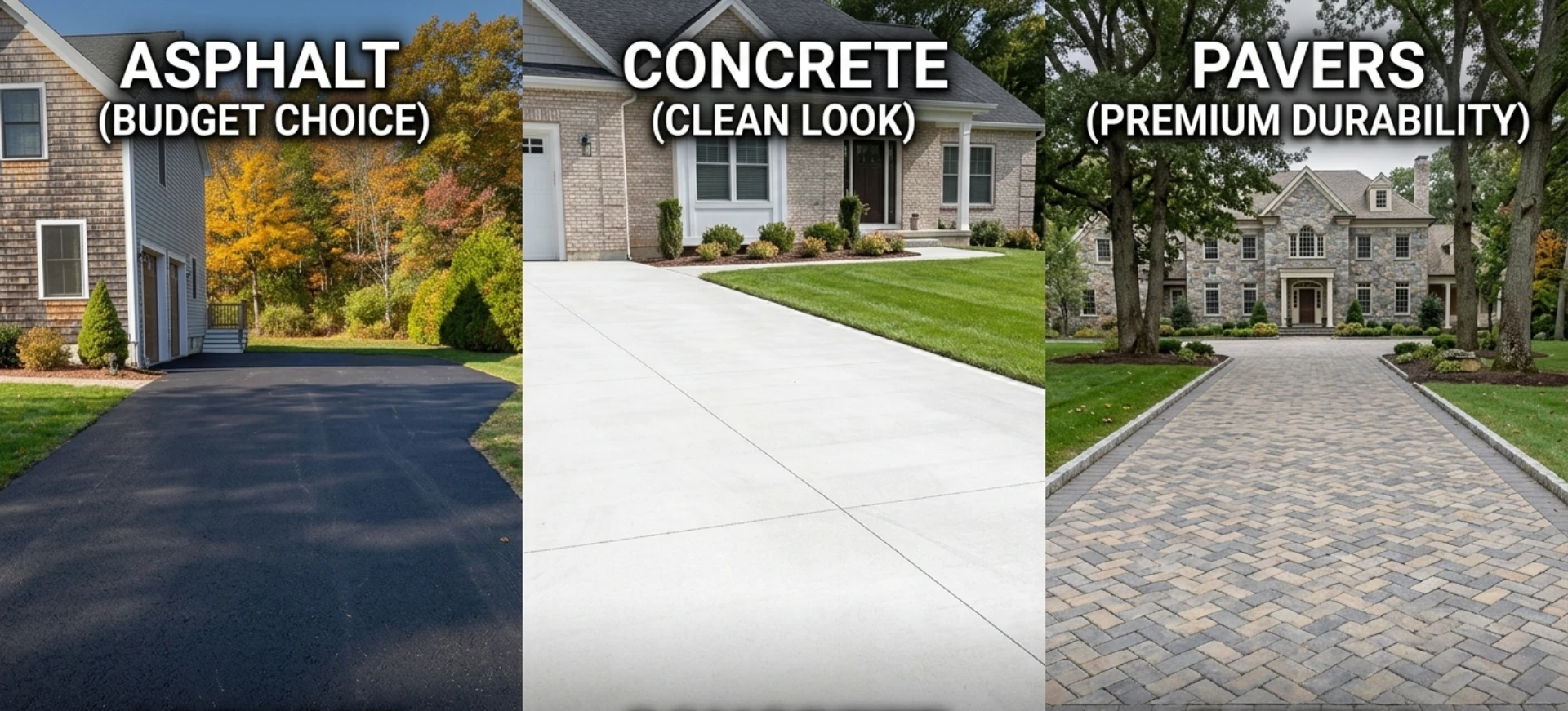
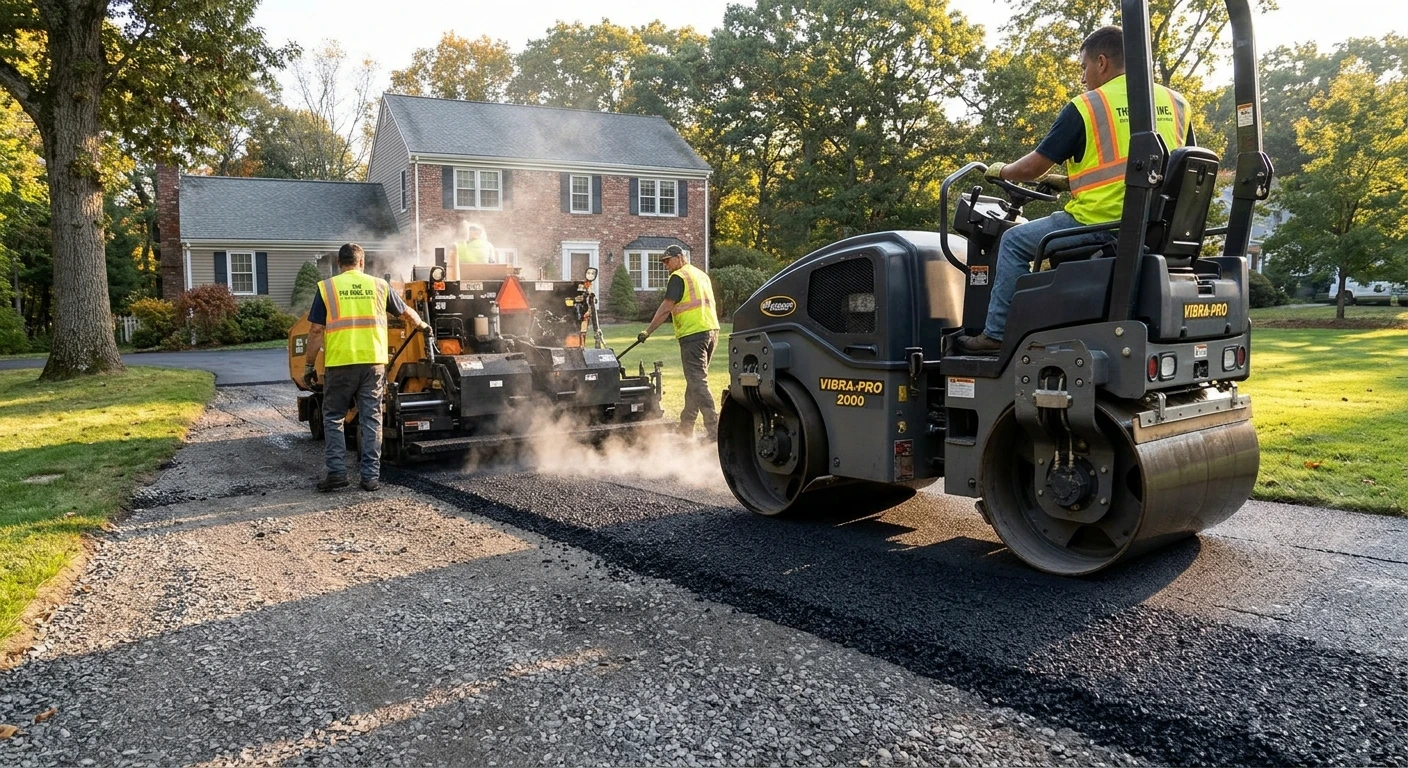
Asphalt Driveways: The Budget Choice
An asphalt driveway, often called blacktop, is the most common driveway in Massachusetts, and for good reason. It costs the least to install, it goes in fast, and it’s ready to drive on within days.
Pros
- Lowest upfront cost of the three
- Flexes with cold better than concrete
- Easiest to plow, and its dark surface helps snow melt
- Can be resurfaced with a new top layer instead of a full rebuild
Cons
- Needs sealcoating every 2 to 3 years, plus crack filling
- Softens in summer heat, so heavy loads and turning tires can mark it
- Shortest lifespan, about 15 to 20 years
- Only one look: black
Best for: homeowners who want a solid, plowable driveway on a tighter budget, or a long rural driveway where cost per foot adds up quickly.
Concrete Driveways: Clean Look, Careful With Salt
A poured concrete driveway gives a bright, clean finish that suits many modern homes. It also lasts longer than asphalt and needs less routine upkeep.
Pros
- Lasts about 25 to 30 years with good care
- Little routine upkeep beyond sealing
- Stays cooler in summer than asphalt
- Can be stamped, colored, or finished with exposed aggregate
Cons
- Rigid, so frost and settling can crack it
- Cracks and patches are hard to hide
- Needs careful de-icer choice, and no de-icers in its first year
- Repairs often mean replacing a whole section
Best for: homeowners who like a bright, low-upkeep surface and are willing to use salt carefully.
Paver Driveways: Highest Cost, Longest Life
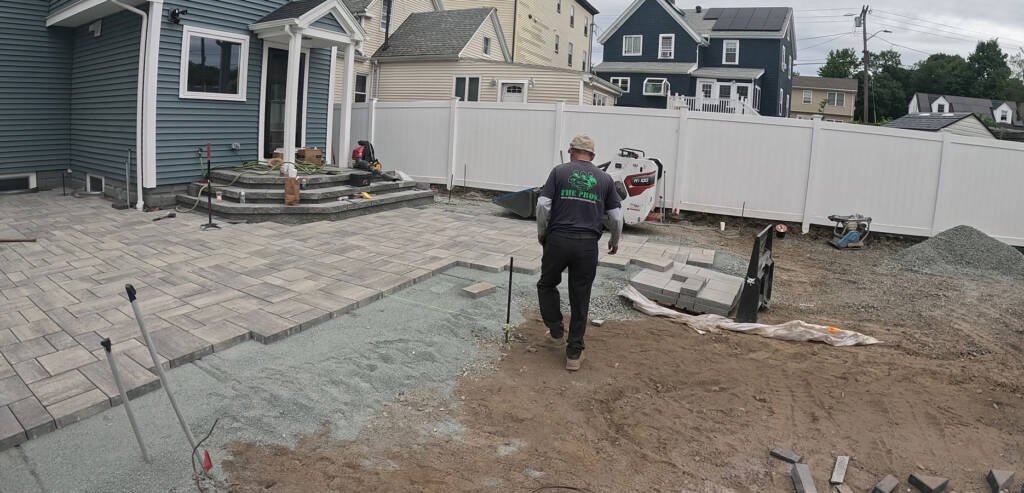
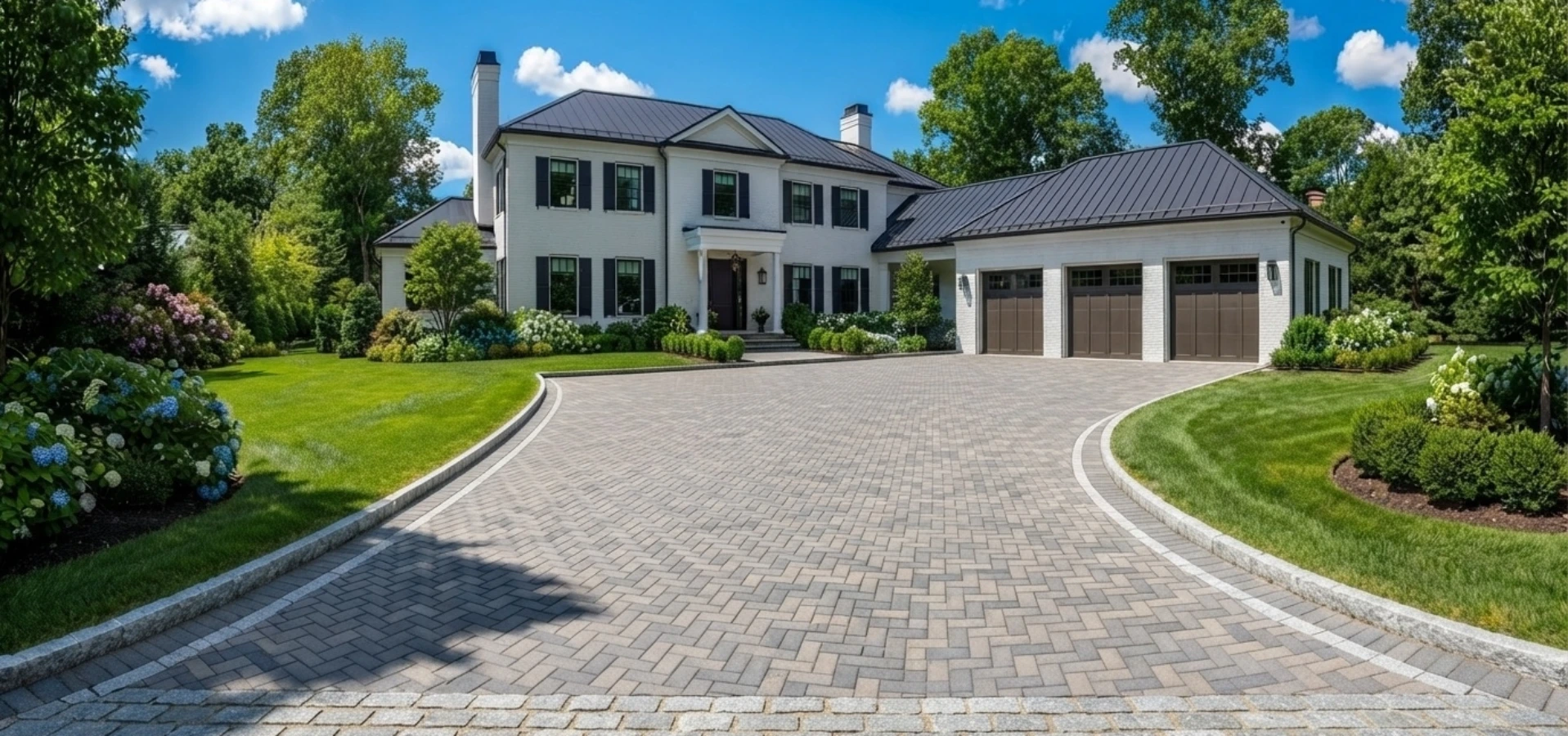
A paver driveway is built from interlocking concrete, brick, or stone pieces over a deep gravel base. In Massachusetts, that base runs 10 to 12 inches of compacted crushed stone, because the driveway has to handle both frost and vehicle weight.
Pros
- Longest life, often 25 to 50 years or more
- Flexes with freeze-thaw instead of cracking
- Single pavers can be replaced, so repairs don’t show
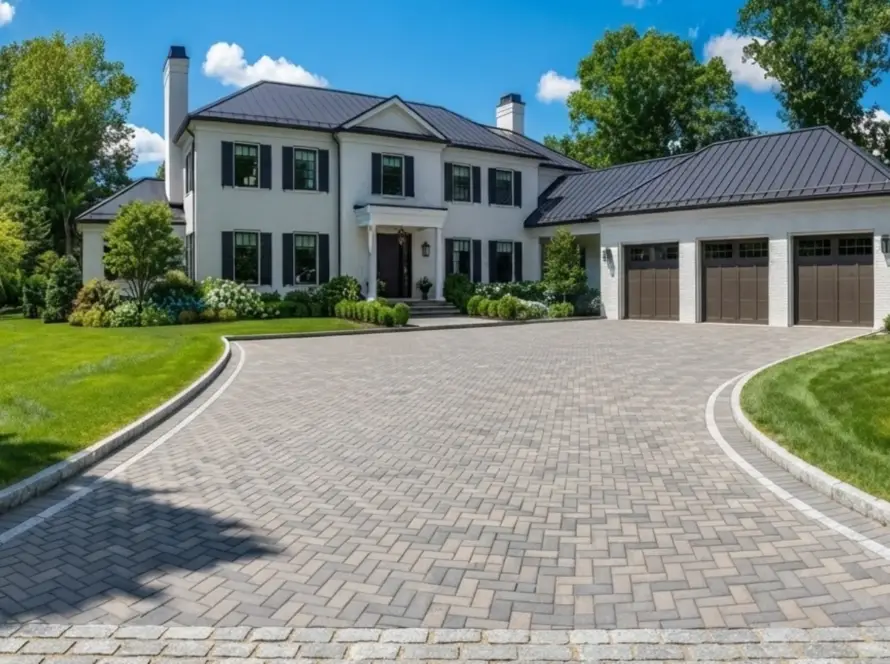
- The most design choices: colors, patterns, borders, and aprons
- Permeable pavers can help with drainage and stormwater rules
Cons
- Highest upfront cost
- Joints need re-sanding over time
- Needs a plow with a rubber or poly edge
- Quality depends heavily on the installer and the base
Best for: homeowners who plan to stay, want the strongest curb appeal, or have drainage problems a solid surface would make worse. For a full price breakdown, see our paver driveway cost guide.
Asphalt vs Concrete Driveway: Which Is Better Here?
For most Massachusetts homes, choosing an asphalt vs concrete driveway is a close call. Asphalt usually wins in our climate on cost, plowing, and flexibility, while concrete wins on lifespan and looks. If your driveway gets heavy salt or sits on soil that heaves, an asphalt driveway is often safer than a concrete driveway. On the other hand, if you want a brighter surface and can be careful with de-icers, concrete lasts longer.
Paver Driveway vs Asphalt: Is the Upgrade Worth It?
A paver driveway vs asphalt costs about two to three times as much upfront. However, pavers can last two or three asphalt lifespans, and they skip sealcoating. So the gap narrows over 25 or 30 years, especially if you stay in the home.
A middle option is also popular on the North Shore: an asphalt driveway with a paver apron at the street, or a paver border along the edges. You get the curb appeal where people see it and asphalt pricing for the rest.
Driveway Cost in Massachusetts: What a New Driveway Costs
Driveway cost in Massachusetts depends on more than the surface. These items show up on most real quotes:
- Removing the old driveway and hauling it away
- Excavation and base, the part that decides how long the driveway lasts
- Grading and drainage, such as a trench drain at the garage or a dry well
- Edging and aprons, such as granite or Belgian block curbing
- Permits, especially where the driveway meets a public street. Requirements vary by town.
Our driveway installation team gives one price that includes the base, drainage, and edging. That way, you can compare an asphalt vs concrete driveway, or pavers, on equal terms.
Which Driveway Material Should You Choose?
- Choose asphalt if you want the lowest cost and the easiest snow removal.
- Choose concrete if you want a bright, clean look and a longer life, and you’ll use de-icers carefully.
- Choose pavers if you plan to stay, want the most curb appeal, or want a driveway you can repair piece by piece.
Still weighing an asphalt vs concrete driveway against pavers? Not sure how each would look on your home? Our 3D landscape rendering shows your driveway in each material before you decide. To light the edges for safe parking at night, see our landscape lighting service.
Frequently Asked Questions
What is the best driveway material for Massachusetts?
It depends on budget and how long you’ll stay. Asphalt is the best value and the easiest to plow. Pavers last the longest and handle freeze-thaw winters best, because they flex and single pavers can be replaced. Concrete sits in between, but it needs careful de-icer use.
Is an asphalt or concrete driveway better in a cold climate?
Asphalt usually holds up better in a cold climate, because it flexes with frost and isn’t damaged by rock salt. Concrete lasts longer overall, but it’s rigid, so frost can crack it, and it should get no de-icers in its first year.
What is the cheapest driveway in Massachusetts?
Asphalt is the cheapest of the three, at about $7 to $12 per square foot installed in 2026. Concrete runs about $10 to $18, and pavers $18 to $40. Gravel costs less than all three, but it needs regular raking and is harder to plow.
Can you plow a paver driveway?
Yes. Use a rubber or polyurethane plow edge instead of bare steel, and set the blade slightly higher than you would for asphalt. A paver driveway with proper edge restraint holds up to years of regular plowing.
Does salt damage a concrete driveway?
It can. Don’t use any de-icer on concrete less than one year old. After that, use rock salt or calcium chloride in moderation, and avoid magnesium chloride, ammonium products, and fertilizer-based de-icers. A penetrating sealer adds protection.
How long do asphalt, concrete, and paver driveways last?
In Massachusetts, asphalt lasts about 15 to 20 years, concrete about 25 to 30 years, and pavers 25 to 50 years or more. A deep, well-compacted base and regular upkeep push each one toward the long end.
Can pavers go over an existing asphalt or concrete driveway?
We don’t recommend it for a driveway. Cars put heavy loads on the surface, so a paver driveway needs its own deep, compacted gravel base. The old driveway should come out first, so the new one doesn’t crack, shift, or drain poorly.
When is the best time to install a driveway in Massachusetts?
Spring through late fall. Asphalt and concrete both need above-freezing weather to install and cure properly. Booking over the winter helps you get on the schedule before the spring rush.
Driveway Installation on the North Shore and Beyond
The Pros, Inc. has built driveways across the North Shore, Essex County, and Middlesex County for more than 20 years, including asphalt, concrete, and paver driveways. Whether you choose an asphalt vs concrete driveway or pavers, we build every base for our frost depth and real vehicle loads, and we match the driveway to your walkways, patio, and landscape.
Ready to compare materials for your home? Request a free estimate or call (857) 574-4380. Our office at 29 Hanover St in Lynn is open Monday to Friday, 9 AM to 6 PM, and Saturday, 9 AM to 4 PM.
The Pros, Inc. Hardscaping Company MA