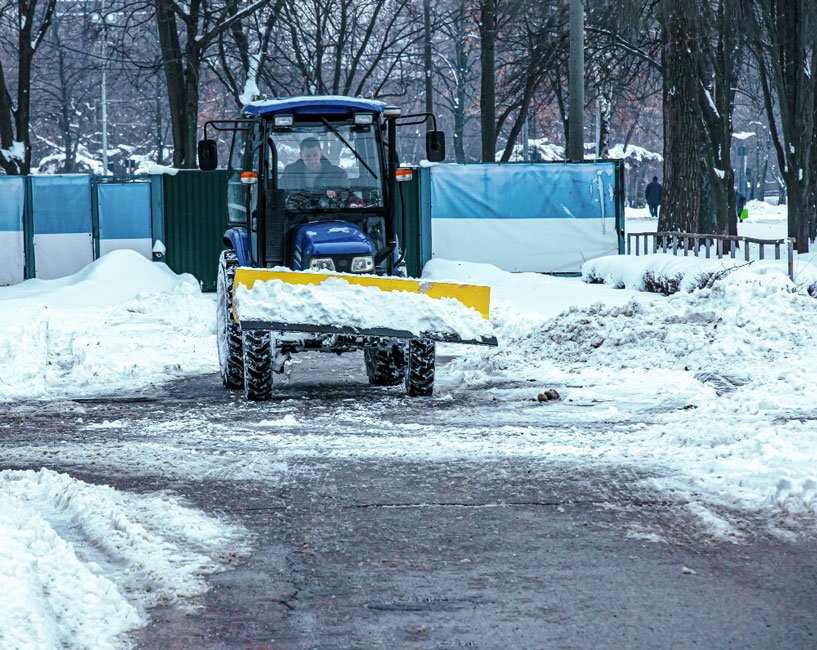
To prevent ice melt damage, shovel first and salt second. Is rock salt bad for pavers? Not in small amounts. In fact, it’s the best ice melt for pavers, but it causes salt damage to lawns and plants. So spread a thin layer only on ice, keep salty snow off grass and beds, and water the soil deeply each Massachusetts spring.
Key takeaways
- Shovel before you salt. Ice melt should treat ice, not replace snow removal.
- Rock salt is the gentlest de-icer on concrete pavers, but the hardest on plants.
- Calcium chloride keeps working to about minus 20°F, while rock salt slows below about 20°F.
- Skip magnesium chloride and fertilizer de-icers on pavers. They can break down concrete.
- Protect plants with burlap screens, and keep salty snow piles off lawns and beds.
- In spring, rinse pavers, refill joint sand, and water salty soil deeply.
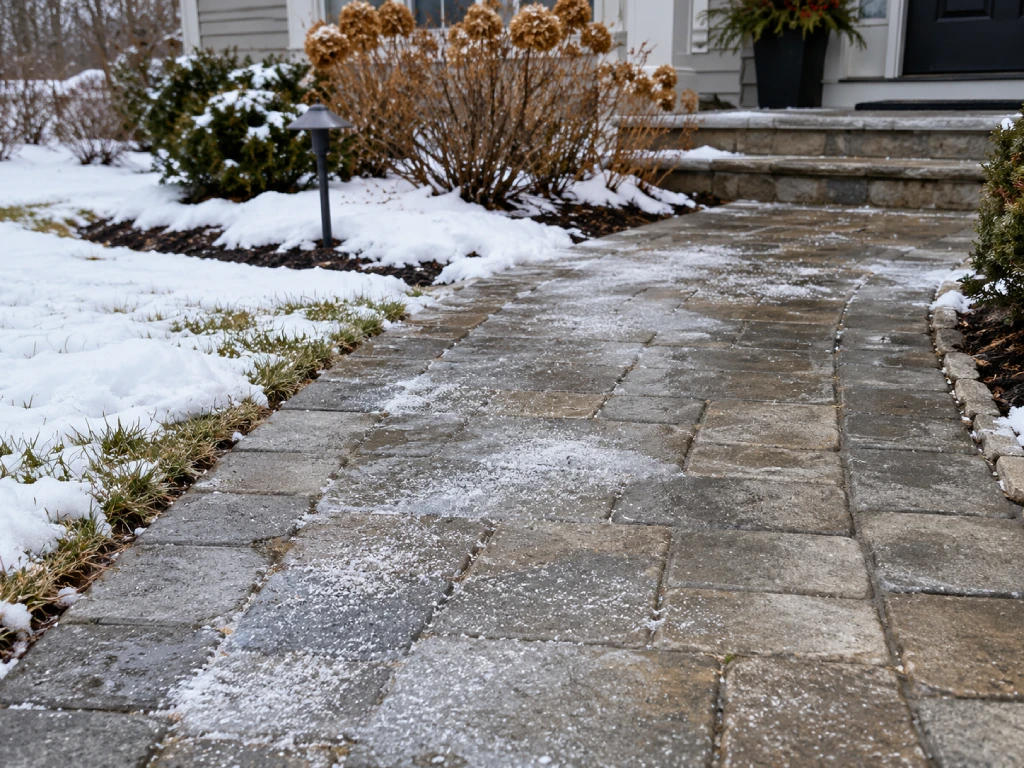
Why Ice Melt Damage Is Worse in Massachusetts
A Massachusetts winter swings above and below freezing again and again. Every time ice melt turns ice into water, that water can soak into stone and soil, and then refreeze. Over a season, those cycles add up.
Salty water does two kinds of harm. First, brine soaks into porous stone, brick, and concrete. When the salt crystallizes, it can expand by 10 to 20 percent, which flakes and chips the surface. Second, sodium and chloride build up in the soil. As a result, roots struggle to take up water, and plants dry out even when the ground is wet.
North Shore homes face extra salt. Road crews spread salt on every street, plows push salty slush onto lawns, and coastal towns such as Marblehead, Swampscott, and Nahant also get salt spray from the ocean. That’s why a simple plan for ice melt damage pays off every spring.
Ice Melt Compared: Which De-Icer Should You Use?
Each de-icer works at a different temperature and causes a different kind of ice melt damage. Here is how the common types compare.
De-icer | Works down to about | On pavers and concrete | On lawns and plants |
Rock salt (sodium chloride) | 20°F | Least damaging to concrete pavers | The most harmful to plants and soil |
Calcium chloride | -20°F | Use sparingly | Less harmful than rock salt |
Magnesium chloride | 0°F | Can break down concrete; avoid on pavers | Less harmful than rock salt |
Potassium chloride | 25°F | Use sparingly | Less harmful than rock salt |
Calcium magnesium acetate (CMA) | 20°F | Can break down concrete; avoid on pavers | Very low impact |
Sand | Doesn’t melt ice | No chemical damage | No chemical damage |
Note: Temperatures come from University of Wisconsin–Madison Extension. Paver guidance comes from the Concrete Masonry and Hardscapes Association (CMHA). Plant guidance comes from UMass Amherst Extension.
The de-icer that’s gentlest on plants isn’t always the gentlest on pavers. So the best approach is to use less of any product, keep it on hard surfaces, and keep it away from lawns and beds.
How to Prevent Ice Melt Damage to Pavers and Walkways
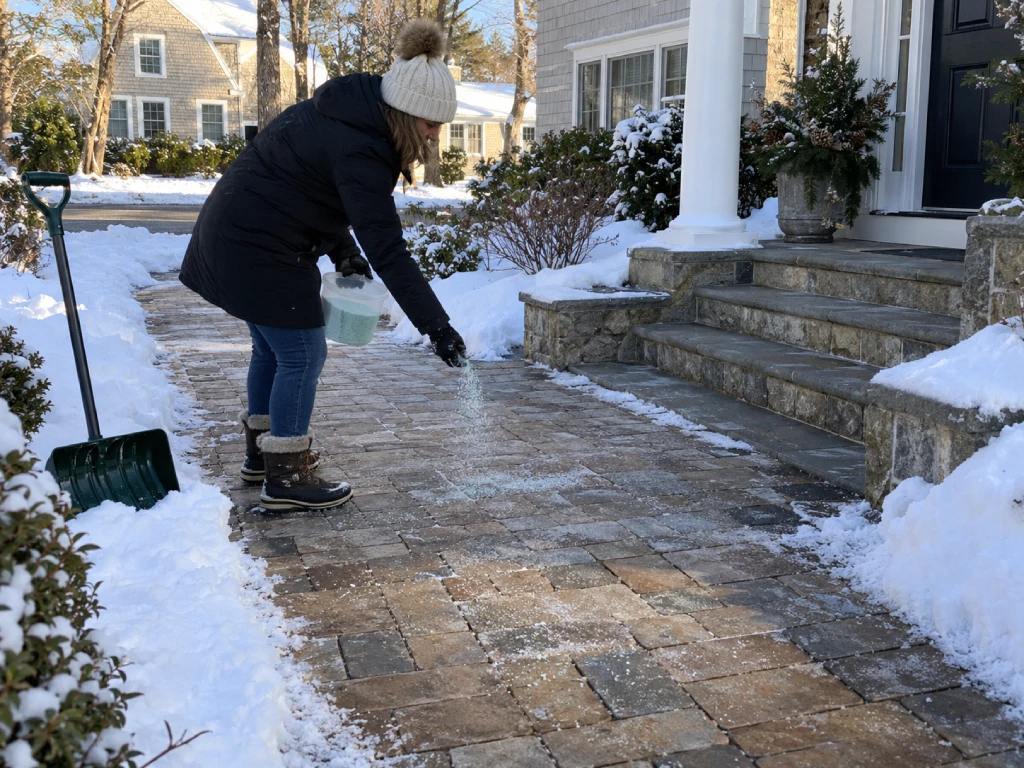
Paver patios and walkways hold up well in winter when they’re built on a deep base. Still, the wrong de-icer or too much of it can cause ice melt damage over time. Follow these steps.
- Shovel or plow first. CMHA advises against using de-icers in place of snow removal. Clear the snow, then treat only the ice that’s left.
- Choose the right product. Rock salt is the best choice for pavers. On very cold days, calcium chloride works when rock salt won’t, so use it sparingly.
- Avoid three products. Skip magnesium chloride, CMA, and fertilizer-based de-icers on concrete pavers, because they can break down the concrete.
- Use less. Follow the label. A thin, even layer works better than a heavy dose, and extra salt only adds to the damage.
- Sweep away slush. Once the ice melts, shovel or sweep away the salty slush, so it doesn’t refreeze or soak into the joints.
- Use a plastic shovel blade on pavers and natural stone. Metal edges can chip and scratch the surface.
- Consider a sealer. Sealing is optional, but it reduces how much salty water soaks into joints and stone.
Natural stone and brick are more porous than concrete pavers, so they absorb more brine. On bluestone, brick, or flagstone, be even more careful with the amount you spread. Not sure which material you have? Our guide to pavers vs. concrete vs. natural stone patios explains the differences.
Professional Snow Removal Company MA | The Pros, Inc.
Book a Project Consultation With Us
Thank You!
Your request has been received. Our team will contact you within 24 hours.
How to Prevent Salt Damage to Your Lawn
Salt damage to lawns shows up in spring as brown strips along driveways, walkways, and the street. It happens because salty snow sits on the grass for weeks. Here is how to stop this kind of ice melt damage.
- Keep salt on hard surfaces. Spread ice melt only on pavement, not on the grass edges.
- Pile snow carefully. Don’t shovel or plow salty snow onto the lawn. Instead, pick a snow storage spot away from grass and beds.
- Mark your edges. Driveway markers help plow drivers see where the pavement ends, so they don’t scrape and salt the turf.
- Water deeply in early spring. Heavy watering flushes salt below the root zone before the grass wakes up.
- Treat clay soil. On heavy clay soils, University of Wisconsin–Madison Extension recommends gypsum, which helps push sodium out of the soil.
How to Protect Trees, Shrubs and Garden Beds
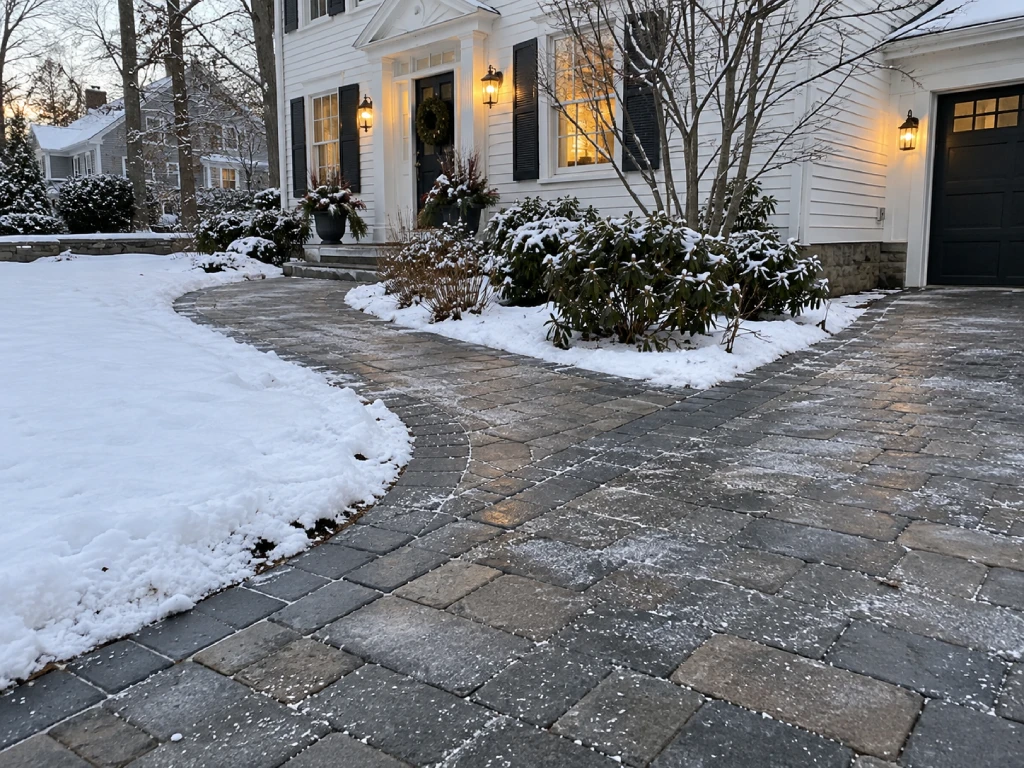
Salt damage to plants in Massachusetts comes from two directions: spray that lands on branches, and salty water that soaks into the soil. According to UMass Amherst Extension, the damage often doesn’t show until late winter or spring.
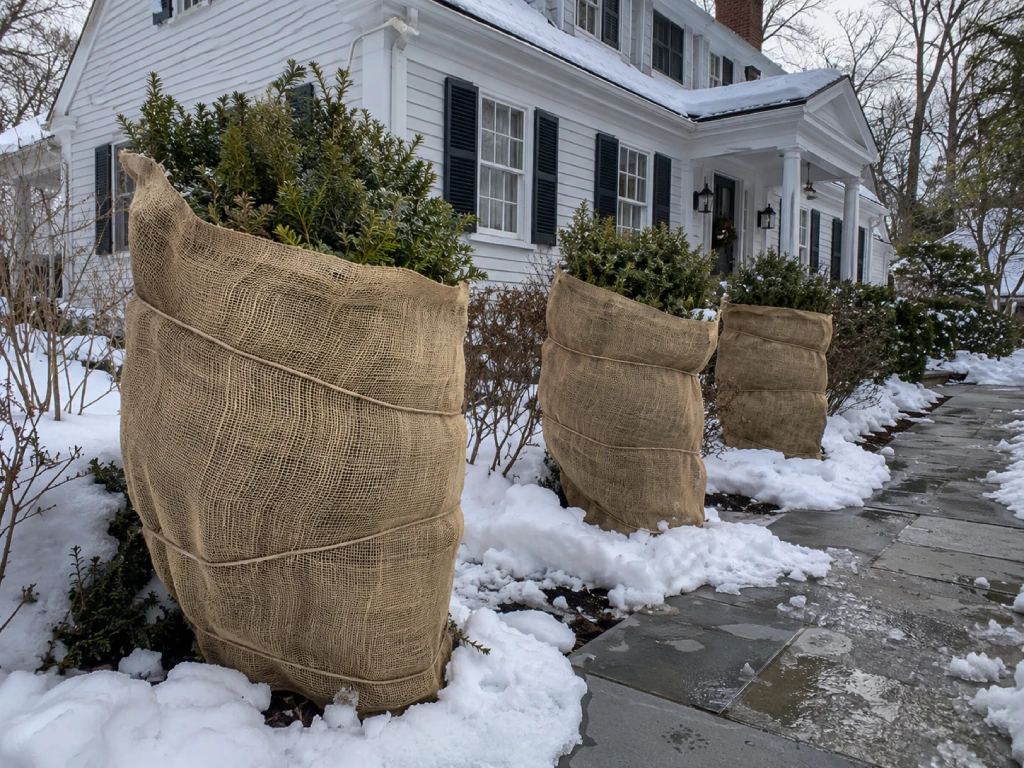
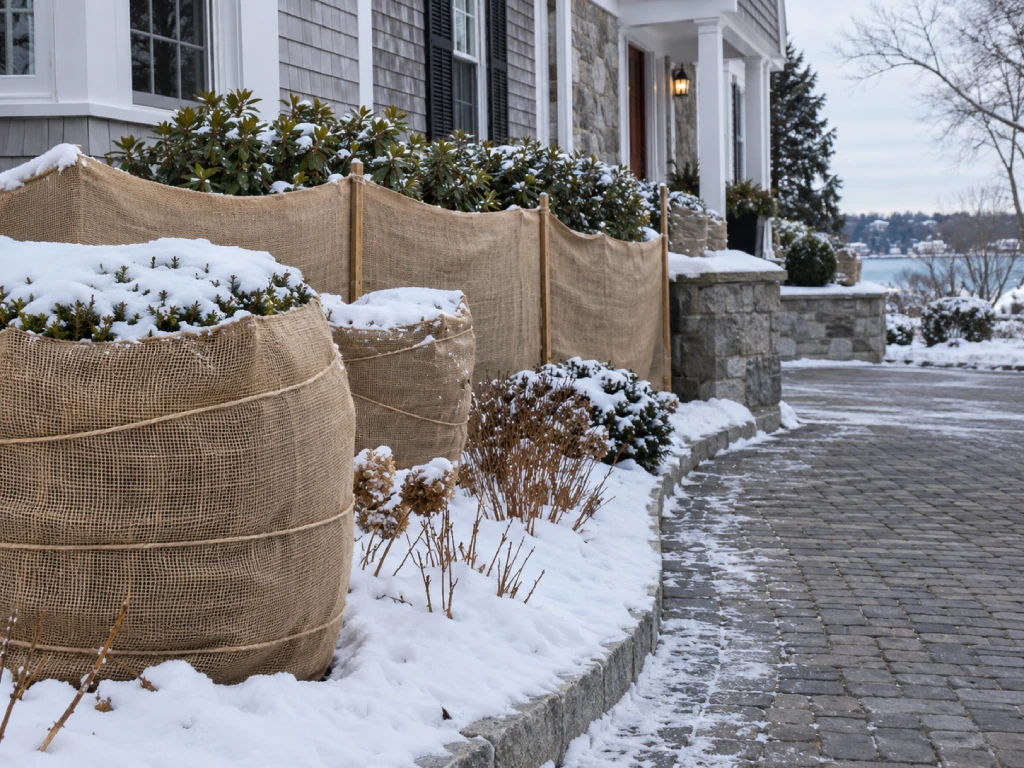
- Put up a barrier. In late fall, wrap shrubs near the street or driveway in burlap, or set up a short snow fence.
- Redirect runoff. Keep meltwater from driveways and walkways from draining into beds.
- Rinse during a thaw. On a mild winter day, rinse salt off evergreens near the road, before buds open.
- Plant salt-tolerant plants near pavement. UMass lists juniper, rugosa rose, white spruce, mugo pine, thornless honeylocust, and northern red oak among the more salt-tolerant choices.
- Keep sensitive plants back. Sugar maple, red maple, eastern white pine, eastern hemlock, boxwood, and viburnum are among the most salt-sensitive.
Planning new beds next to a driveway? Our plants and garden team can choose salt-tolerant plants that still look good all year.
Is Ice Melt Safe for Pets?
Rock salt can irritate pets’ paws, and many dogs try to lick it off. So wipe your dog’s feet after every winter walk. Products labeled pet-friendly are usually gentler, but read the ingredient list and store every bag where pets can’t reach it.
A Simple Winter Routine to Prevent Ice Melt Damage
- Before the storm: set out driveway markers, put up burlap screens, and move snow storage away from beds.
- During the storm: shovel or plow early and often, so snow doesn’t pack into ice.
- After the storm: treat only the ice that’s left, with a thin layer of the right de-icer.
- After it melts: sweep away the salty slush, and pile snow away from lawns and plants.
- In spring: rinse pavers and walkways, refill joint sand, flush lawns and beds with water, and reseed any bare spots.
Spring Repair for Ice Melt Damage
Even careful homeowners see some ice melt damage by March. Fortunately, most of it is easy to fix.
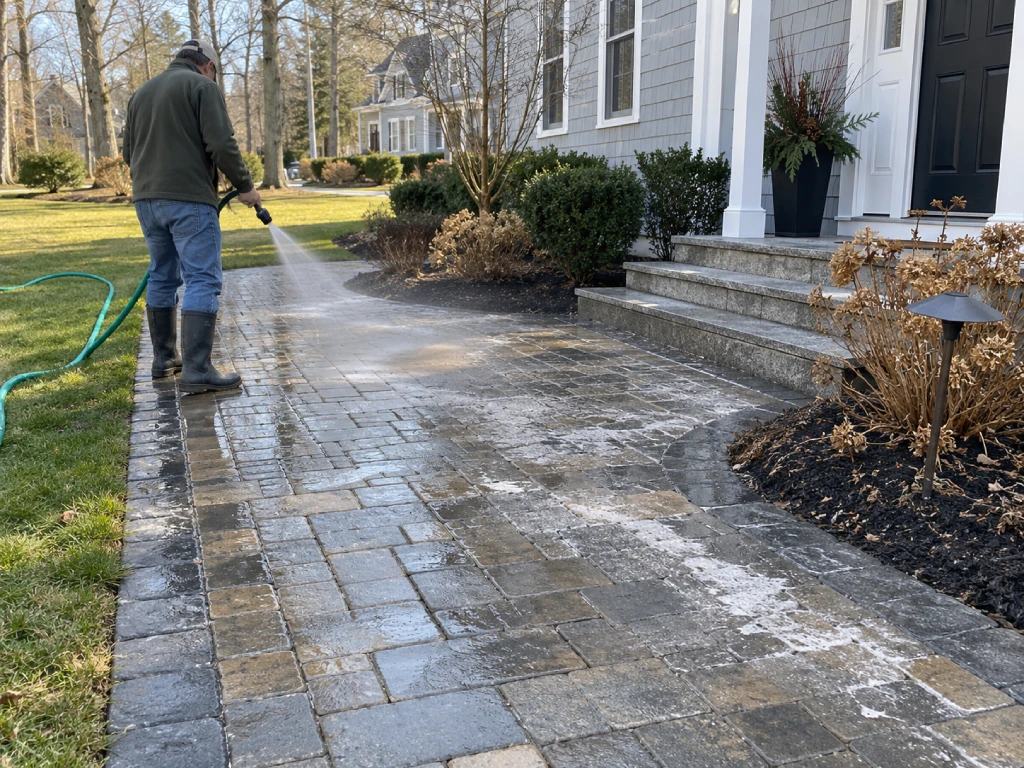
- Pavers: rinse off salt residue, then refill any joints that lost sand. Re-level any pavers that frost moved.
- Lawn: water deeply, rake out dead grass, and add a thin layer of topsoil. Then reseed with a salt-tolerant blend. For large areas, sod installation is faster.
- Plants: wait until buds open, then prune only the branch tips that stay dead.
Our spring landscaping checklist for Massachusetts covers the rest of your spring cleanup.
Frequently Asked Questions
Is rock salt bad for pavers?
Not when used sparingly. The Concrete Masonry and Hardscapes Association says rock salt is the least damaging de-icer for concrete pavers. Ice melt damage comes from overuse, so shovel first, spread only a thin layer on ice, and sweep away the leftover slush.
What is the best ice melt for pavers?
Rock salt is the gentlest on concrete pavers, and calcium chloride is the best choice for very cold days below about 20°F. Avoid magnesium chloride, calcium magnesium acetate, and fertilizer-based products on pavers, because they can break down concrete.
What ice melt is safest for lawns and plants?
Calcium magnesium acetate and potassium chloride are the gentlest on plants, and sand causes no chemical damage at all. Rock salt is the most harmful to lawns and shrubs, because its sodium dries out roots and damages soil.
At what temperature does rock salt stop working?
Rock salt slows down sharply below about 20°F and does little in deeper cold. Calcium chloride keeps working to about minus 20°F, so it is the better choice for the coldest Massachusetts nights.
How do I fix grass damaged by salt?
In early spring, water the damaged area deeply to flush salt below the root zone. Then rake out the dead grass, add a thin layer of topsoil, and reseed with a salt-tolerant seed blend. For large areas, new sod is faster.
Can I use sand instead of ice melt?
Yes, for traction. Sand doesn’t melt ice, but it makes walkways less slippery and causes no chemical damage to pavers or plants. Many homeowners mix a small amount of salt into sand to get both melting and grip.
Is ice melt safe for pets?
Rock salt can irritate pets’ paws, so wipe your dog’s feet after walks. Products labeled pet-friendly are usually gentler, but check the label for ingredients and keep any ice melt where pets can’t eat it.
Let The Pros, Inc. Handle Winter and Spring
The Pros, Inc. provides snow removal across the North Shore, Essex County, and Middlesex County. We also build and repair patios and walkways, so we know how plows and salt affect stone and pavers. If you hire any snow removal company, ask what de-icer they use near your pavers and planting beds.
Want to compare plans first? See our guide to residential snow removal cost in Massachusetts, or read our snow removal tips.
Ready for winter? Request a free quote or call (857) 574-4380. Our office at 29 Hanover St in Lynn is open Monday to Friday, 9 AM to 6 PM, and Saturday, 9 AM to 4 PM.
The Pros, Inc. Snow Removal Company MA