Backyard Fire Pit Ideas for New England Patios

A fire pit is the cheapest way to add months to your outdoor season. But the best backyard fire pit ideas aren’t really about the pit itself. They’re about where it sits and what surrounds it. They’re also about how the smoke behaves on a cold October night. Get those right and the space gets used constantly. Get them wrong and it becomes an expensive stone ring nobody sits around. Here are ten designs that work in New England. The siting rules that make them work follow at the end.

Quick Answer: The most effective backyard fire pit designs pair a 36 to 44 inch pit with a surrounding patio at least 12 to 14 feet across, seating set 3 feet back from the edge, and placement that accounts for prevailing wind. Built-in seat walls, sunken designs, and gas burners are the three upgrades that most increase how often the space gets used.

Key Takeaways

  • Size the patio, not just the pit. You need roughly 12 to 14 feet of clear space for seating to work.
  • Wind decides everything. Smoke follows the breeze, so seating placement matters more than pit style.
  • Seat walls are the highest-value upgrade. They add permanent seating and tie the pit into your hardscape.
  • A masonry pit needs a real base. On a shallow footing, it heaves and tilts like any other structure here.
  • Decks need extra protection. Composite boards scorch, so a heat barrier isn’t optional.

1. The Classic Paver Patio Fire Pit

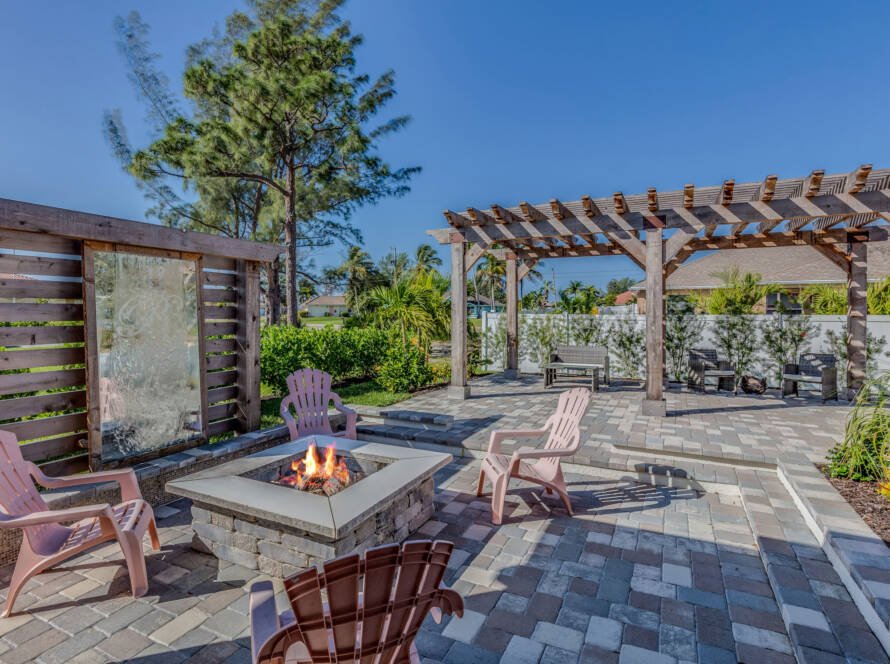
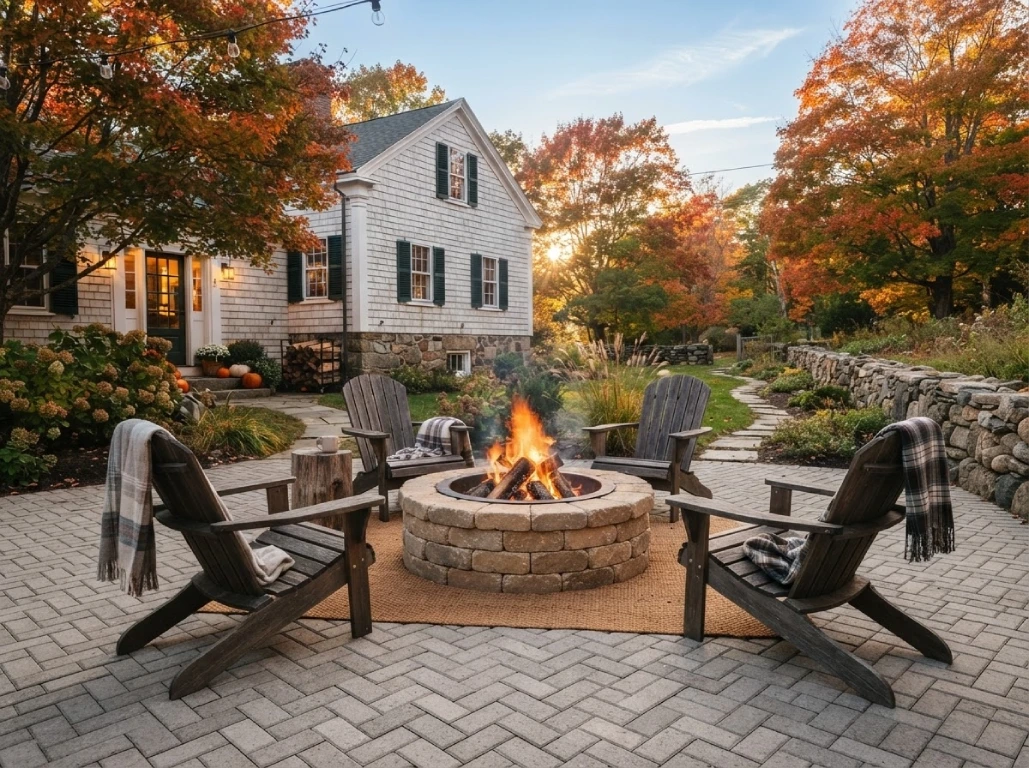
The most common design for a reason. A round masonry pit sits centered in a paver patio, with movable chairs around it. It’s flexible and suits almost any yard. It also matches whatever pavers you already have.

Keep the pit between 36 and 44 inches across. Smaller feels like a token gesture. Larger pushes seating too far from the heat. That defeats the purpose in October.

Classic stone fire pit patio - New England farmhouse

2. Sunken Fire Pit With a Lowered Seating Area

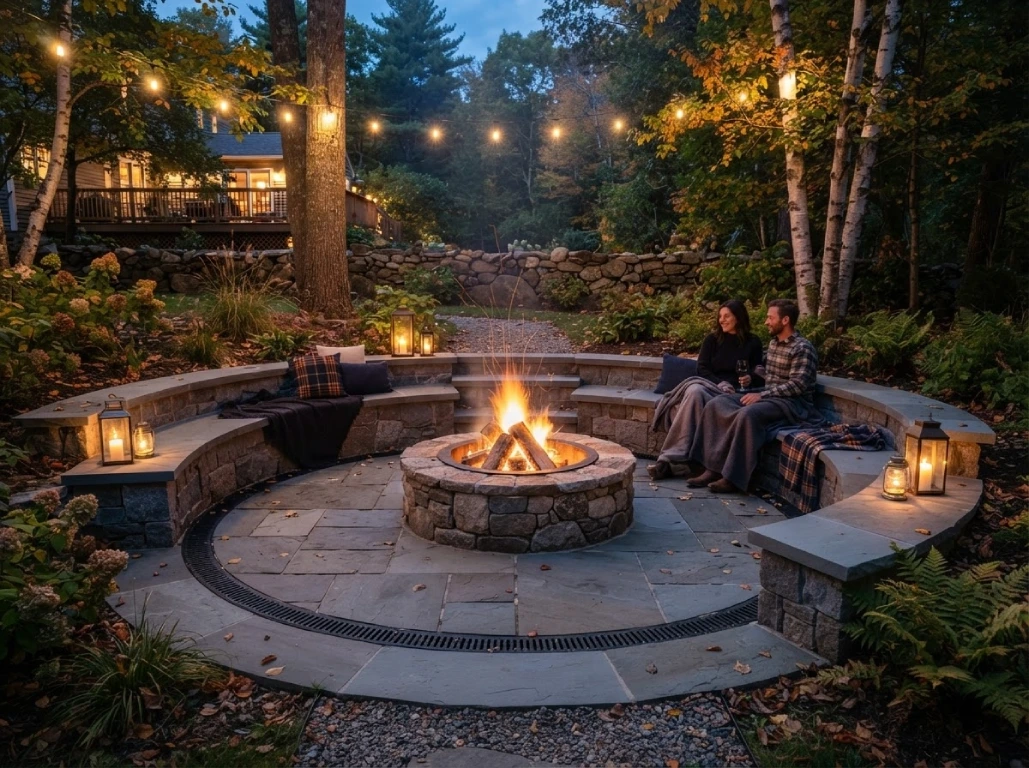
A sunken pit sits at or below the surrounding grade. The fire feels contained, and the whole area reads as a distinct “room.” It’s the most architectural option on this list.

The tradeoff is drainage. A recessed area collects water, and here it collects snowmelt too. So this design needs a drain built in from the start.

Sunken bluestone fire pit with seat walls - North Shore MA

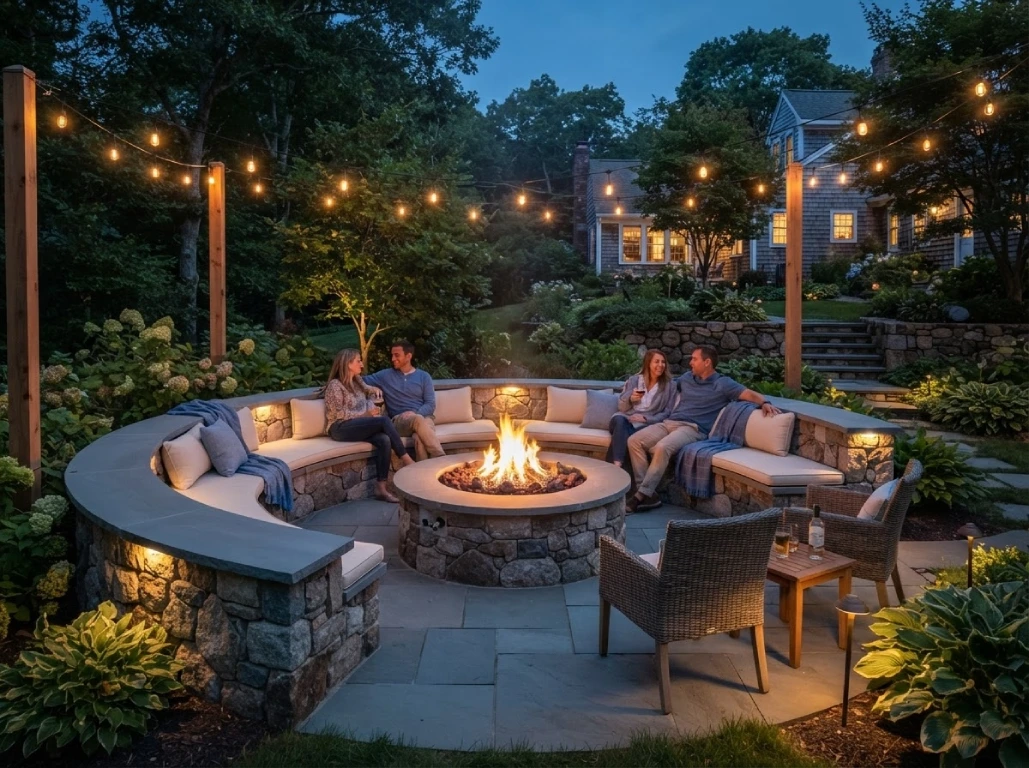
3. Built-In Seat Walls Around the Fire

This is the upgrade that changes how much a fire pit gets used. Wrap a low retaining or seat wall around two or three sides. You get permanent seating that never blows over and never needs storing. It also works as a design element the rest of the year.

Build seat walls 18 to 20 inches high, which matches normal chair height. Set them about 3 feet back from the pit edge. That’s close enough for warmth and far enough for comfort.

Fieldstone seat walls around gas fire pit - Essex County MA

Outdoor Living Design Expert MA

Call Us857-574-4380

Book a Project Consultation With Us

Please enter a valid email.
Please enter your mobile number.
Please enter your name.
Please enter your address.
Please enter your state & zip.
Please select a project type.
Please select a budget.
Please choose a start date.
Please select an option.
Please describe your project.

Thank You!

Your request has been received. Our team will contact you within 24 hours.

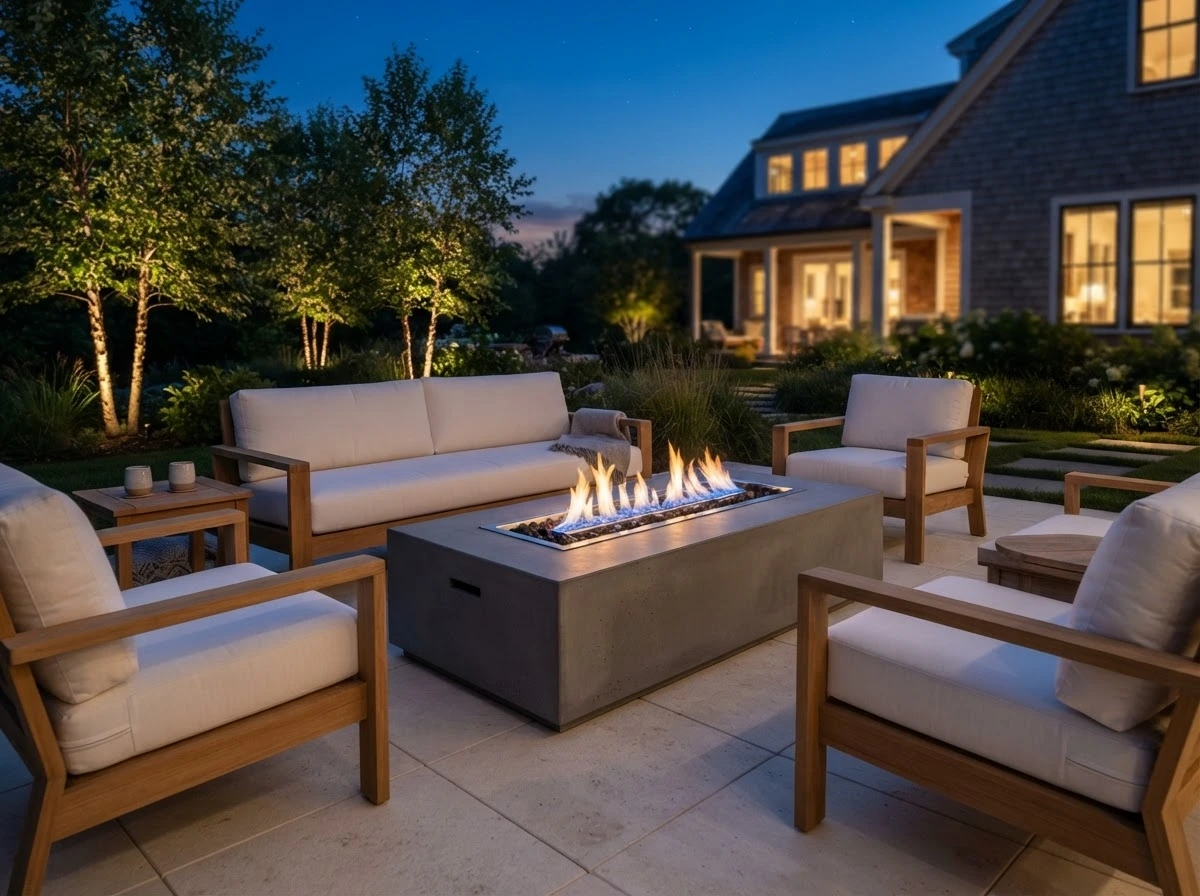
4. Gas Fire Pit for Instant Use

A gas burner lights with a switch and produces no smoke. It also needs no wood storage or ash cleanup. That convenience matters more than people expect. A wood fire is an event you plan. A gas fire is something you turn on for twenty minutes after dinner. That means it actually gets used on a Tuesday.

Gas also solves the smoke problem entirely. So it’s the better choice on tight lots where neighbors sit close.

Modern gas fire table patio - North Shore MA

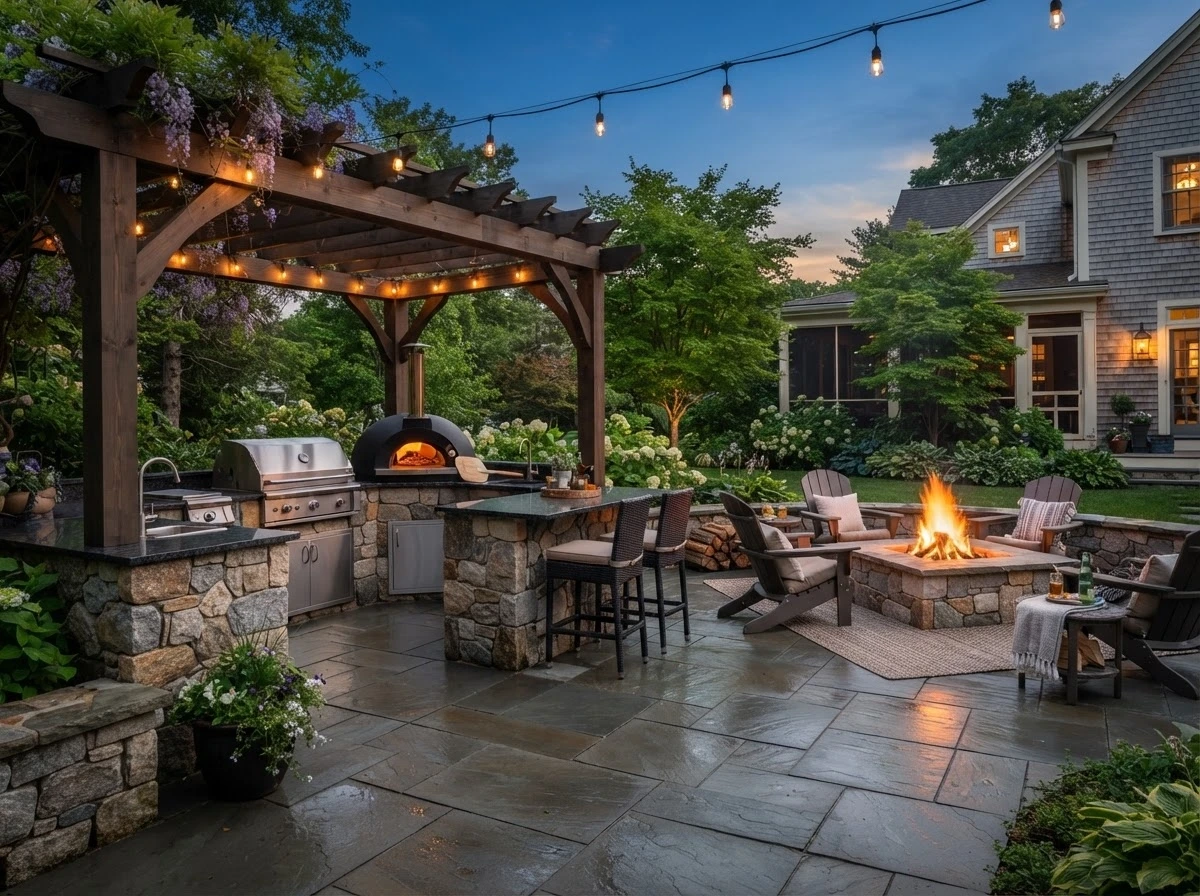
5. Fire Pit and Outdoor Kitchen Together

Pair a fire feature with a cooking area and you get one connected entertaining zone, not two separate spots. The layout logic is simple. Cooking sits on one side and gathering on the other. Leave circulation space between, so guests aren’t standing in the cook’s way. See our outdoor kitchen cost guide if you’re considering both.

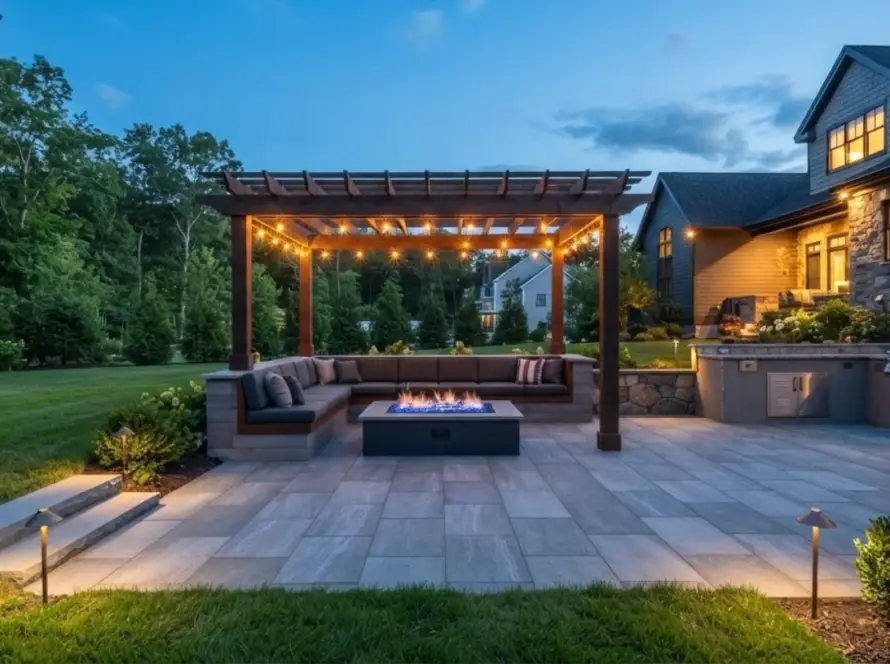
Outdoor kitchen fire pit pergola - North Shore backyard

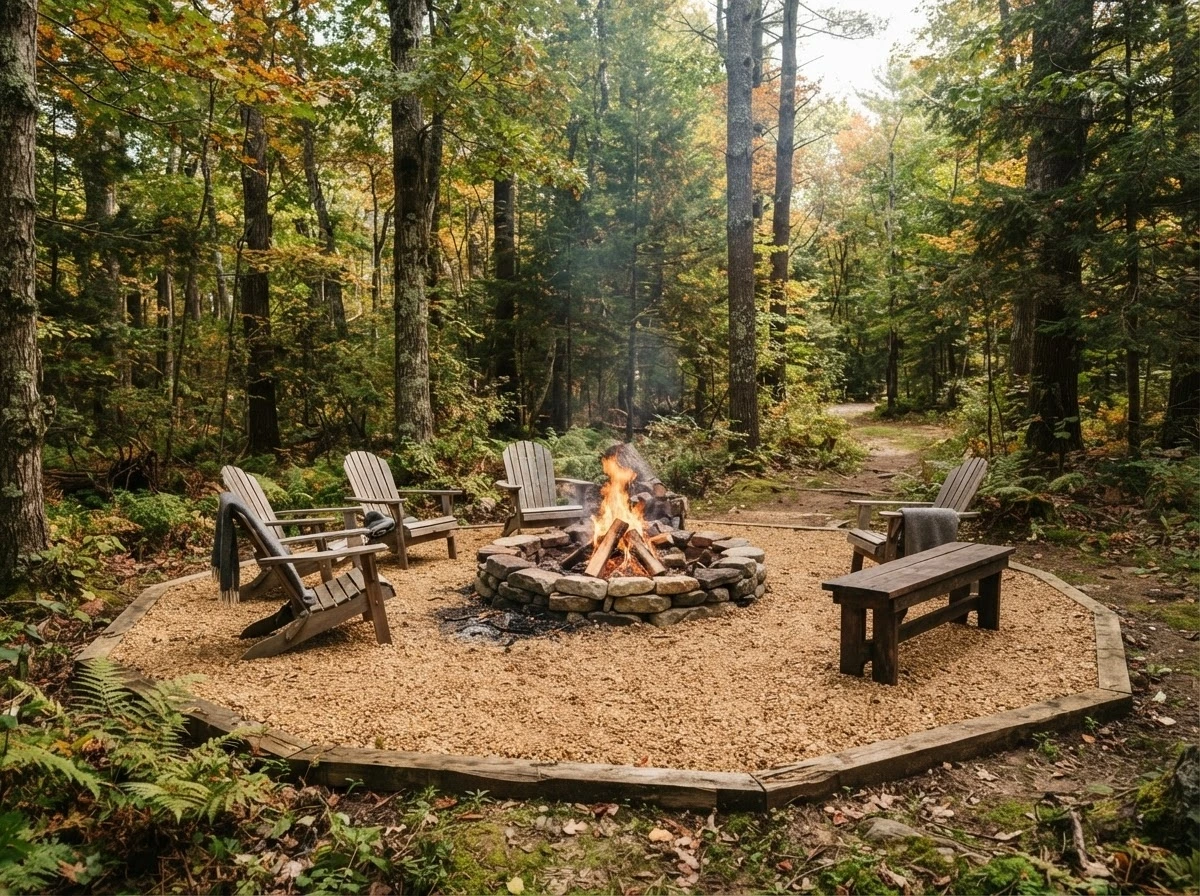
6. Gravel Court Fire Pit

Not every fire pit needs a full paver patio. A compacted gravel or pea stone court costs far less and drains naturally. It also gives a relaxed, informal look that suits wooded New England lots.

Gravel also handles embers better than most surfaces. Just use a stable, compacted base rather than loose stone. Otherwise chairs will sink.

Pea gravel fire pit court - central MA woods

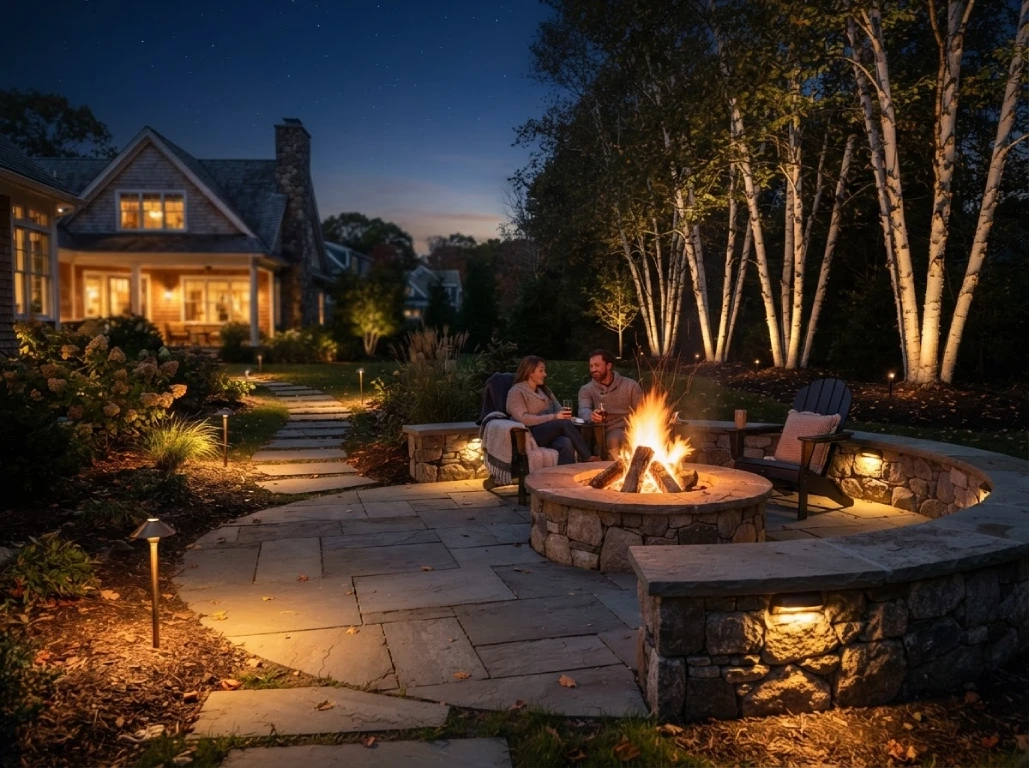
7. Fire Pit With Integrated Lighting

A fire pit lights the circle immediately around it and nothing else. Without low-level path or wall lighting, guests can’t safely reach the space after dark. Add a few warm fixtures along the path and inside seat walls. That extends usable hours and makes the area look intentional.

Fire pit with path lighting - Massachusetts backyard night

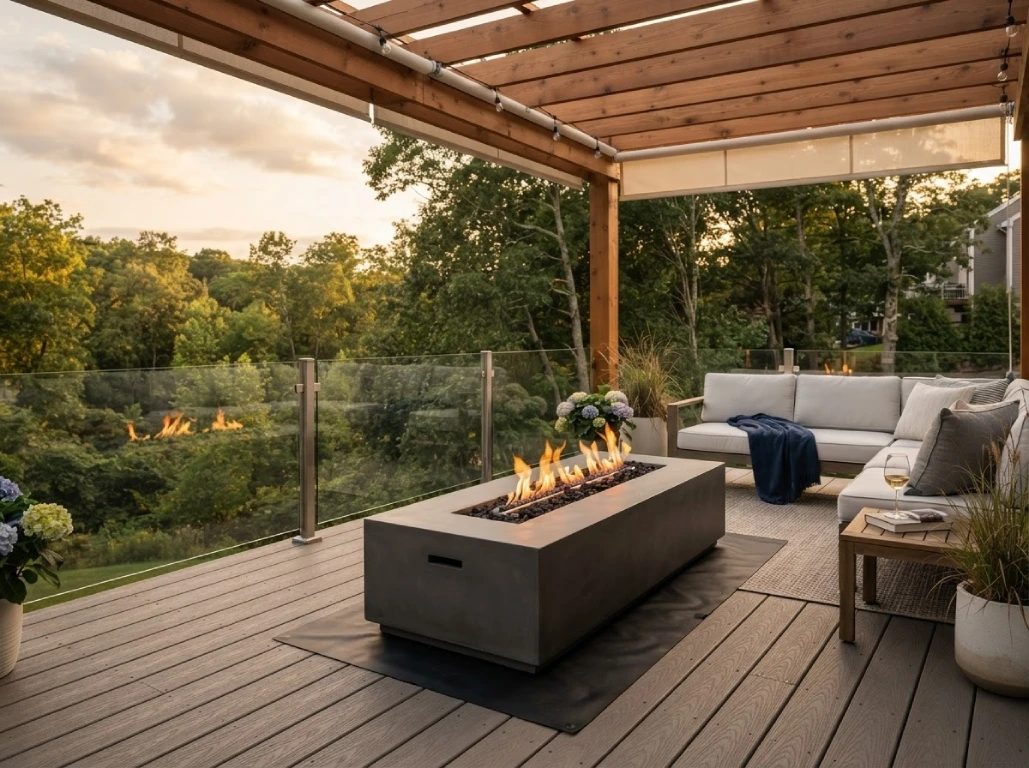
8. Fire Table on a Deck

A fire table works well on a deck. But composite decking scorches and can melt under sustained radiant heat. So this design needs a protective barrier underneath, plus a unit rated for deck use. Check the manufacturer’s clearance spec for the deck surface. Do the same for anything overhead, including a pergola or roof.

Pergola fire pit three-season room - Massachusetts backyard

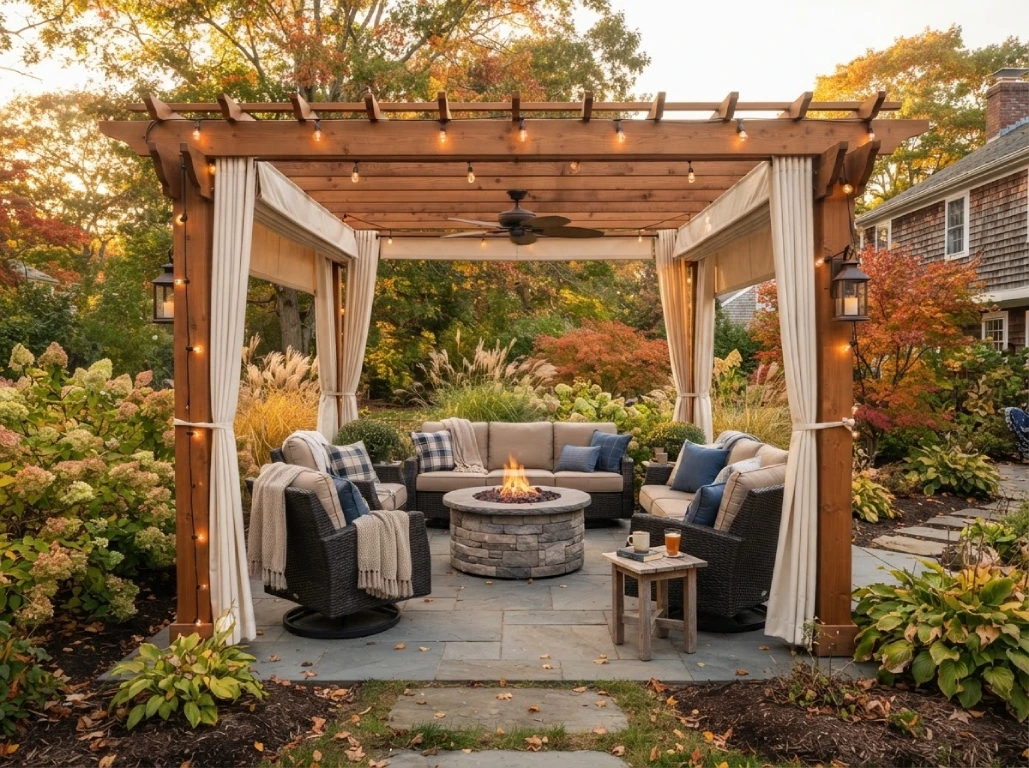
9. Fire Pit as the Anchor of a Three-Season Space

Combine a fire pit with a pergola, wind screening, and good seating. The result works from April through November. Our guide to all-season outdoor living covers how these elements layer together.

Pergola fire pit three-season room - Massachusetts backyard

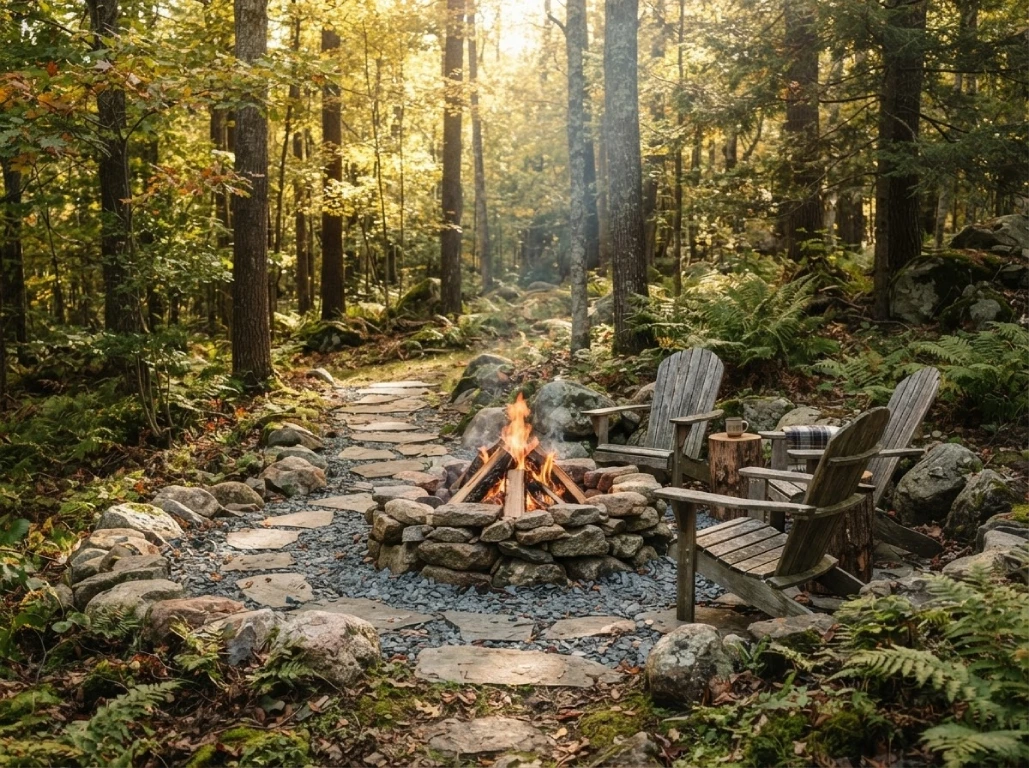
10. Natural Stone Fire Pit for Wooded Lots

Fieldstone and granite look native on New England properties, because they are. A pit built from local stone blends into a wooded setting far better than manufactured block. It also pairs naturally with the natural stone patio options that suit our climate.

Fieldstone fire pit in wooded MA lot

The Siting Rules That Make Backyard Fire Pit Ideas Work

Design decides how it looks. Siting decides whether you use it.

Plan around the wind. Smoke follows the prevailing breeze. In New England that’s most often out of the northwest during the cool months, exactly when you want a fire. Place primary seating so the usual wind carries smoke away from it. A wind screen, hedge, or seat wall on the windward side helps too.

Keep 10 to 25 feet of clearance from the house, fences, sheds, and low branches. Check your town’s requirement, since local rules vary.

Build the base properly. A masonry fire pit is a structure. Set it on compacted gravel to a proper depth. Otherwise freeze-thaw heaves and tilts it within a few winters, just like a poorly built patio.

Size the surrounding space. Plan roughly 12 to 14 feet of clear patio. Chairs then sit about 3 feet back, with room to walk behind them.

Confirm burn rules first. Many Massachusetts towns require an open-burn permit for wood fires. Some also restrict burning to certain months. Gas features are usually exempt. Your local fire department can confirm in one call. The Massachusetts Department of Environmental Protection also publishes related air quality guidance.

How to Plan Your Fire Pit Project
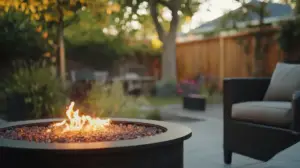
Gas fire pit backyard - Essex County MA

  1. Pick the spot before the style. Check wind direction, clearances, and sight lines from the house.
  2. Choose your fuel. Wood for atmosphere, gas for convenience and no smoke.
  3. Size the patio around the pit, not the other way around.
  4. Decide on seating early. Seat walls are structural, so they must be designed in from the start.
  5. Run gas and lighting conduit before paving. Retrofitting means lifting finished surfaces.
  6. Confirm permits for open burning and any gas line work.

Frequently Asked Questions

What are the best backyard fire pit ideas for New England patios? Built-in seat walls, sunken designs, and gas burners deliver the most everyday use. Pair any of them with a patio 12 to 14 feet across. Set seating about 3 feet back from the pit edge.

How big should a backyard fire pit be? Most work best between 36 and 44 inches across. Smaller pits throw too little heat for cool evenings. Larger ones push seating so far back that the warmth is lost.

Where should I place a fire pit in my yard? Place it downwind of your main seating, and 10 to 25 feet from the house, fences, and branches. Prevailing New England winds often come from the northwest in cool months. Plan seating around that.

Can I put a fire pit on a composite deck? Only with a protective heat barrier and a unit rated for deck use. Composite boards scorch and can melt under sustained radiant heat. Check the manufacturer’s clearance requirements first.

Are seat walls worth adding around a fire pit? For most homeowners, yes. Seat walls add permanent seating that never blows over or needs storing. They also connect the fire pit visually to the rest of your hardscape.

Do I need a permit for a backyard fire pit in Massachusetts? Often for wood-burning fires. Many towns require an open-burn permit and limit burning to certain months. Gas features are usually exempt. Check with your local fire department before building.

Why Homeowners Choose The Pros, Inc.

The Pros, Inc. has built fire pits and outdoor fireplaces across the North Shore, Essex County, and Middlesex County for 20+ years. We design fire features as part of the whole patio, not as an add-on dropped in later. We also build every base for real New England freeze-thaw conditions. Explore our outdoor fireplaces and fire pits service, or see how it fits into complete hardscape design and patios and walkways.

Ready to add a fire feature? Call (857) 574-4380 or request a free consultation.

Contact Us

The Pros, Inc. Hardscaping Company MA

Fire Pits Design Installation