Massachusetts winters don’t wait for you to be ready. The first snow usually falls sometime between mid-November and early December, but the ground starts freezing weeks before that. If you winterize your landscape in Massachusetts before that first hard frost, your lawn, plants, and irrigation system come through winter in far better shape — and your spring clean-up bill shrinks too.
This guide walks through exactly what to do, in order, and why timing matters more than most homeowners think.
When Does Winter Actually Start in Massachusetts?
Most of the North Shore, Essex County, and Middlesex County sits in USDA hardiness zone 6a to 6b. That means the first frost typically lands between mid-October and early November, with the first real snowfall following 3 to 6 weeks later.
Here’s the part most homeowners miss: your landscape prep window closes at that first hard frost, not at the first snowfall. Once the ground freezes, aeration, fertilizing, and irrigation shutdown all become far less effective — or impossible. So if you’re reading this in October, you still have time. If it’s already mid-November, move fast.
Your Fall Landscape Checklist (Do These in Order)
1. Give your lawn its final mow — at the right height
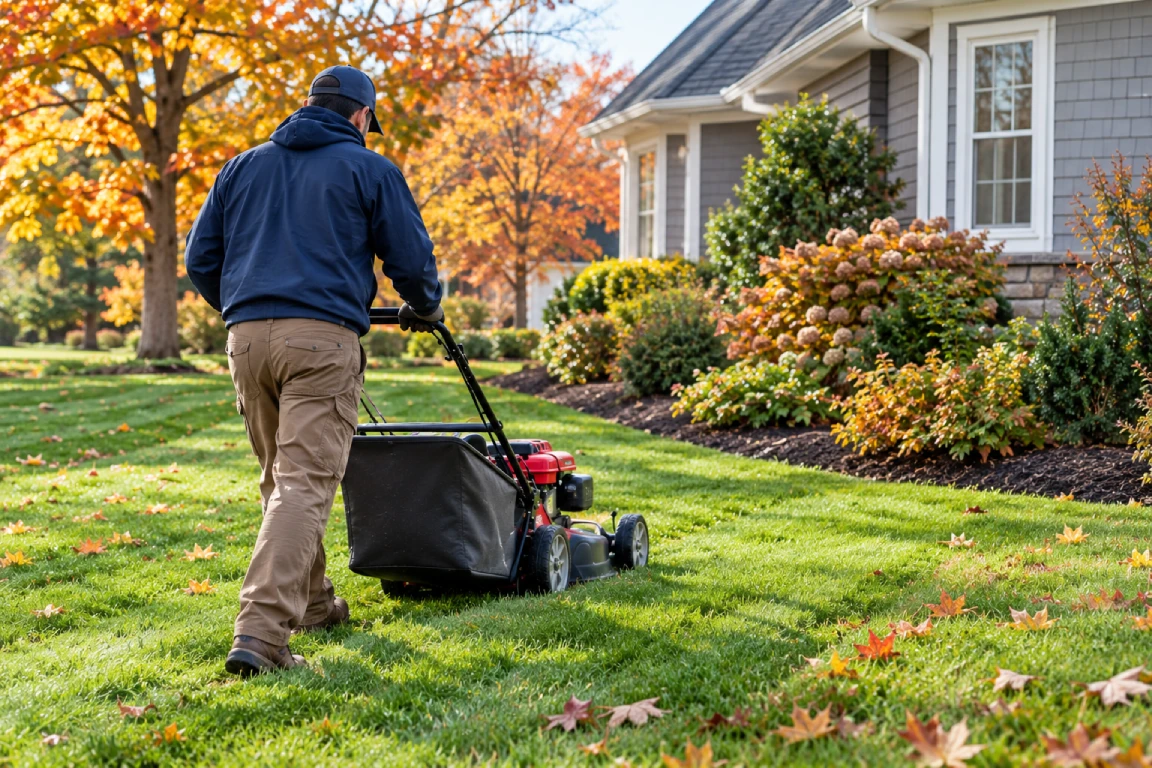
Cut your grass down to about 2 to 2.5 inches for the last mow of the season. Taller grass mats down under snow and invites mold and fungus over winter. Shorter than 2 inches stresses the roots right when they need to store energy. Keep mowing until growth actually stops, usually once nighttime temperatures hold below 40°F.
2. Aerate, then fertilize with a potassium-rich blend
Aeration opens up compacted soil so oxygen and nutrients reach the roots before dormancy. Follow it with a fall fertilizer higher in potassium than nitrogen — potassium builds cell strength and helps grass survive freeze-thaw cycles, while heavy nitrogen late in the season just pushes soft, vulnerable growth you don’t want heading into winter.
3. Clear leaves and debris before they mat the lawn
A thick layer of wet leaves blocks sunlight and traps moisture against the grass, which is exactly how snow mold gets started. Rake or mulch-mow leaves regularly through fall rather than waiting for one big cleanup after they’ve all dropped.
4. Mulch your beds
A 2 to 3 inch layer of mulch around perennials, shrubs, and tree bases insulates roots against freeze-thaw swings, which do more damage to plants than steady cold ever does. Keep mulch a few inches back from trunks and stems to avoid trapping moisture against the bark.
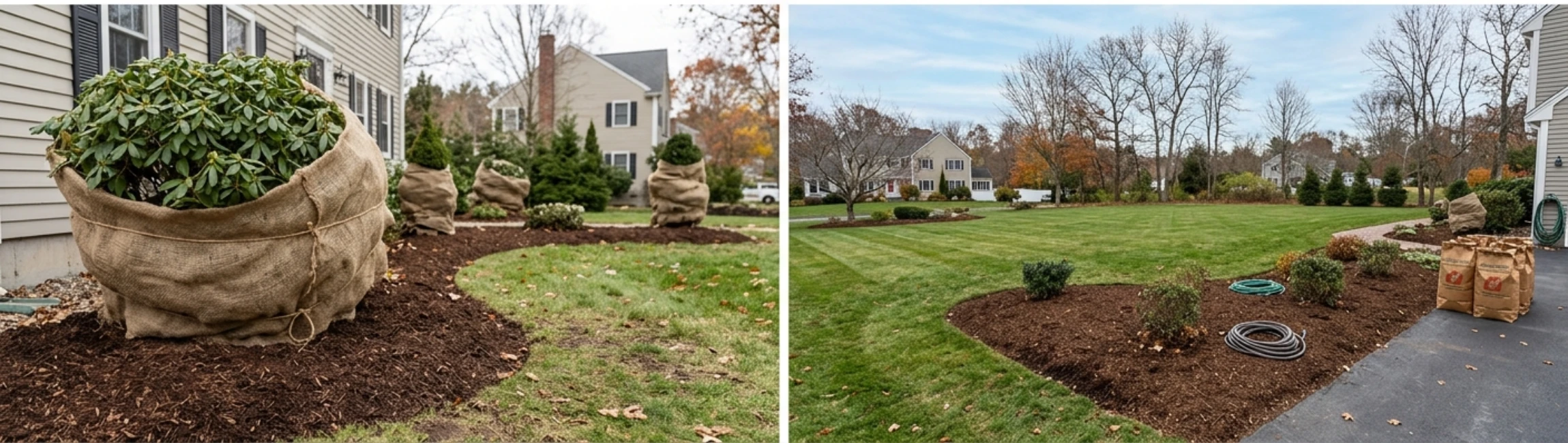
5. Protect vulnerable shrubs and evergreens
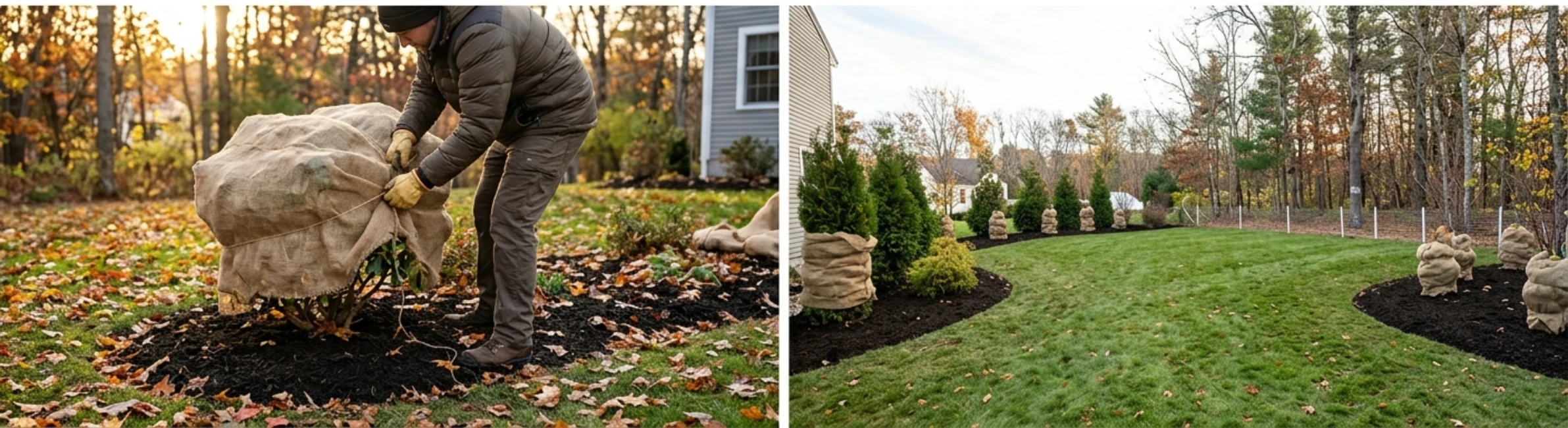
Broadleaf evergreens lose water through their leaves all winter but can’t pull replacement moisture from frozen ground, which causes the browning known as winter burn. An anti-desiccant spray helps. For shrubs near rooflines, where sliding snow and ice can snap branches, loosely tie up vulnerable limbs before the first storm.
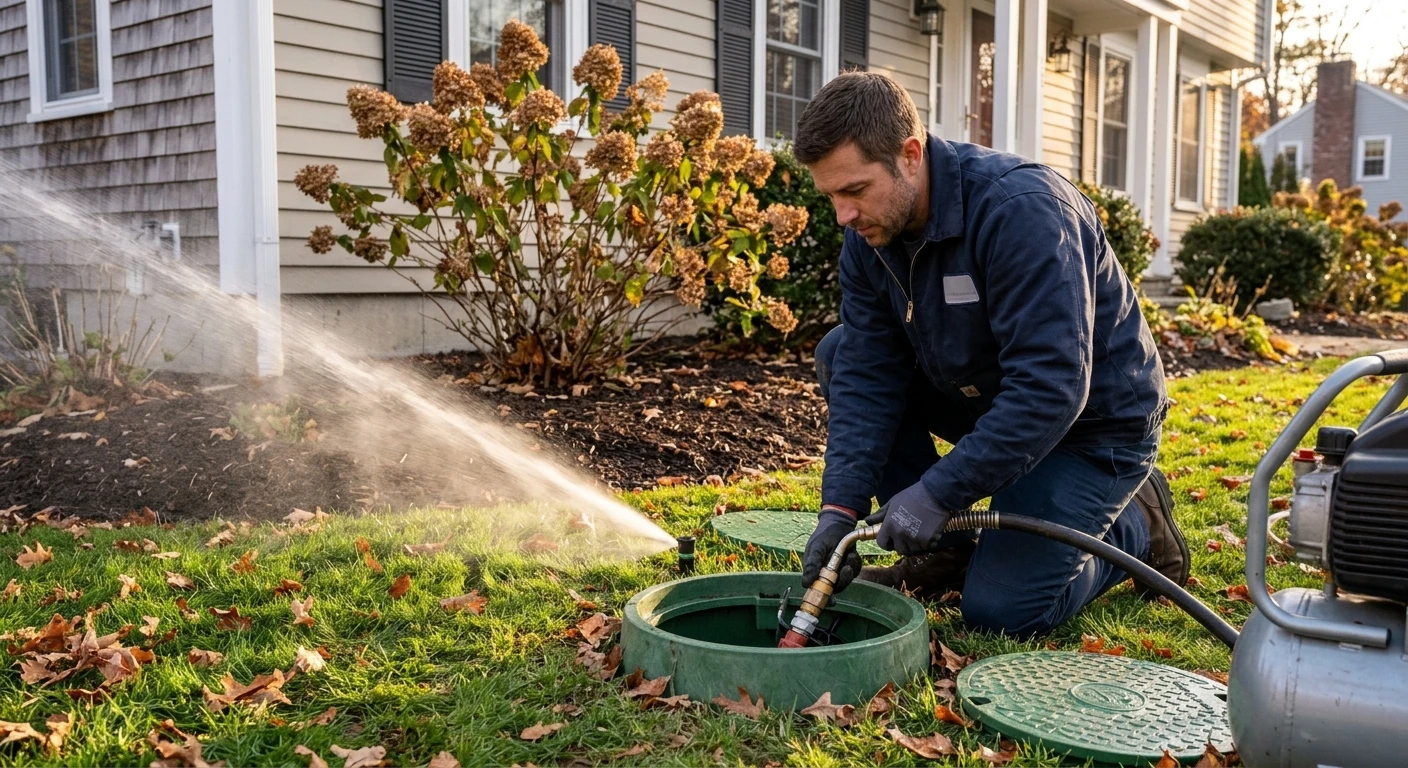
6. Winterize your irrigation system before the first freeze
This is the step most homeowners forget, and it’s the costliest to skip. Water left in sprinkler lines freezes, expands, and cracks pipes and valves, which means a spring repair bill before the system even turns back on. A professional blow-out clears every line with compressed air. If you’ve never had this done, it’s worth booking early, since irrigation companies across the North Shore get fully booked the week before the first forecasted freeze.
7. Clean your gutters and check drainage
Clogged gutters send water where it shouldn’t go, and in winter that means ice dams along your roofline and ice sheeting across walkways below. Clear gutters now, and walk your property looking for low spots where water pools — those become ice patches fast once temperatures drop.
8. Line up your snow removal plan early
Seasonal snow contracts and reliable plow routes fill up before the first storm, not after. Locking in service now, rather than scrambling during the first nor’easter, usually costs less and guarantees you’re on the schedule when it matters.
Winterize Your Landscape in Massachusetts | The Pros, Inc.
Book a Project Consultation With Us
Thank You!
Your request has been received. Our team will contact you within 24 hours.
Don’t Forget Wildlife Protection
Massachusetts has one of the densest deer populations in New England, and hungry deer do real damage to landscaping once natural food sources disappear for winter. A monthly deer-repellent application from now through early spring protects young shrubs, arborvitae, and anything newly planted — the plants deer target hardest.
A Simple Rule of Thumb
If a task involves water — irrigation, hoses, drainage — finish it before the first hard freeze. If it involves the lawn or soil, finish it before the ground freezes solid, which usually follows a few weeks behind. Everything else, from mulching to wildlife protection, is safest done by mid-November across most of the North Shore and Essex County.
Frequently Asked Questions
When should I winterize my landscape in Massachusetts? Start landscape winterization by mid-October, and finish irrigation shutdown and final lawn care before the first hard frost — typically mid-October to early November across the North Shore and Essex County.
What height should I cut my grass before winter? Mow your lawn down to 2 to 2.5 inches for the final cut of the season. Shorter stresses the roots; taller invites snow mold once the snow sits on top of it.
Do I need to winterize my irrigation system every year? Yes. Any water left in the lines over winter can freeze, expand, and crack pipes, valves, and backflow devices — damage that’s far more expensive to repair in spring than a seasonal blow-out costs in fall.
When does it usually snow first in Massachusetts? The North Shore and surrounding areas typically see first snowfall between mid-November and early December, though the ground often starts freezing several weeks earlier.
How do I protect my plants from snow and ice damage? Mulch around roots, apply anti-desiccant spray to broadleaf evergreens, and loosely tie up shrub branches that sit under rooflines where heavy snow can slide and snap them.
Get Ahead of Winter
Prepping your landscape properly takes a few focused weekends in October and November, but it pays off every time a storm rolls through. The Pros, Inc. handles fall clean-up, irrigation winterization, and seasonal snow removal as one connected service across the North Shore, Essex County, and Middlesex County — so nothing falls through the cracks between teams. Schedule your fall prep today and head into winter with your landscape actually ready for it.
The Pros, Inc. Landscaping & Hardscaping Company MA