Raised garden beds in Massachusetts solve a problem most gardeners here know well. Our clay soil is heavy, slow-draining, and fights you at every turn. A raised bed skips the fight entirely. You fill it with soil you choose. You can start growing the same week you build it. This 2026 guide covers real material costs and ideal sizing. It also explains why a raised bed works better here than almost anywhere else.
Key Takeaways
- The Massachusetts reason: our clay-heavy soil drains slowly and compacts easily, which is exactly what a raised bed fixes.
- Typical cost: $150–$600 DIY, $400–$1,800 professionally built, including soil.
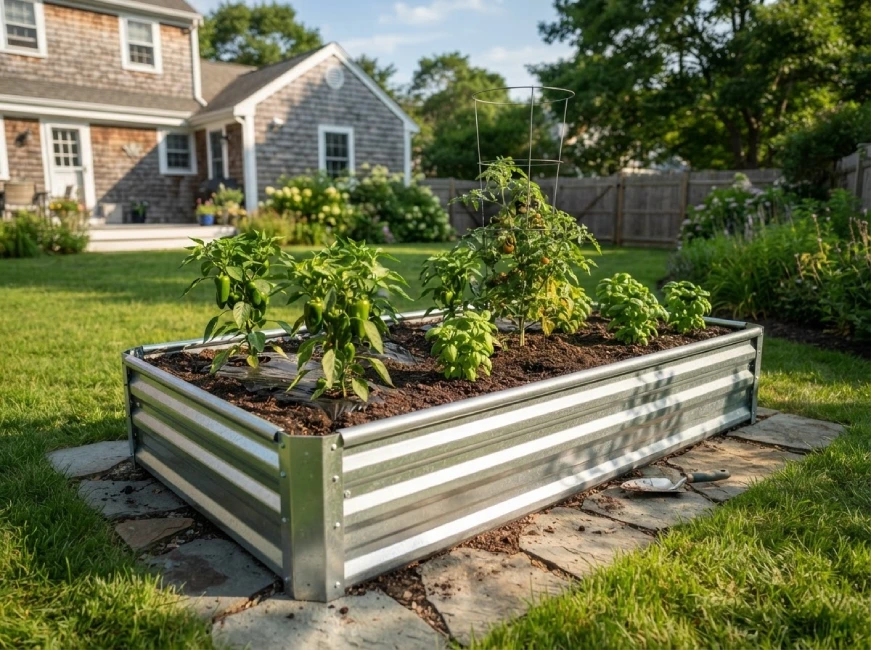
- Metal beds warm up faster in spring sun, letting you plant earlier in a state with a late last frost.
- Depth matters more than width. Most vegetables need 12 inches; root crops need 18 to 24.
- Older urban soil can carry lead. A raised bed with fresh soil sidesteps that risk entirely.
Why Raised Garden Beds in Massachusetts Make Sense
This is the part most guides skip. Much of Massachusetts sits on heavy glacial clay. It holds water well. But it drains slowly and compacts hard when wet. Dig a vegetable bed straight into that soil, and you’ll fight it every season. Roots stay waterlogged in spring. The ground turns to concrete by August.
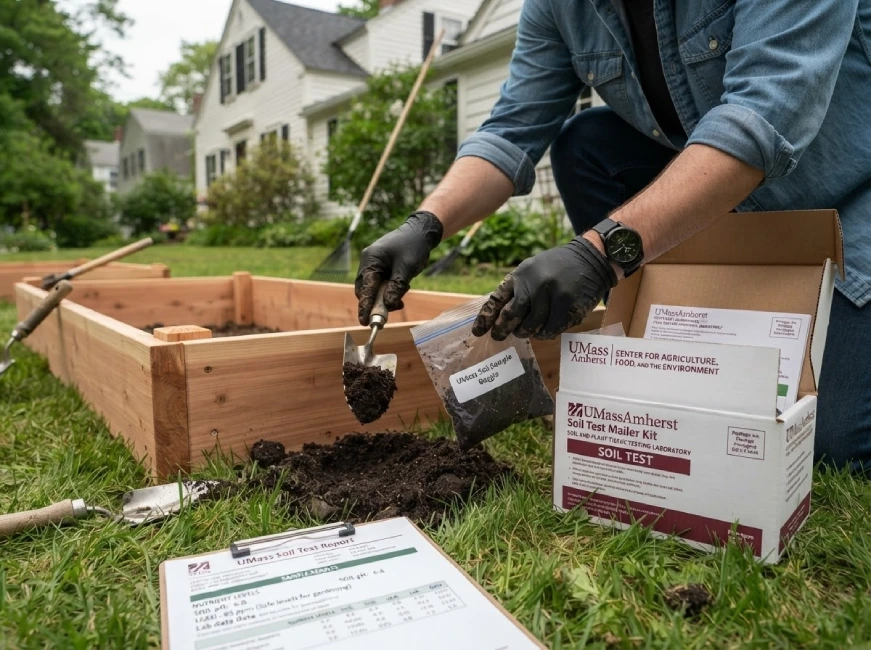
A raised bed sidesteps the problem completely. You fill it with a soil blend you control. Drainage and fertility stop being a fight. There’s a second local reason too. Older urban and suburban lots can carry legacy lead in the soil. It’s often left over from old paint and construction debris. A raised bed filled with fresh, tested soil removes that risk. If you’re unsure about your yard’s soil, get a UMass Extension soil test first. It’s cheap, and it’s a smart step before planting anything you plan to eat.
Raised Garden Bed Cost in Massachusetts
Pricing splits cleanly into two paths: build it yourself, or have it built for you.
| Approach | Typical Cost (4×8 ft bed) | What’s Included |
| DIY kit or lumber | $150 – $600 | Frame only; you supply labor and soil |
| Professionally built | $400 – $1,800 | Frame, assembly, soil, and often delivery |
| Soil fill (either path) | $35 – $170 | 60/30/10 mix of topsoil, compost, perlite |
A basic wood-frame bed sits at the low end. A professionally installed metal or masonry bed sits at the top. That’s especially true when it’s sized and placed as part of a real landscape plan. Either way, soil is a separate line item. Budget for it properly. Cheap fill dirt undermines even the best frame.
Cost by Material
Material is the single biggest decision you’ll make. It affects both price and lifespan a great deal.
| Material | Cost (4×8 ft frame) | Lifespan | Best For |
| Cedar | $50 – $250 | 5–10 yrs | Natural look, lower upfront cost |
| Galvanized steel | $150 – $500 | 15–20 yrs | Best long-term value |
| Corten steel | $400 – $800+ | 20–30+ yrs | Architectural, weathered-rust look |
| Composite | $200 – $500 | 15–25 yrs | Won’t rot, insulates soil |
| Stone or masonry | $1,500 – $4,000+ | Lifetime | Permanent, built-in landscape feature |
Cedar is the classic choice, and it looks the most natural. It resists rot better than most wood. But it still needs replacing every 5 to 10 years. Once you factor that in, its cost per year ends up higher than metal.
Galvanized steel has become the practical favorite. It lasts two to three times longer than cedar at a similar price. People often raise a food-safety concern about zinc, but it doesn’t hold up at garden-bed concentrations. Look for at least 20-gauge steel. Choose rolled or safety-edged top rails if you have kids around the yard.
Corten steel develops a rich, rust-colored patina. It holds up for decades. It costs more upfront. But for a design-forward yard, the architectural look often justifies the price on its own.
Composite boards resist rot completely. Unlike bare metal, they also insulate the soil against sudden heat spikes in peak summer sun.
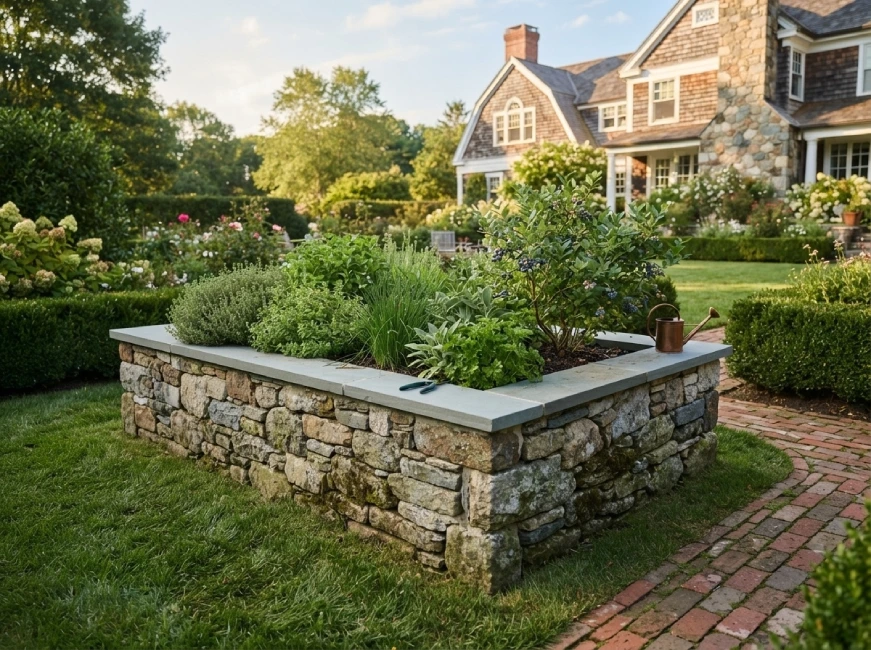
Stone or masonry beds cost the most by far. But they’re permanent, built-in landscape features, not a removable frame. This is where a raised bed stops being a garden accessory and becomes real hardscaping.
Book a Project Consultation With Us
Thank You!
Your request has been received. Our team will contact you within 24 hours.
Sizing and Depth: The Detail Most Guides Get Wrong
The most common raised-bed mistake isn’t material. It’s depth. A bed that’s too shallow will underperform all season, no matter how good the soil is.
| Bed Type | Dimensions | Best For |
| Small space | 3×4 ft, 18 in deep | Patios, tight yards |
| Standard | 4×8 ft, 12 in deep | Most vegetables, the versatile default |
| Deep root bed | 4×8 ft, 24 in deep | Carrots, potatoes, parsnips |
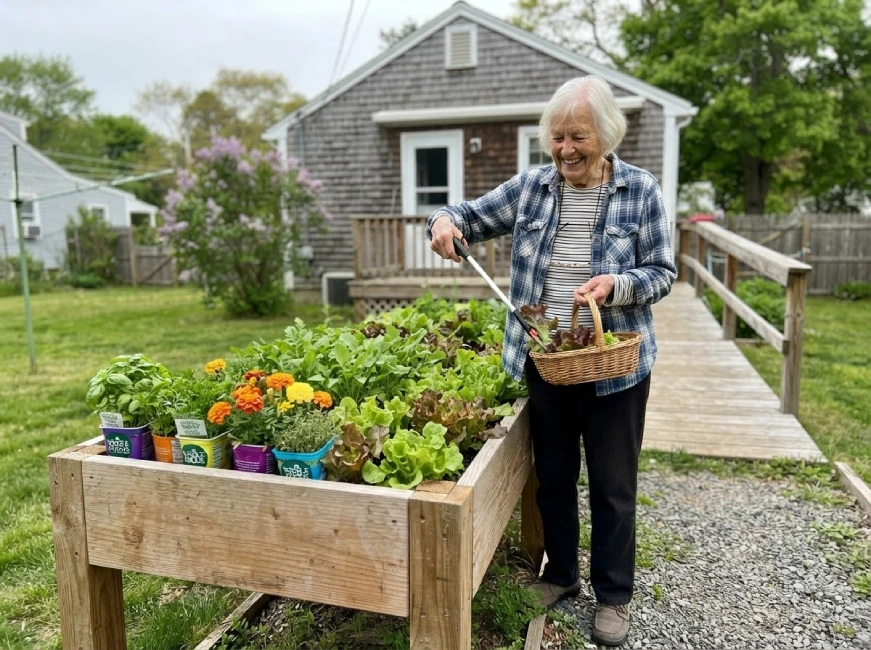
| Accessible height | 2×6 ft, 24–30 in deep | Reduced mobility, no bending required |
Keep width to 3 or 4 feet, no matter the length. That way, you can reach the center from either side without stepping on the soil. Twelve inches of depth is plenty for most vegetables. Root crops need more. Plan on 18 to 24 inches if you want the bed to last for years without rebuilding.
The Massachusetts Growing Season
Most of Massachusetts falls in USDA Zone 6. The Boston area is typically 6a to 6b. That gives most of the state a growing window of roughly 150 to 165 frost-free days. It runs from the last spring frost, in late April to mid-May, to the first fall frost, usually in October. Plant too early, and a late frost wipes out tender seedlings. Plant too late, and heat-loving crops like tomatoes may not ripen before the season closes.
This is where material choice connects back to timing. A metal-framed bed absorbs heat. It warms the soil inside it faster than the ground around it. In a warm climate, that’s a drawback. In Massachusetts, with our late last frost, it’s a real advantage. Metal beds let you plant cool-season crops like peas, spinach, and radishes earlier. The soil warms faster than an in-ground plot would allow.
What Actually Grows Well Here
Once your bed is filled and the timing is right, Massachusetts conditions favor a solid range of crops:
- Cool-season starters: peas, spinach, radishes, lettuce, and brassicas like broccoli and kale
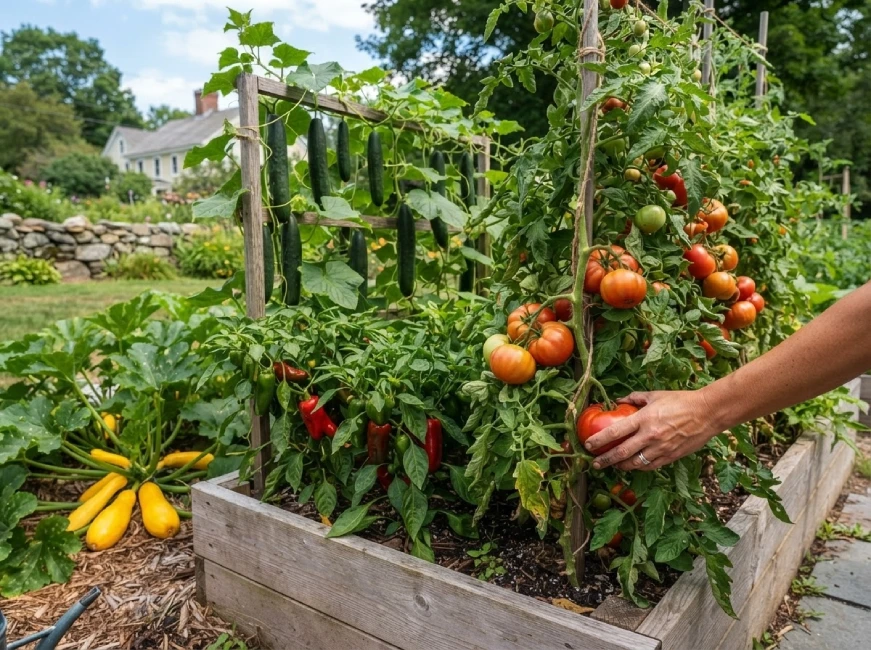
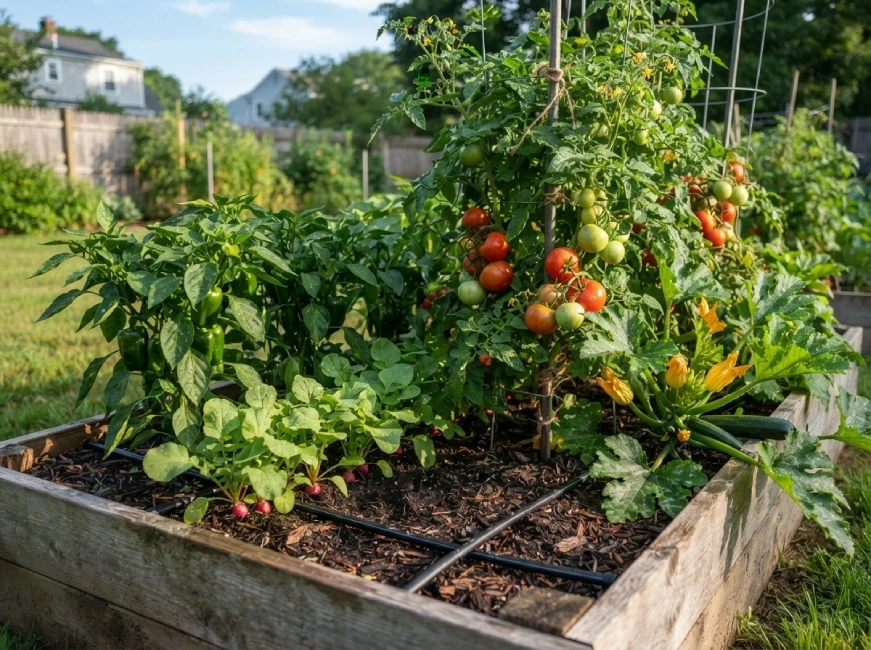
- Summer staples: tomatoes, peppers, cucumbers, and summer squash, once soil hits 60°F
- Root vegetables: carrots, beets, and potatoes, which specifically benefit from a deeper bed
- Reliable perennials nearby: if you’re pairing the bed with surrounding plantings, echinacea, daylilies, and native ferns all thrive in our zone
Succession planting works well here too. Many Massachusetts gardeners resow lettuce and greens every two weeks through spring. It stretches the cool-season harvest.
Placement and Site Prep
A few site decisions matter more than people expect:
- Six to eight hours of direct sun is the minimum for vegetables. Look beyond shaded foundation areas and mature tree canopies.
- Level ground is essential. Even a slight slope makes water pool on one end of the bed.
- Leave at least 2 feet between beds. That gives you room for a wheelbarrow or knee pads.
- Check drainage first. If a spot holds standing water after rain, that’s exactly what a raised bed is built to solve.
Is a Raised Bed Worth It?
Yes, for most Massachusetts yards. You gain full control over soil quality and built-in drainage. You can start growing the same week the bed goes in, instead of fighting compacted native soil first. Raised beds also look more intentional in a finished landscape than an in-ground plot cut into the lawn. That’s especially true when the bed matches the material palette of your patio or retaining walls.
DIY Kit or a Custom-Built Bed?
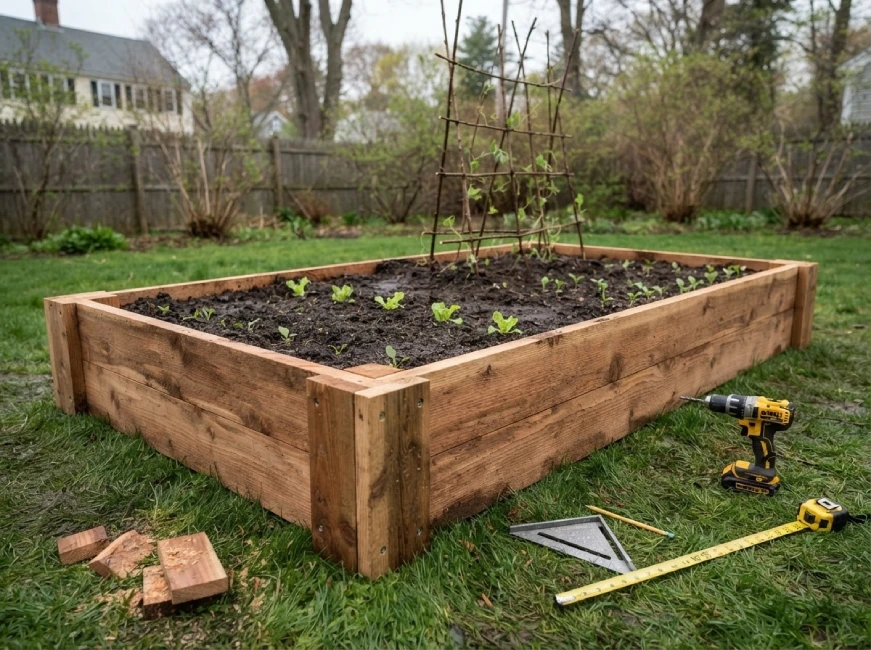
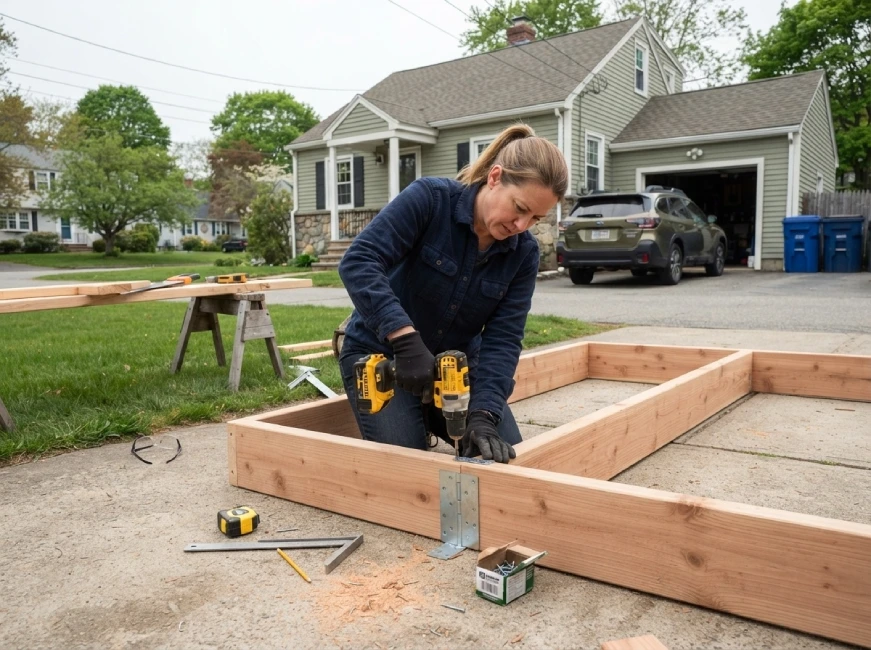
A basic cedar or metal kit is a reasonable weekend project for one or two beds. It gets more complex with multiple beds tied into an irrigation line. The same goes for a masonry or corten steel bed built to match existing hardscaping, or beds worked into a larger landscape design instead of dropped into a corner of the lawn. That’s where a professional build pays for itself. It looks better, and the soil, drainage, and placement get done right the first time.
Frequently Asked Questions
How much do raised garden beds cost in Massachusetts? A DIY raised bed typically costs $150 to $600 for a standard 4×8 frame. A professionally built bed, including soil and installation, runs $400 to $1,800 depending on material and size.
Why are raised garden beds in Massachusetts especially useful? Much of the state has heavy clay soil. It drains slowly and compacts easily. A raised bed lets you fill it with soil you control, skipping that problem entirely. It also avoids any legacy lead that can be present in older urban soil.
What material lasts the longest for a raised garden bed? Corten and galvanized steel last the longest, typically 15 to 30 years. Cedar lasts only 5 to 10 years. Stone or masonry beds are effectively permanent, but they cost far more upfront.
How deep should a raised garden bed be? Twelve inches is enough for most vegetables. Root crops like carrots and potatoes need 18 to 24 inches to develop properly. Match the depth to what you plan to grow.
When should I plant in a raised bed in Massachusetts? Most of the state sits in USDA Zone 6. The last frost falls in late April to mid-May, and the first fall frost arrives around October. That gives roughly 150 to 165 frost-free days.
Do metal raised beds get too hot in Massachusetts? Rarely a problem here. Metal absorbs heat and warms the soil faster in spring. That’s an advantage in our climate, since it lets you plant cool-season crops earlier than an in-ground bed would.
Should I test my soil before filling a raised bed? Yes, especially in older urban or suburban neighborhoods, where legacy lead can be present. A UMass Extension soil test is inexpensive. It’s worth doing before planting anything you intend to eat.
Can raised garden beds be built into a larger landscape design? Yes, and this is where a professional build adds the most value. Masonry or corten steel beds can be sized to match existing patios or walls. They can also tie into an irrigation system, instead of standing apart as a separate feature.
Why Homeowners Choose The Pros, Inc.
The Pros, Inc. has designed landscapes across the North Shore, Essex County, and Middlesex County for 20+ years. We build raised garden beds as part of a complete yard plan, not a standalone kit. We work in cedar, steel, and masonry. We size and place every bed for real Massachusetts soil, sun exposure, and drainage. Where it makes sense, we tie beds into an existing irrigation and landscape design. That way, watering isn’t one more chore added to your week.
Want raised beds that actually fit your yard? Call (857) 574-4380 or request a free consultation.
The Pros, Inc. Landscaping Company MA