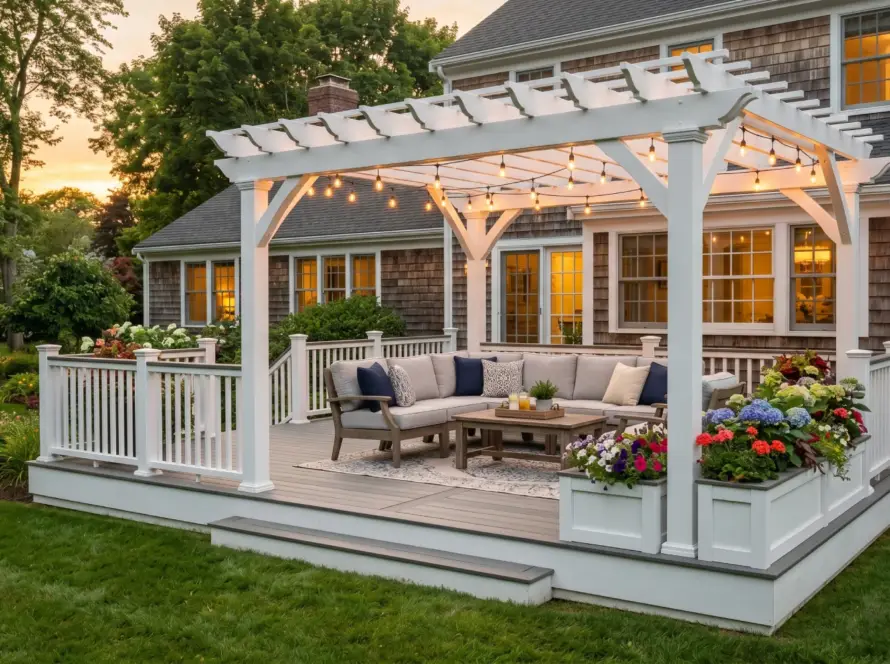
Choosing decking material for a new deck? The Trex vs TimberTech vs wood debate usually comes down to price first. But in Massachusetts, winter performance matters just as much. Here’s the short answer: wood costs the least upfront but needs constant care. Trex and TimberTech cost more but shrug off our freeze-thaw winters with almost no maintenance.
Quick Answer: Trex composite decking runs $40–$80 per sq ft installed. TimberTech runs $50–$100+ per sq ft, with premium AZEK lines at the top. Pressure-treated wood costs the least at $20–$35 per sq ft but needs staining every 2–3 years and lasts about half as long
Factor | Pressure-Treated Wood | Trex | TimberTech |
Cost per sq ft | $20 – $35 | $40 – $80 | $50 – $100+ |
Lifespan | ~15 yrs | 25–30+ yrs | 30–50 yrs |
Maintenance | Stain every 2–3 yrs | Occasional wash | Occasional wash |
Material | Natural wood | Wood-plastic composite | Composite or capped PVC (AZEK) |
Warranty | None | 25–50 yrs | 30 yrs to lifetime |
Best for | Tightest budgets | Best value composite | Longest life, wettest sites |
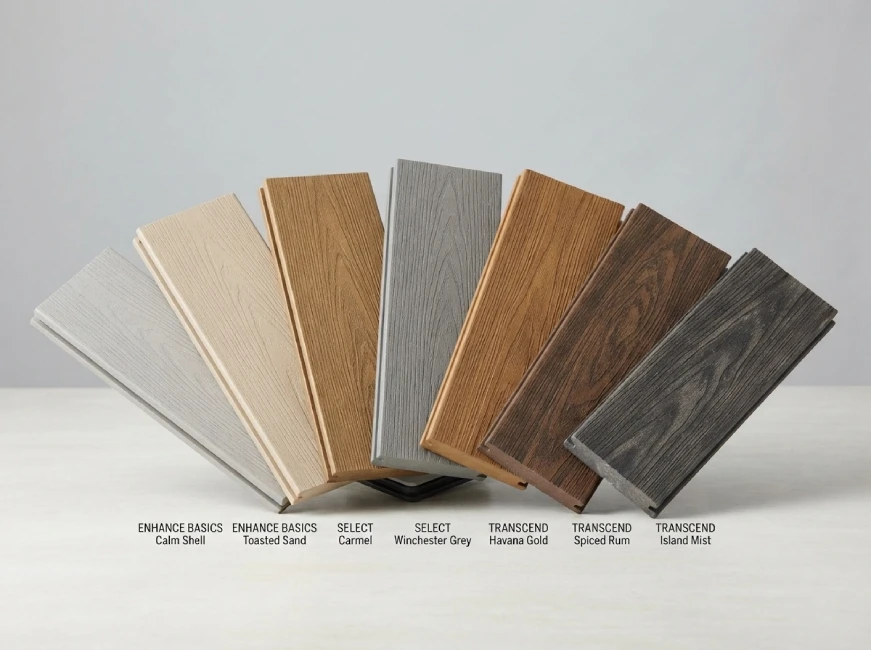
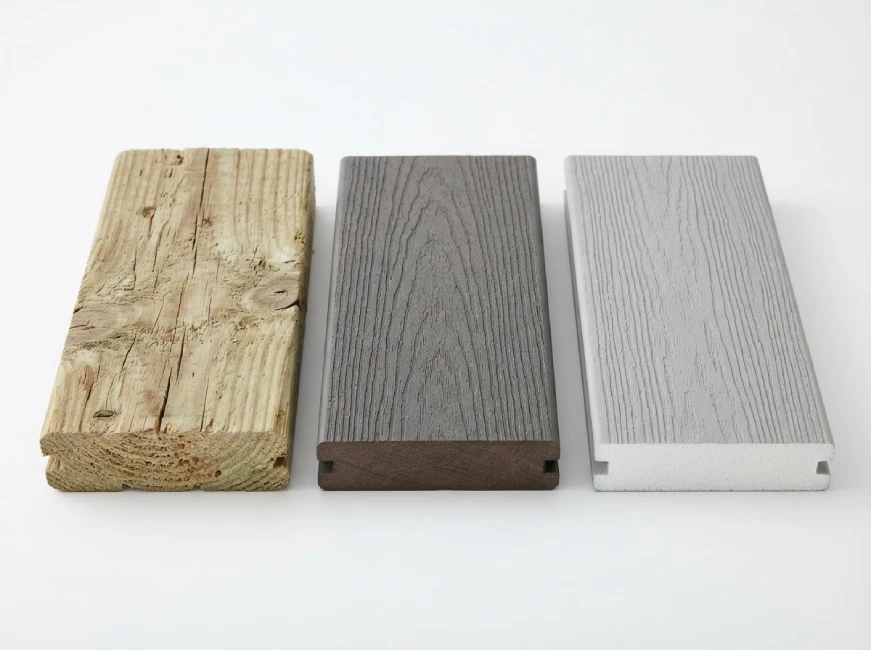
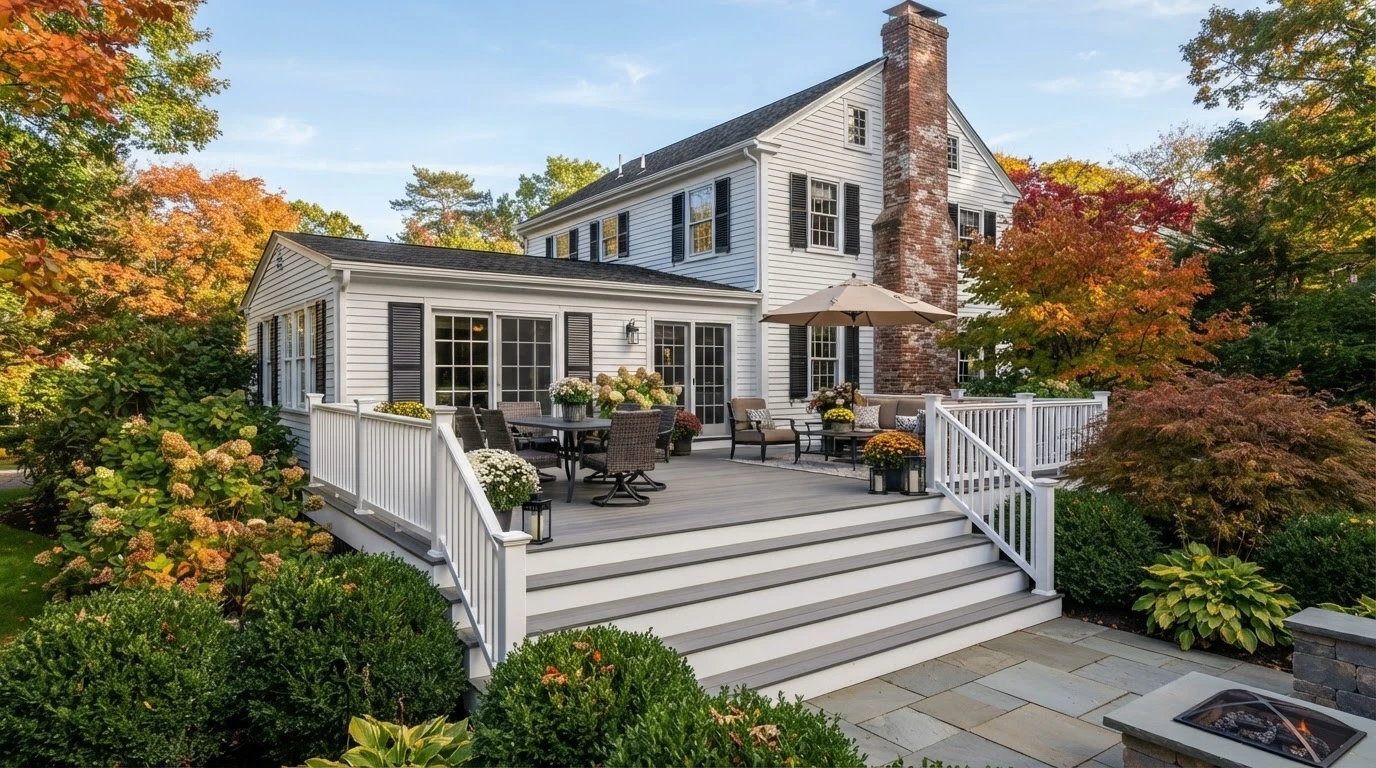
Trex offers three tiers. Enhance is the entry point, Select sits in the middle, and Transcend is the premium line with the strongest warranty. All three share the same core benefit: a hard cap over a wood-plastic core that resists staining, fading, and rot. For full pricing by tier, see our composite deck cost guide.
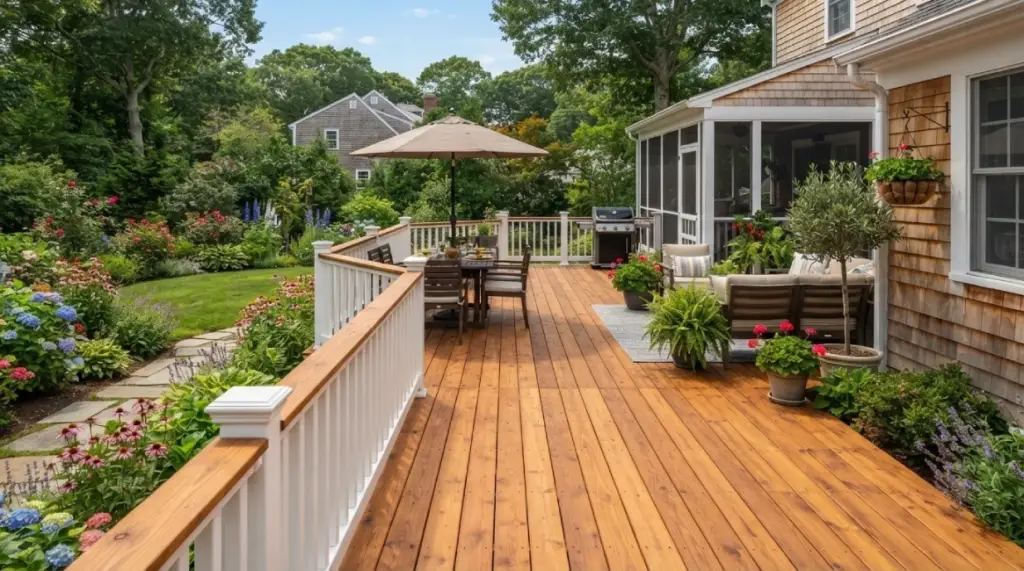
Within each tier, Trex also offers multiple color collections. Shades range from muted “Havana Gold” and “Spiced Rum” tones to deep charcoal. Lighter colors stay noticeably cooler underfoot in summer sun. That’s worth weighing alongside style preference.
TimberTech offers two paths. Its PRO and EDGE lines are composite, similar to Trex. Its AZEK line is different. It’s capped cellular PVC with no wood fiber at all. That matters in a wet climate. PVC can’t soak up moisture the way wood-plastic composite can. AZEK costs more. But it carries some of the strongest warranties in the industry. Its Vintage and Arbor collections also mimic natural wood grain closely, despite the all-PVC construction.
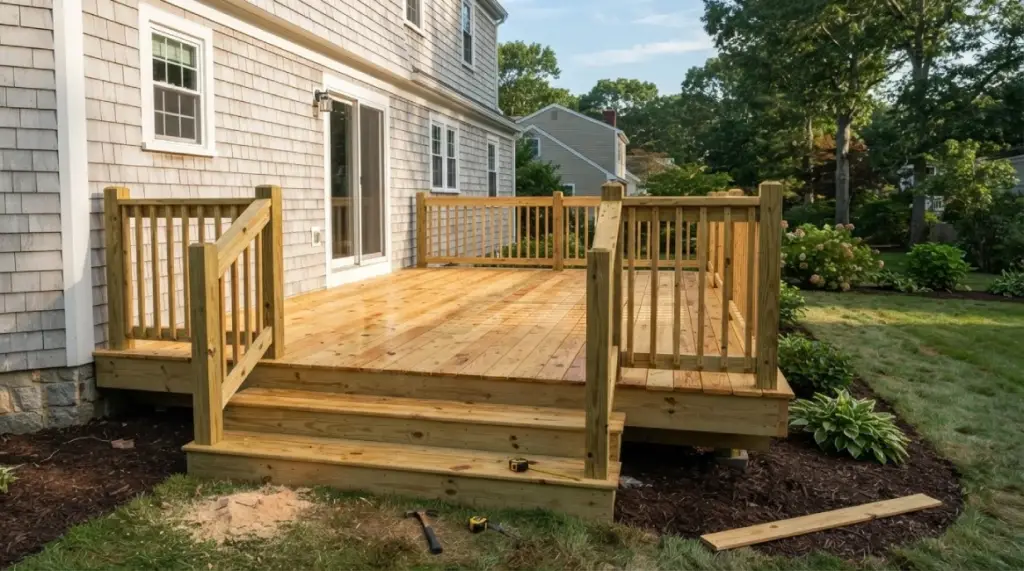
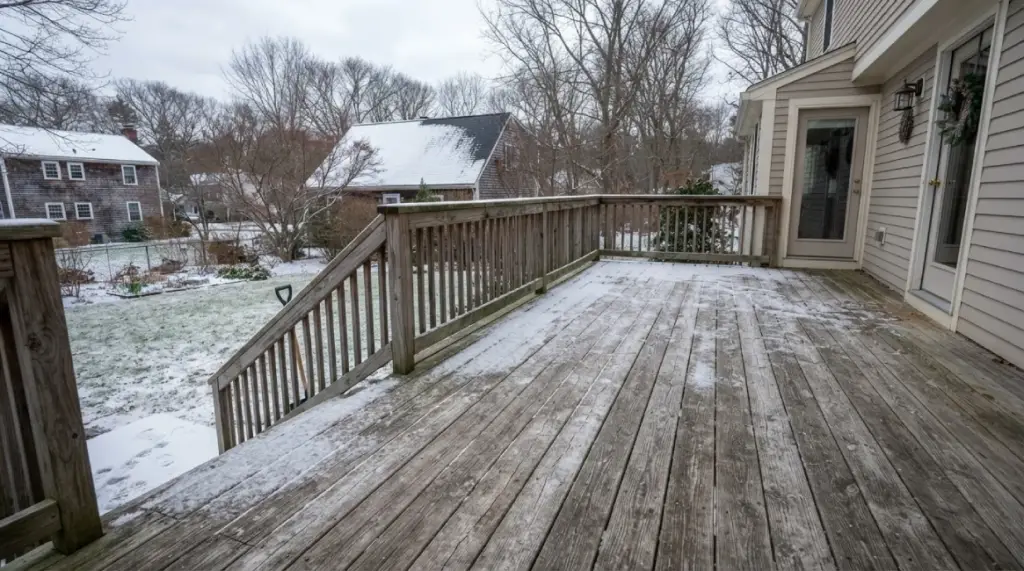
Pressure-treated wood wins on day one. It’s the lowest-cost option by a wide margin. But New England winters are hard on wood. Without regular staining, every board soaks up moisture. It swells, and it eventually splits or rots. Most wood decks need restaining every 2 to 3 years. Each round costs roughly $2 to $4 per square foot. Add that up over 15 years. The price gap between wood and composite starts to close.
Book a Project Consultation With Us
Your request has been received. Our team will contact you within 24 hours.
Both major composite brands lean heavily on recycled material. That’s a real point of difference if sustainability matters to your decision. Trex decking is made mostly from reclaimed wood scraps and recycled plastic film. Think the kind used in grocery bags and product wrap. TimberTech’s composite lines use a similar reclaimed-wood-and-plastic approach. AZEK’s cellular PVC contains recycled PVC content, too. Traditional pressure-treated lumber is different. It’s a virgin wood product, treated with chemical preservatives to resist rot and insects.
A few technical details separate a deck that lasts from one that doesn’t. This holds true regardless of brand:
A contractor unfamiliar with composite installation can build a deck that looks fine on day one. Problems often show up within a few seasons instead.
This is the number most comparisons skip. A wood deck costs less to build. But it needs multiple restaining cycles, and likely a full rebuild before year 20. A composite deck costs more upfront. But it needs almost nothing beyond a wash. Add up materials, upkeep, and replacement over time. Composite often matches or beats wood on total cost, and it takes far less of your time.
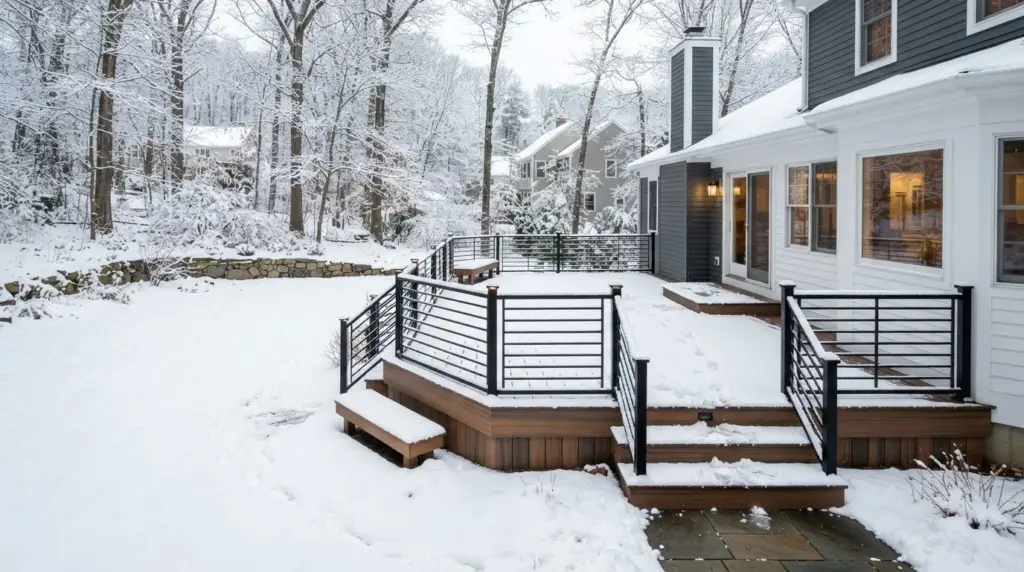
Snow load, freeze-thaw cycles, and road salt all put a deck to the test here. Wood soaks up moisture and swells. That speeds up rot in our wet winters. Composite resists moisture entirely. It holds its shape through repeated freezing and thawing. Between the two brands, AZEK’s all-PVC build gives it a slight edge in wet or shaded spots. There’s no wood fiber left to hold water at all.
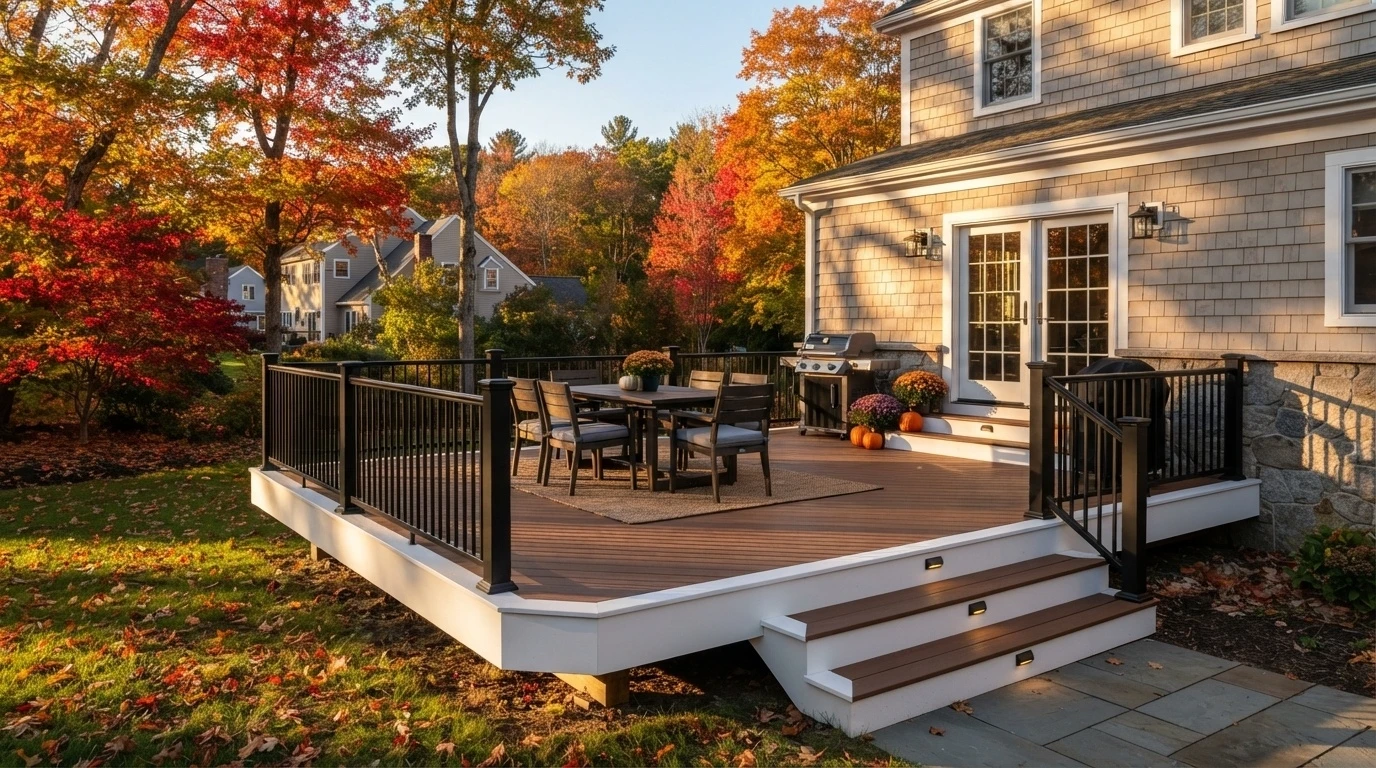
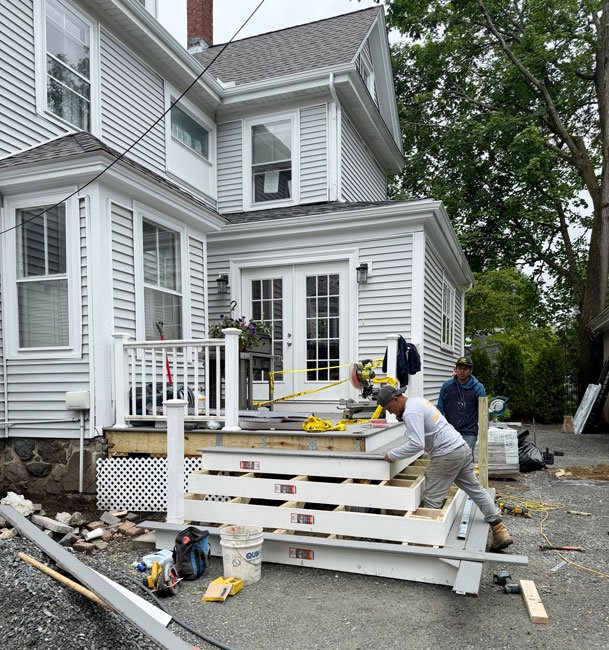
A recent North Shore rebuild replaced a 320-square-foot deck. It was 15 years old, pressure-treated, and had begun rotting near the ledger board. The homeowner chose Trex Select in a mid-tone color. The build used hidden fasteners and a new frost-depth footing system. Total project cost, including demolition of the old deck, landed at roughly $19,500. The new deck carries an expected 25-plus year lifespan, with no restaining ever required.
If budget matters most within composite, start with Trex Enhance or Select. If you want the longest lifespan and the strongest warranty, and you’re okay paying more, TimberTech AZEK is the top tier. Both brands perform well in Massachusetts, as long as the framing and footings are built right, below the frost line.
Trex vs TimberTech: which is better? Both perform well in Massachusetts. Trex is generally more affordable, especially at the entry tier. TimberTech AZEK costs more but uses capped PVC instead of wood-plastic composite, giving it slightly better moisture resistance in constantly wet spots.
Is composite decking worth it over wood? Often, yes, over the long run. Wood costs less upfront but needs staining every 2 to 3 years and lasts about half as long. Composite costs more initially but needs almost no maintenance and can last 25 to 50 years.
How long does Trex decking last? Trex composite decking typically lasts 25 to 30-plus years, backed by warranties ranging from 25 to 50 years depending on the product line.
Does TimberTech AZEK really resist water better than composite? Yes. AZEK is capped cellular PVC with no wood fiber, so it can’t absorb moisture the way wood-plastic composite can. That makes it a strong choice for shaded or consistently wet areas of a deck.
Is composite decking eco-friendly? Largely, yes. Trex and TimberTech’s composite lines are made mostly from reclaimed wood and recycled plastic film. AZEK’s PVC lines include recycled PVC content, too. That’s unlike virgin, chemically treated pressure-treated lumber.
What’s the cheapest decking option in Massachusetts? Pressure-treated wood is cheapest upfront at $20 to $35 per square foot. However, ongoing staining costs and a shorter lifespan can close the price gap with composite over 15 to 20 years.
The Pros, Inc. builds Trex, TimberTech, and wood decks across the North Shore, Essex County, and Middlesex County. We frame every deck for New England snow load and set footings below the frost line, so your material choice performs the way it’s supposed to for decades. See full pricing in our composite deck cost guide.
Not sure which decking fits your budget? Call (857) 574-4380 or request a free consultation.