Your front yard is the first thing buyers, guests, and neighbors see. The best front yard landscaping ideas do two jobs at once. They look good in July. And they still look intentional in February, when a Massachusetts yard has no leaves and a snowbank by the mailbox. This guide covers real costs, the upgrades that return their value, and the salt-and-snow planning almost every other guide skips.
Key Takeaways
- Start with a refresh. Mulch, pruning, and edging cost the least and change the most.
- The walkway is the highest-return hardscape. A clean entry path returns close to dollar-for-dollar.
- Lighting returns about 59% at resale, but it doubles your yard’s visible hours.
- Plan for salt and snow. Road salt kills common foundation plants and the plow needs somewhere to push snow.
- Build winter structure. Evergreens and hardscape carry the view for five leafless months.
Where to Spend: The Three Real Tiers
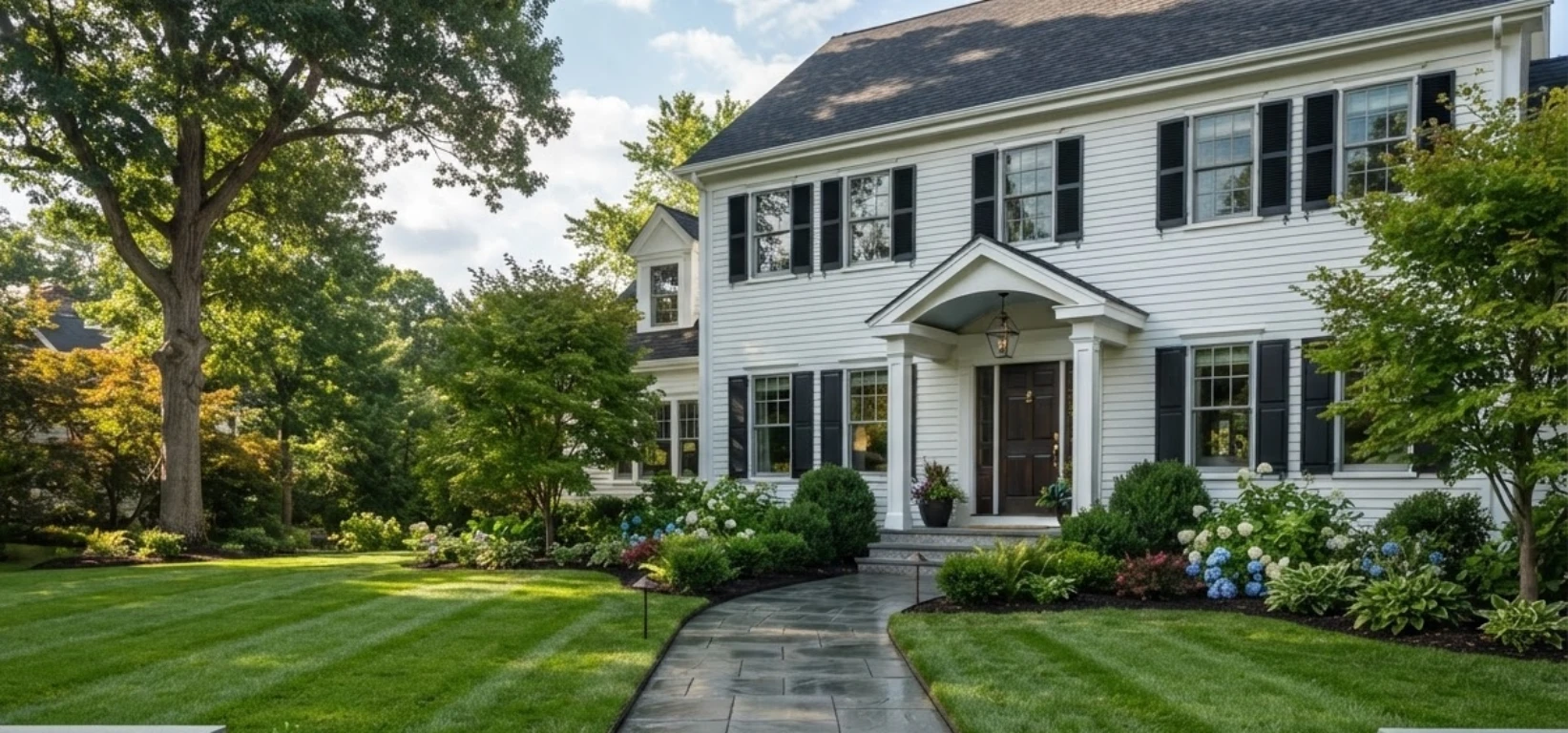
Most homeowners overthink this. Front yard work falls into three clear budget tiers, and the cheapest tier usually delivers the biggest visual jump.
| Tier | Typical Cost | What It Covers |
| Refresh | $750 – $2,500 | Mulch, pruning, edging, seasonal color, cleaning |
| Partial redesign | $3,000 – $8,000 | New beds, defined borders, updated path, some lighting |
| Full rebuild | $8,000 – $25,000 | New walkway, steps, lighting system, full planting plan |
A refresh is almost always the right first move. It restores what’s already there rather than replacing it, and the visual impact is far larger than the price suggests. Only move up a tier once the basics look sharp.
1. Fix the Walkway First
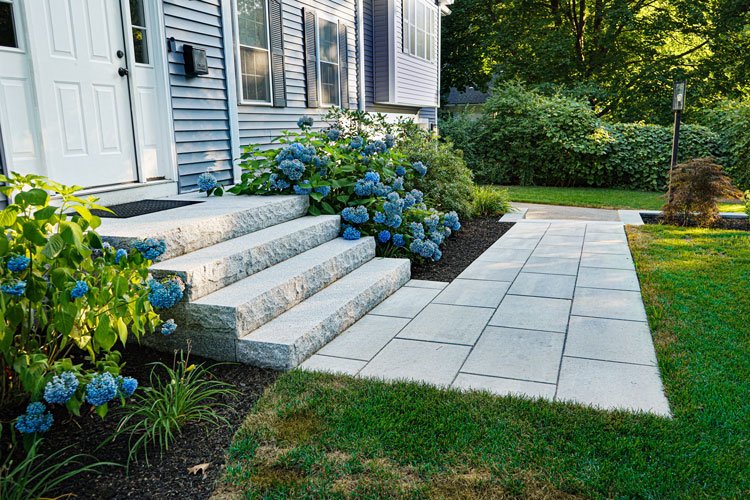
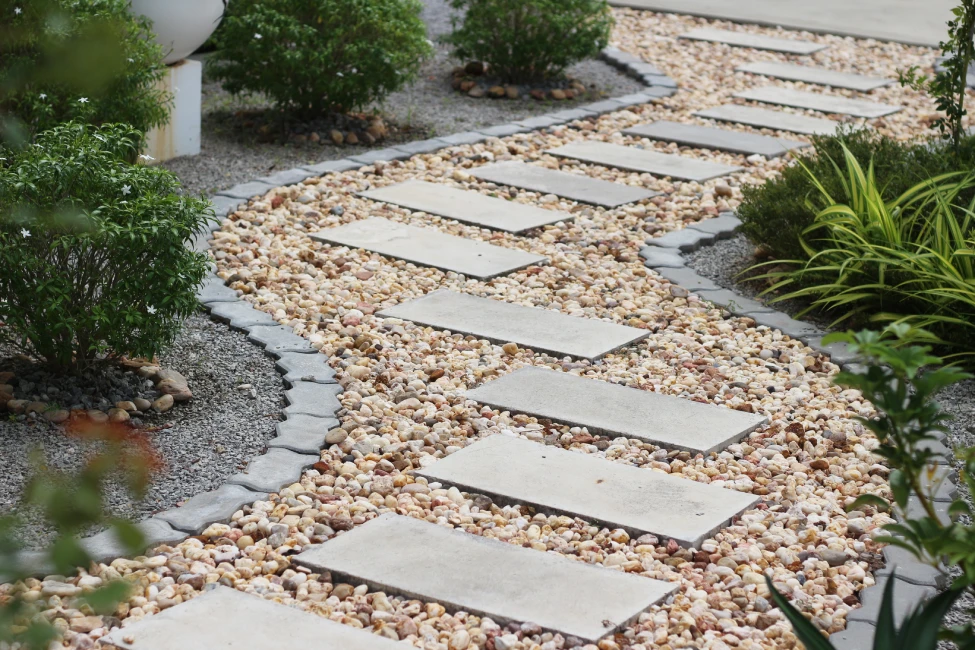
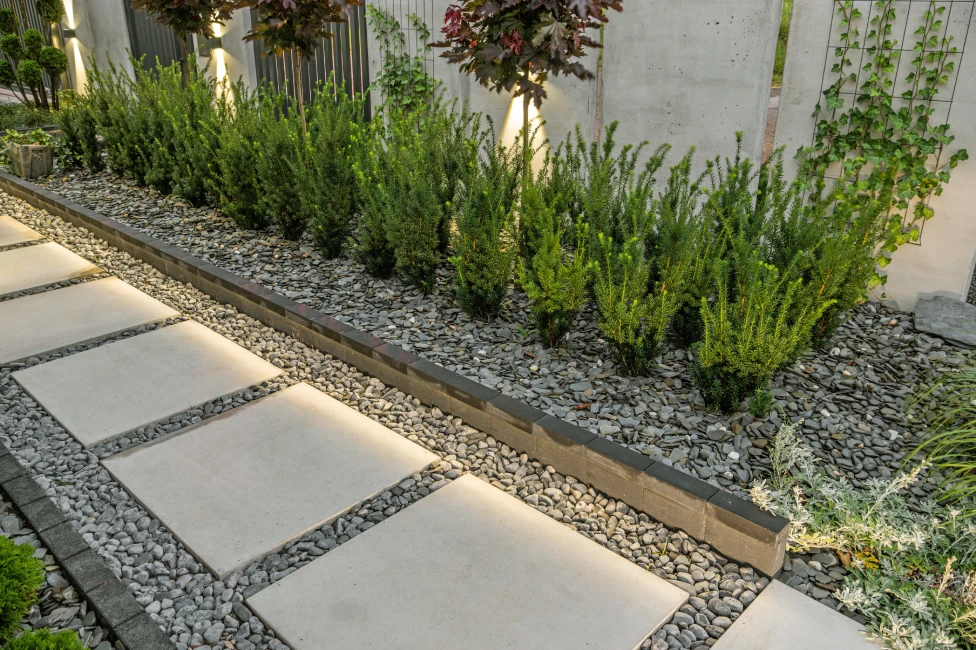
If one thing gets a budget, make it the path to your front door. A cracked, narrow, or heaved walkway signals deferred maintenance before anyone reaches the doorbell.
Costs run predictably. A poured concrete walkway costs $1,200 to $3,000 for a standard 30-foot run. Concrete pavers run $2,500 to $6,000. Natural stone or flagstone runs $3,000 to $8,000 depending on the stone.
Two Massachusetts details matter here. Width comes first: a 3-foot path feels cramped, so 4 feet lets two people walk side by side. Frost depth comes second. A walkway set on a shallow base heaves after a few freeze-thaw cycles, which is exactly how paths end up uneven. Our full paver patio cost guide covers the same base principles that apply to walkways
2. Foundation Plantings That Survive Road Salt
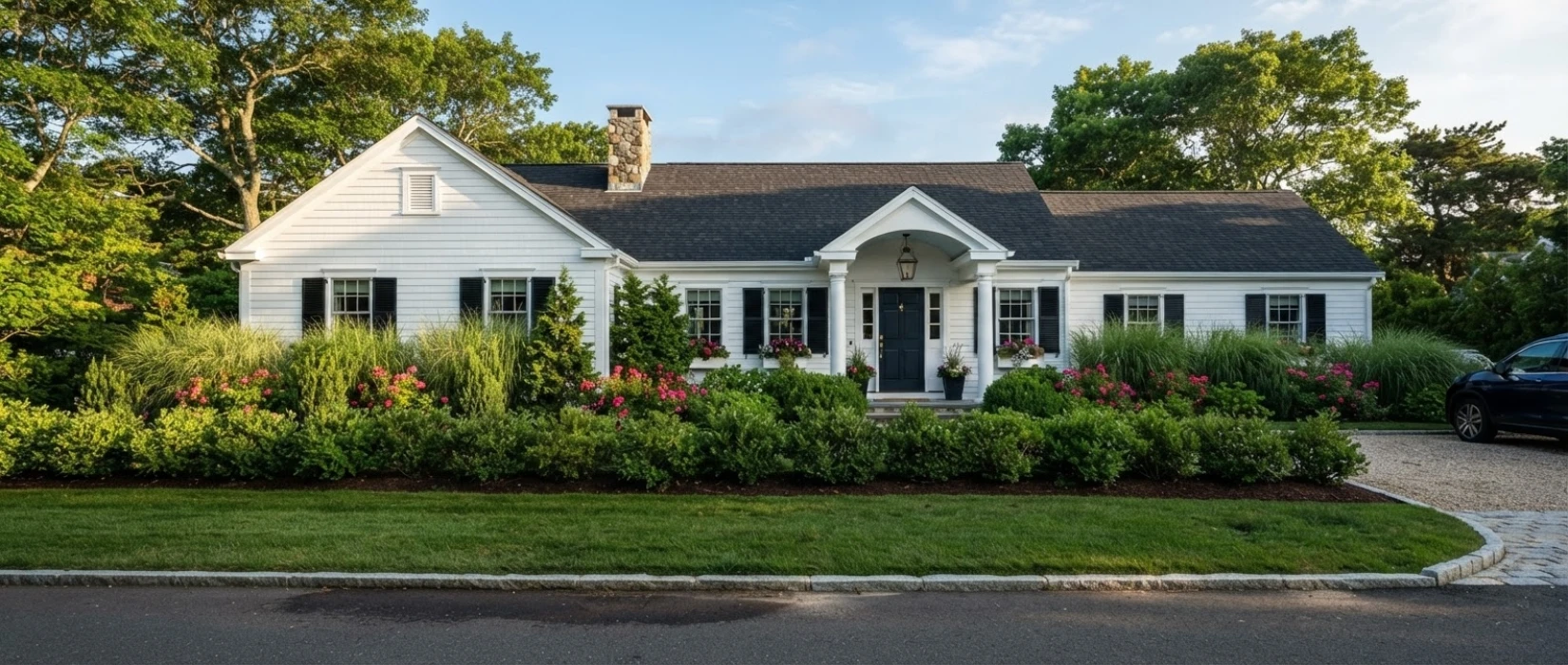
Here’s the gap in nearly every curb appeal article. Massachusetts road crews salt heavily, and salt spray drifts well past the curb. Plants along the street edge and beside the driveway take that spray all winter. Boxwood, a curb appeal favorite everywhere else, browns badly under salt exposure.
UMass Extension maintains regional guidance on plants suited to our soil and conditions, and the salt-tolerant options that hold up best near a Massachusetts road include:
- Bayberry, a New England native that handles salt and poor soil
- Juniper, tough, evergreen, and salt-tolerant
- Rugosa rose, common along our coast for exactly this reason
- Little bluestem and other native grasses, which also hold winter shape
Save the more sensitive plants for beds close to the house, where salt spray doesn’t reach. Also, switch to calcium magnesium acetate near planting beds instead of rock salt. It costs more, but it doesn’t kill the plants you just paid for.
Top Rated Hardscape Design Company MA
Book a Project Consultation With Us
Thank You!
Your request has been received. Our team will contact you within 24 hours.
3. Plan Where the Snow Goes
This is the detail that quietly ruins front yard work in New England. When your driveway gets plowed, that snow has to land somewhere. If nobody planned for it, it lands on your new beds, your path lights, and your shrubs.
Before finalizing a design, identify the snow storage zone at the end of the driveway. Then keep fragile plantings, low-voltage lights, and decorative edging out of it. Lawn tolerates snow piles fine. A young ornamental shrub does not.
4. Light the Entry, Not the Whole Yard
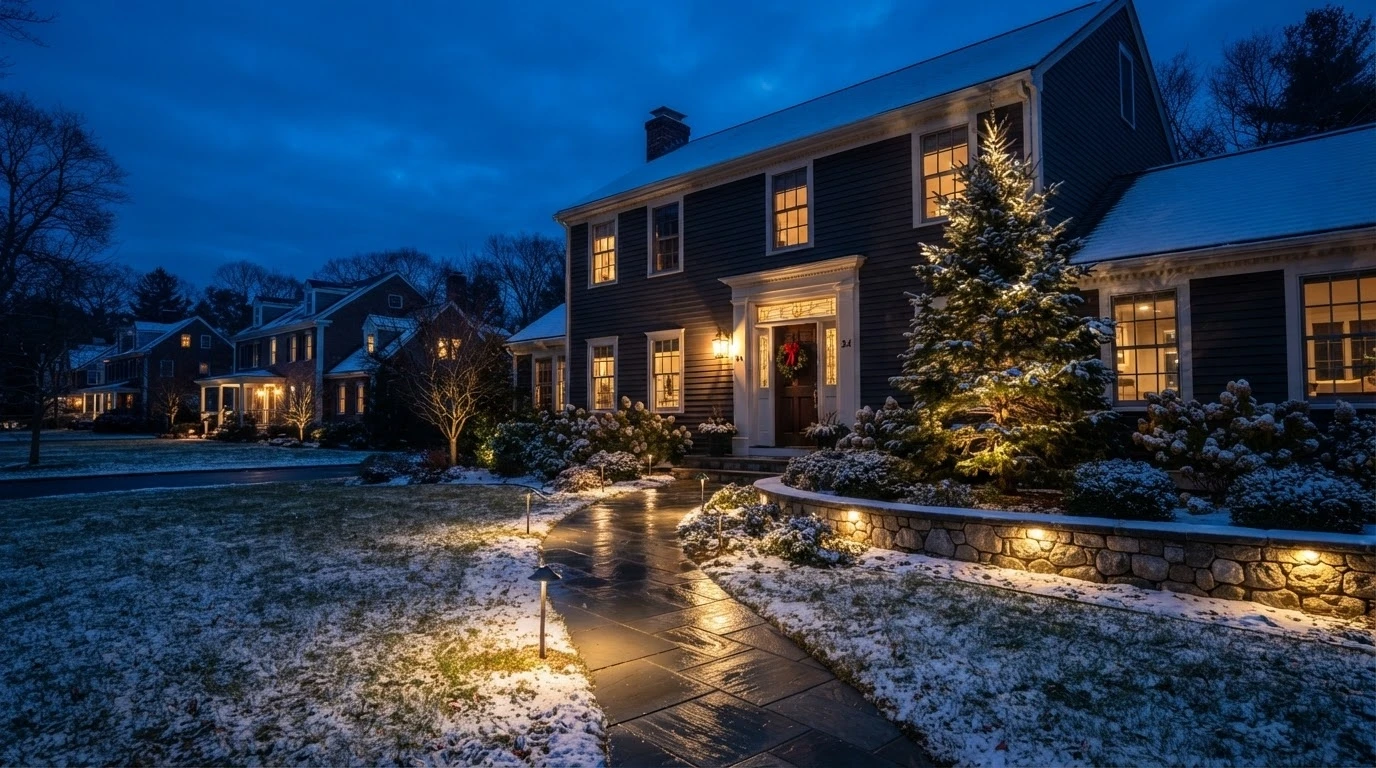
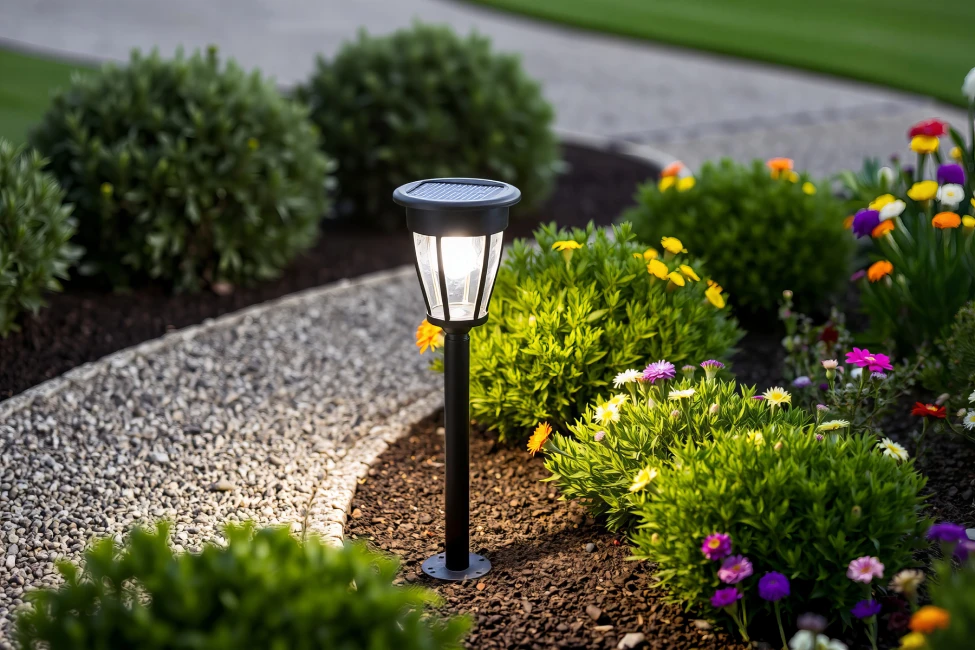
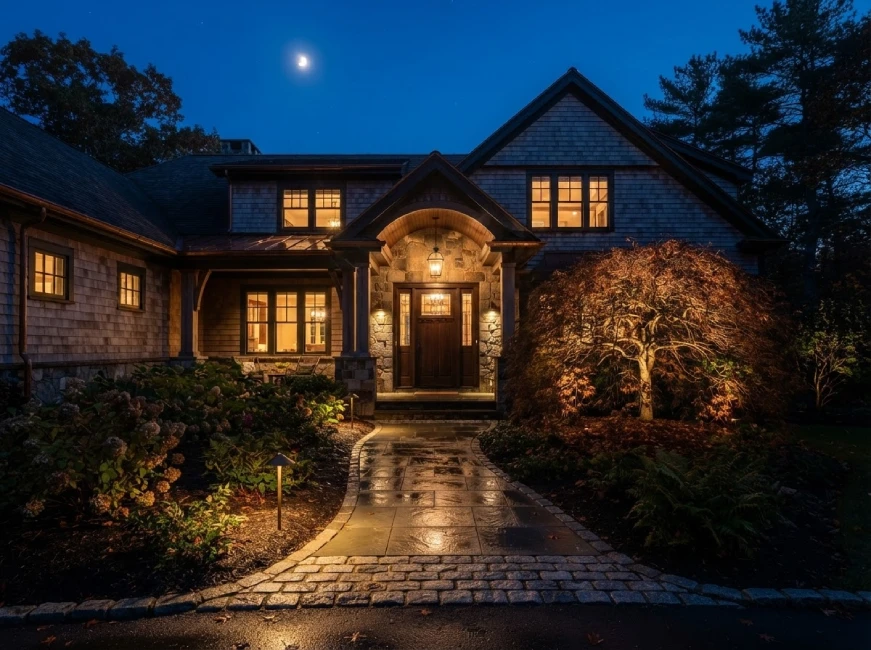
Landscape lighting returns about 59% of its cost at resale according to National Association of Realtors remodeling data, which sounds modest. But the real value is different. It makes your home look intentional after dark, and in Massachusetts winter, dark starts at 4:30 PM.
Focus the budget on three places: the walkway, the front door, and one or two specimen trees. A modest professional system runs $1,500 to $3,500. Skip the harsh floodlights. Warm, low-level LED fixtures read as far more expensive than they cost. See our landscape lighting cost guide for full pricing.
5. Build for Winter, Not Just Summer
A front yard planted only with perennials looks great from June to September. Then it disappears for five months, right through the season when many Massachusetts homes go on the market.
Winter structure comes from three sources:
- Evergreens, which hold shape and color when everything else is bare
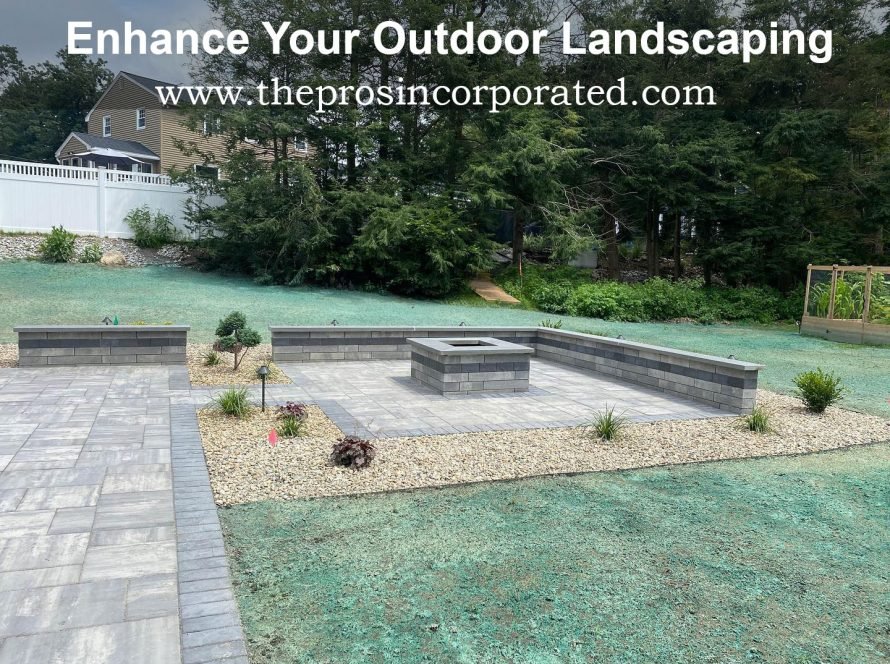
- Hardscape, since walls, steps, and paths look the same in February as in July
- Plants with winter interest, like red twig dogwood, ornamental grasses left standing, and berry-bearing shrubs
A good rule: if your front yard would look empty in a January photo, it needs more evergreen and hardscape structure.
How to Plan a Front Yard Project: 6 Steps
Work in this order and you avoid the two most common mistakes: paying for plants that die, and designing beds where the plow puts snow.
- Walk the property in winter, or picture it. Note where snow piles, where salt spray reaches, and which views look empty without leaves.
- Measure the walkway. Anything under 4 feet wide should be widened before you spend money on anything else.
- Set the hardscape line first. Path, steps, and edging define every bed that follows.
- Choose plants by exposure zone. Salt-tolerant species near the road, everything else closer to the house.
- Add lighting last, but wire it early. Running conduit before the hardscape goes in costs far less than cutting it in later.
- Confirm the snow storage zone stays clear. Nothing fragile in the plow’s path.
6. Get the Proportions Right
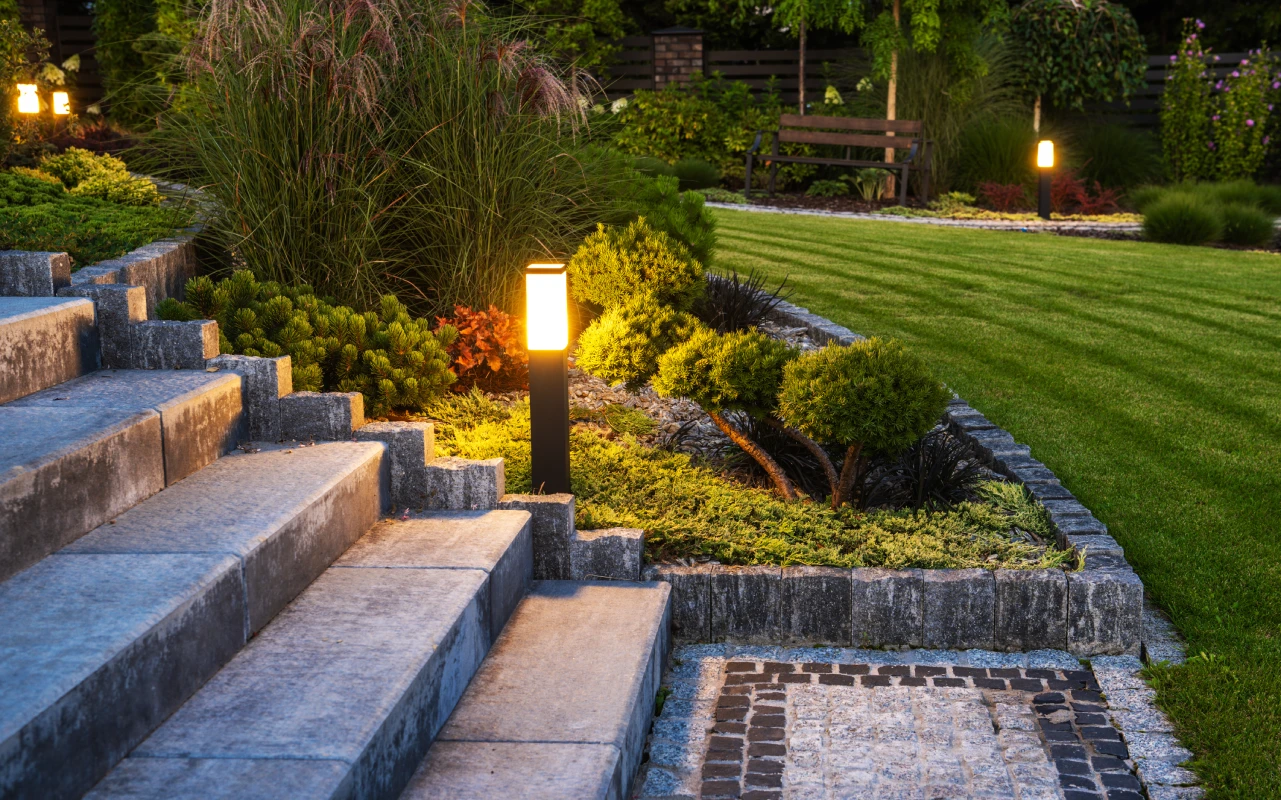
One more thing worth knowing. Too much pavement reads as a maintenance penalty rather than an upgrade. The balance that works on most residential lots is roughly 30 to 40% hardscape and 60 to 70% planted area. Keep large trees 30 to 50 feet from the foundation, and small ornamentals at least 15 feet away, so nothing shows up as a risk on a home inspection.
Which Front Yard Landscaping Ideas Return the Most?
Not every upgrade pays back equally. Based on current market data, the ranking is fairly consistent:
Upgrade | Approximate Return |
Lawn care and overseeding | Highest of any landscaping project |
Front walkway replacement | Roughly 100 – 105% |
Mulch, pruning, edging refresh | Very high per dollar spent |
Landscape lighting | About 59% |
Elaborate front hardscape | Lower; save the budget for the back |
The pattern is clear. Basics beat features. A sharp lawn, clean beds, and a solid walkway outperform expensive additions almost every time.
Frequently Asked Questions
What are the best front yard landscaping ideas for Massachusetts? Start with a walkway that’s at least 4 feet wide, salt-tolerant plantings near the road, and warm lighting at the entry. Then add evergreen structure so the yard still looks designed in winter.
How much does front yard landscaping cost? A refresh runs $750 to $2,500. A partial redesign with new beds and a path costs $3,000 to $8,000. A full rebuild with walkway, lighting, and planting runs $8,000 to $25,000.
What front yard upgrade adds the most value? Lawn care and a replaced front walkway rank highest. A new walkway returns roughly 100% of its cost, and basic lawn and bed maintenance returns even more per dollar spent.
Which plants handle road salt in Massachusetts? Bayberry, juniper, rugosa rose, and native grasses like little bluestem all tolerate salt spray well. Keep sensitive plants like boxwood in beds closer to the house.
How do I keep snow from damaging my front yard? Identify where plowed snow will pile before you design. Then keep shrubs, path lights, and edging out of that zone. Lawn handles snow piles fine, but young plants and fixtures don’t.
Should I light the whole front yard? No. Focus on the walkway, front door, and one or two trees. A modest $1,500 to $3,500 system in the right places looks better than a bright, evenly lit yard.
Why Homeowners Choose The Pros, Inc.
The Pros, Inc. has designed front yards across the North Shore, Essex County, and Middlesex County for 20+ years. We plan for salt, snow storage, and frost depth from the start, so your front yard still looks right in its fifth winter. We handle everything from a seasonal refresh to full landscape design and hardscape construction.
Want a front yard that works year-round? Call (857) 574-4380 or request a free consultation.
The Pros, Inc. Landscaping & Hardscaping Company MA