Tired of your patio sitting empty from October to April? All-season outdoor living is the biggest trend shaping New England backyards in 2026. It’s not just a buzzword. The right mix of shade, heat, and wind protection adds real months of use. Your yard no longer has to shut down at the first frost. This guide shows what each upgrade adds and what it costs.
Quick Answer: A fire feature, infrared heaters, and wind protection can add 2–3 extra months of outdoor use in New England. A covered pavilion or screened structure can push that toward year-round. Costs range from $800 for a basic heater to $40,000+ for a fully enclosed four-season room.
Key Takeaways
- Layering wins. No single upgrade creates a four-season yard. Heat, wind-block, and cover work together.
- Infrared heaters cost $900–$1,500 per unit plus $300–$800 to install, and each one adds real usable weeks.
- A fire pit or fireplace extends evening use well into fall, often the cheapest first step.
- Wellness zones are trending too: saunas, cold plunges, and outdoor showers are showing up alongside heaters and fire.
- Outdoor systems now beat decorative work. Recent industry data shows heating, plumbing, and electrical upgrades outpacing purely decorative outdoor projects.
What “All-Season” Actually Means
All-season outdoor living doesn’t mean turning your patio into a heated room. You can go that far, but you don’t have to. Most homeowners land in the middle. They want a space that’s comfortable from April through November, plus many extra days beyond that. The goal is adding weeks, not chasing perfection.
How Much Extra Season Each Upgrade Adds
| Upgrade | Typical Cost | Extra Season Gained |
| Fire pit or fireplace | $500 – $9,000 | Extends evenings; several extra fall weeks |
| Infrared patio heater | $900 – $1,500 + install | Roughly a month on each end of the season |
| Wind block (screens, walls) | $1,000 – $5,000 | Cuts wind chill, extends comfortable days |
| Pergola with retractable roof | $5,500 – $9,500+ | Blocks rain, adds shoulder-season days |
| Covered pavilion | $10,000 – $40,000+ | Near year-round use with heat added |
| Screened or enclosed porch | $7,200 – $50,000+ | True four-season room, HVAC-tied |
Stacking two or three upgrades often works best. A fire feature, a wind block, and a heater together deliver the biggest jump for the smallest budget.
Custom Pool, Patio, Paver Builders - THE PROS, INC
Book a Project Consultation With Us
Thank You!
Your request has been received. Our team will contact you within 24 hours.
Three Budget Tiers to Plan Around
Not every homeowner needs the top tier, so here’s how a realistic plan scales.
Starter budget ($1,500–$4,000): a fire pit plus two infrared heaters on an existing patio. No construction, no permit, and it’s usually installed in a single day.
Mid-range budget ($10,000–$20,000): a retractable-canopy pergola, wind screens along the exposed side, and integrated lighting. This tier typically adds the most usable weeks per dollar spent.
Full investment ($30,000–$60,000+): a covered pavilion with a solid roof, built-in heaters, and a fire feature, functioning almost year-round. This tier crosses into a true home-addition-level project.
Most homeowners start at the first or second tier, live with it for a season, then decide whether the full investment is worth it.
# Start Small: Fire and Heat
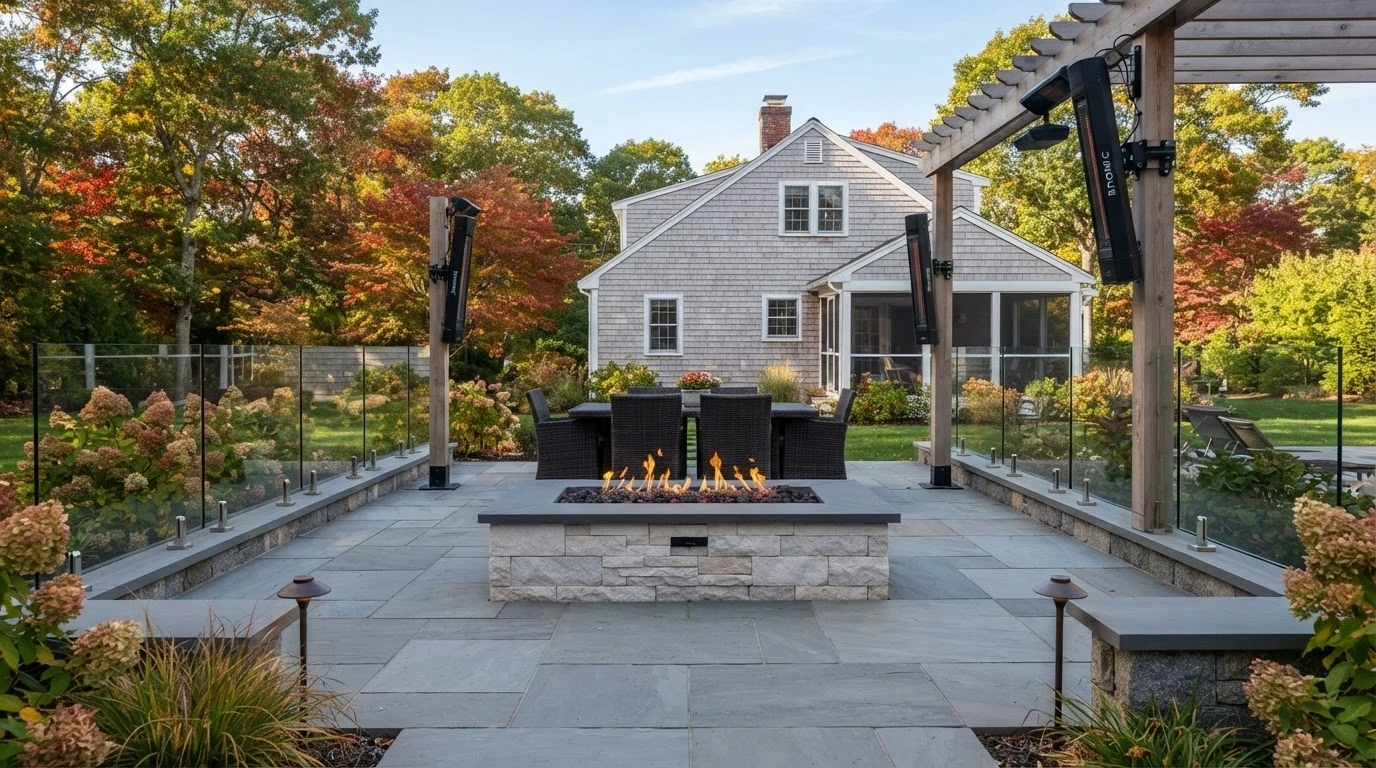
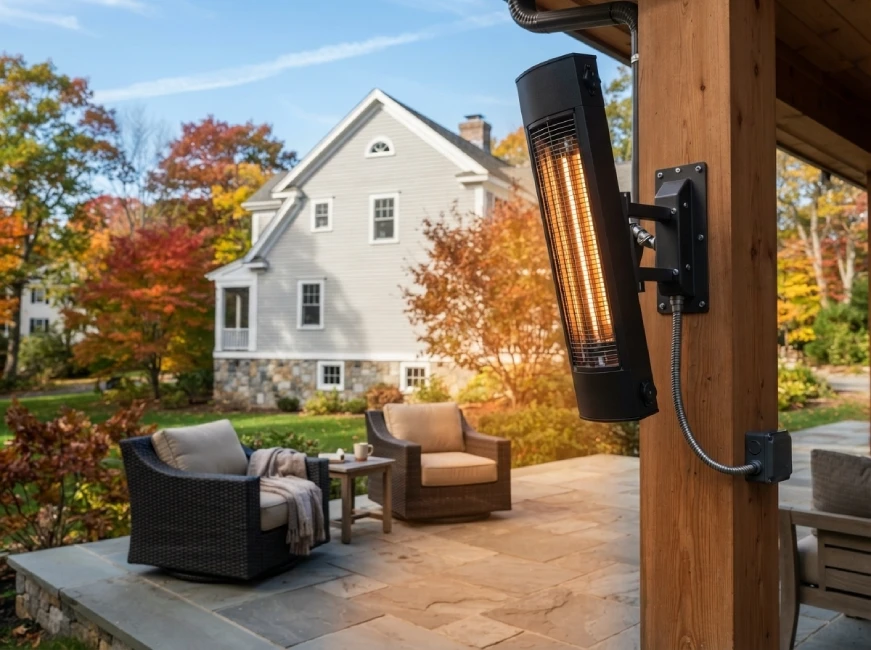
The most affordable path to more outdoor time starts with warmth. A fire pit instantly extends the evening hours you’ll use your patio. Infrared heaters add focused warmth without heating the whole yard. A 2,400-watt unit covers roughly 80 to 120 square feet, enough for a dining or lounge area. Both upgrades work on an existing patio. Neither needs major construction.
# Step Up: Wind Protection and Shade
Once heat is covered, wind becomes the next barrier. A screen, low wall, or dense planting cuts wind chill fast. Wind, not just cold air, is what usually drives people indoors. Pergolas with retractable canopies or motorized louvers add the next layer. They block rain and control sun without fully enclosing the space. This is where the louvered pergola trend fits in. It gives you a roof that adjusts, instead of one fixed cover.
# Go All In: Covered and Enclosed Structures
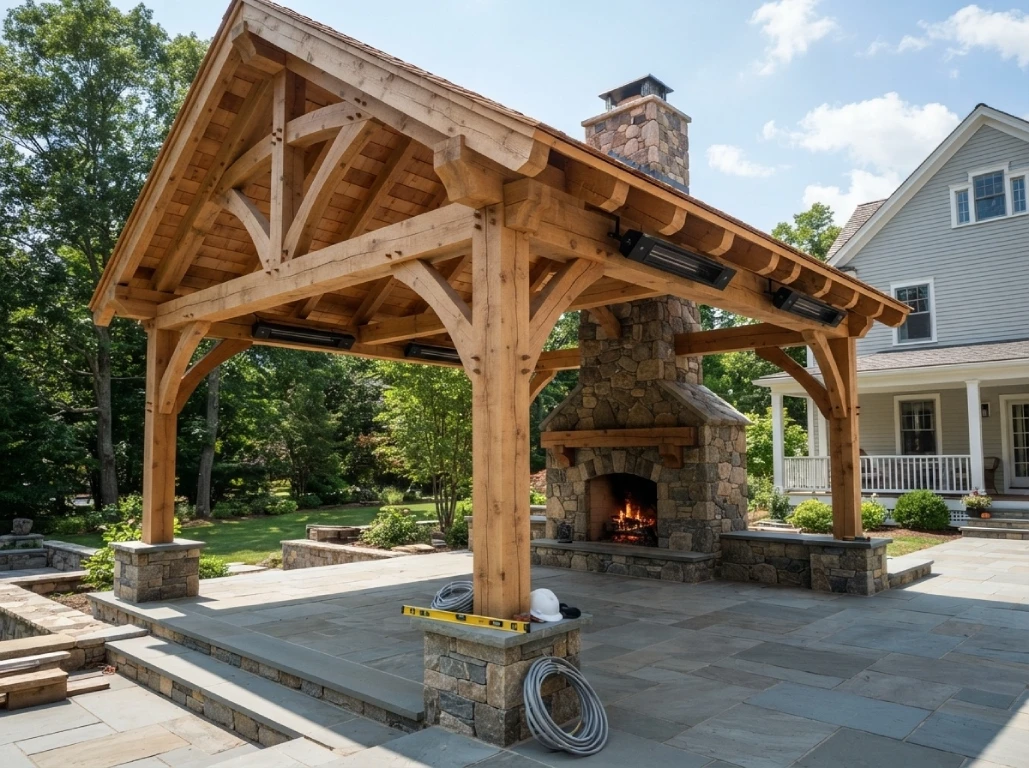
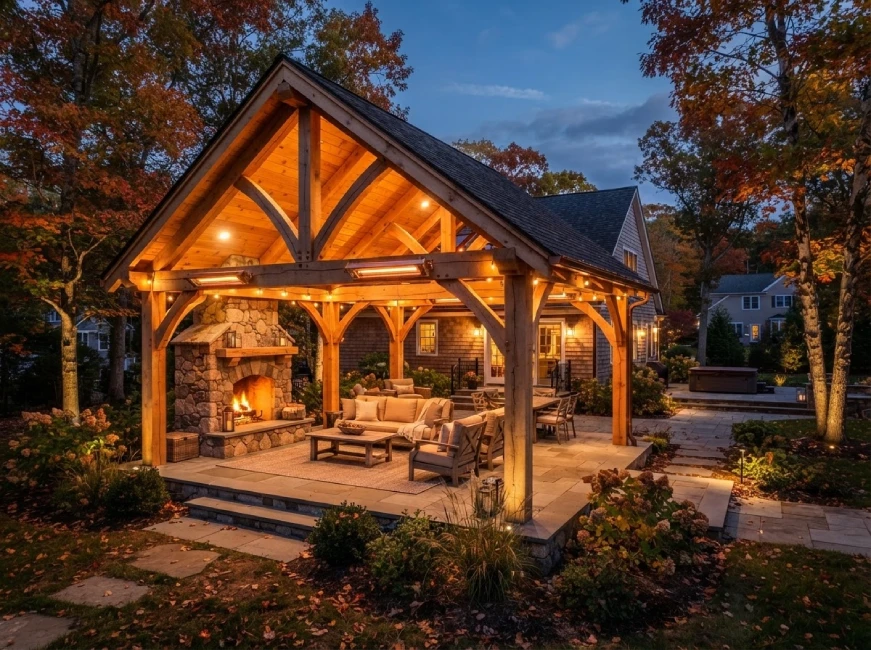
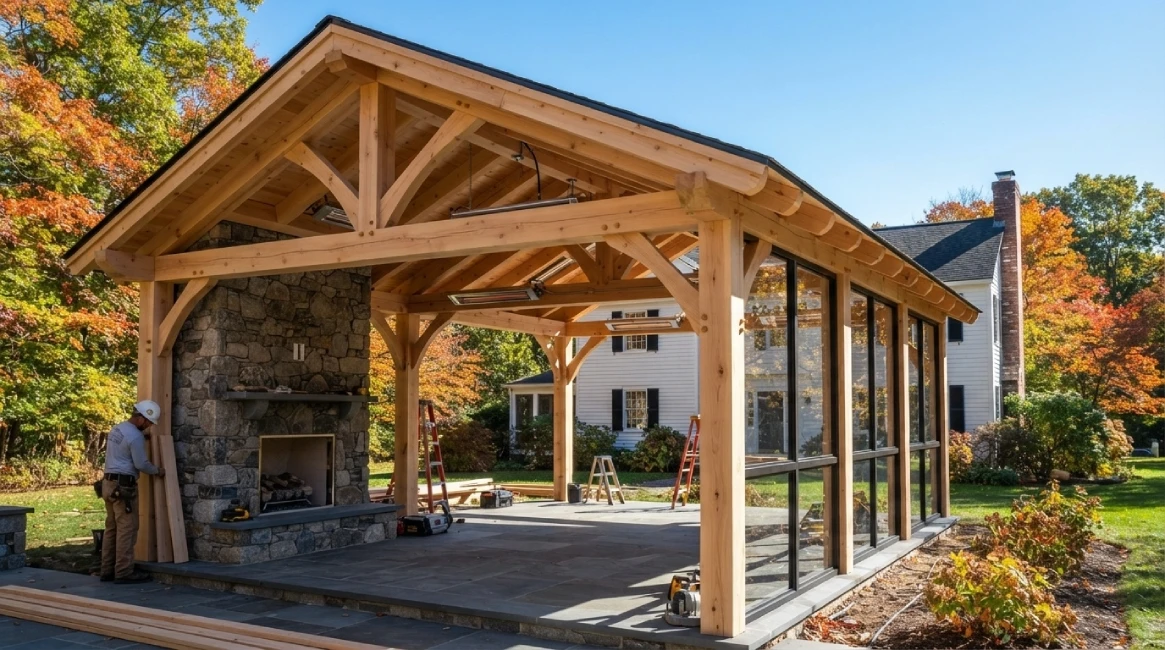
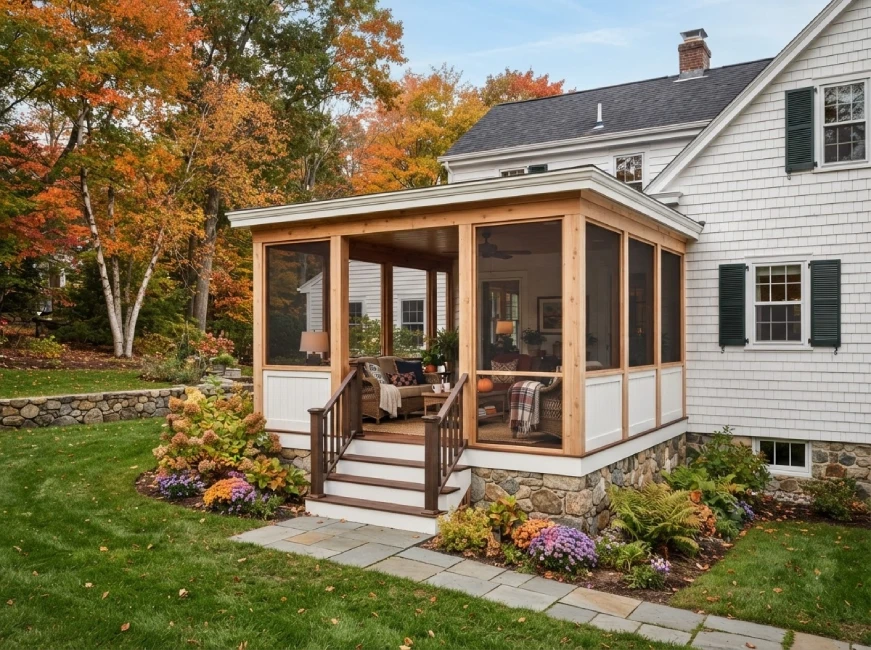
For true four-season use, a covered pavilion or screened structure is the real leap. A pavilion with a solid roof, integrated heaters, and wind panels can function almost year-round. Recent building data shows a surge in these full outdoor-living investments, and permit values for them have climbed sharply in recent years. A fully enclosed, insulated four-season room goes even further. It ties into your home’s HVAC for true winter comfort, though at a much higher cost.
# The Wellness Zone Trend
A newer layer is showing up in 2026 outdoor living plans. Private wellness features are now built right into the backyard. Saunas, cold plunges, outdoor showers, and quiet meditation corners are increasingly designed alongside the fire and heat elements above. Cold plunges pair naturally with the small pools trend, too. These spaces work well tucked beside a covered pavilion. The same wind protection and privacy screening you add for comfort also supports a more private wellness area.
Don’t Forget Bug Season
New England’s mosquito season runs roughly May through October. It’s the one factor that can undo an otherwise perfect outdoor upgrade. A screened porch or screened section of a pavilion is the most complete fix. For open patios, ceiling fans and landscape misting systems help a lot. Fans disrupt mosquito flight, and neither requires full enclosure. Plan bug management alongside heat and shade, not as an afterthought. That keeps the space usable on the exact evenings you built it for.
The Data Behind the Trend
This isn’t just a design preference. Recent industry research found something telling. Outdoor systems, like heating, plumbing, and electrical work, now make up a larger share of projects than purely decorative upgrades. In plain terms, homeowners now choose function over decoration. A space you can actually use in October beats one that only looks good in July photos.
Building the Right Plan for Your Yard
Not every yard needs the top tier. A small budget, spent on a fire pit and a couple of heaters, can meaningfully extend your season. A bigger budget unlocks a pavilion or enclosure. That changes how you use the space entirely. The smart approach starts small. Add heat and wind protection first, live with it a season, then decide if a full structure is worth the next step.
Frequently Asked Questions
What does all-season outdoor living actually mean? It means layering heat, wind protection, and shade or cover. That keeps your patio usable well beyond summer. Most homeowners aim for comfortable use from April through November. Few want a fully heated room.
What’s the cheapest way to extend my outdoor season? A fire pit or a couple of infrared heaters are the most affordable starting points. Together, they often cost under $2,500. They extend evening comfort into fall, with no major construction needed.
Does a pergola really help with all-season use? Yes, especially a louvered or retractable model. It blocks rain and controls sun. That adds usable days in spring and fall, when weather is unpredictable.
How much does a covered, four-season outdoor space cost? A covered pavilion runs $10,000 to $40,000 or more. A fully enclosed, insulated four-season room can reach $40,000 to $85,000-plus, depending on size and finishes.
What is a wellness zone in a backyard? It’s a private area built for recovery and relaxation, often including a sauna, cold plunge, outdoor shower, or quiet seating. These spaces are increasingly designed alongside heaters and fire features rather than added separately.
Is it worth investing in year-round outdoor comfort? For most homeowners who spend real time outside, yes. Recent data shows outdoor heating and structural upgrades now outpace purely decorative work. That shows how much homeowners value a space they can actually use.
Why Homeowners Choose The Pros, Inc.
The Pros, Inc. designs complete outdoor living upgrades across the North Shore, Essex County, and Middlesex County. We build everything from a simple fire feature to a fully covered pavilion. We plan every project with New England’s climate in mind. Your investment extends your season, not just looks good for one summer.
Want to figure out your best first step? Call (857) 574-4380 or request a free consultation.
The Pros, Inc. Landscping & Hardscaping Company MA